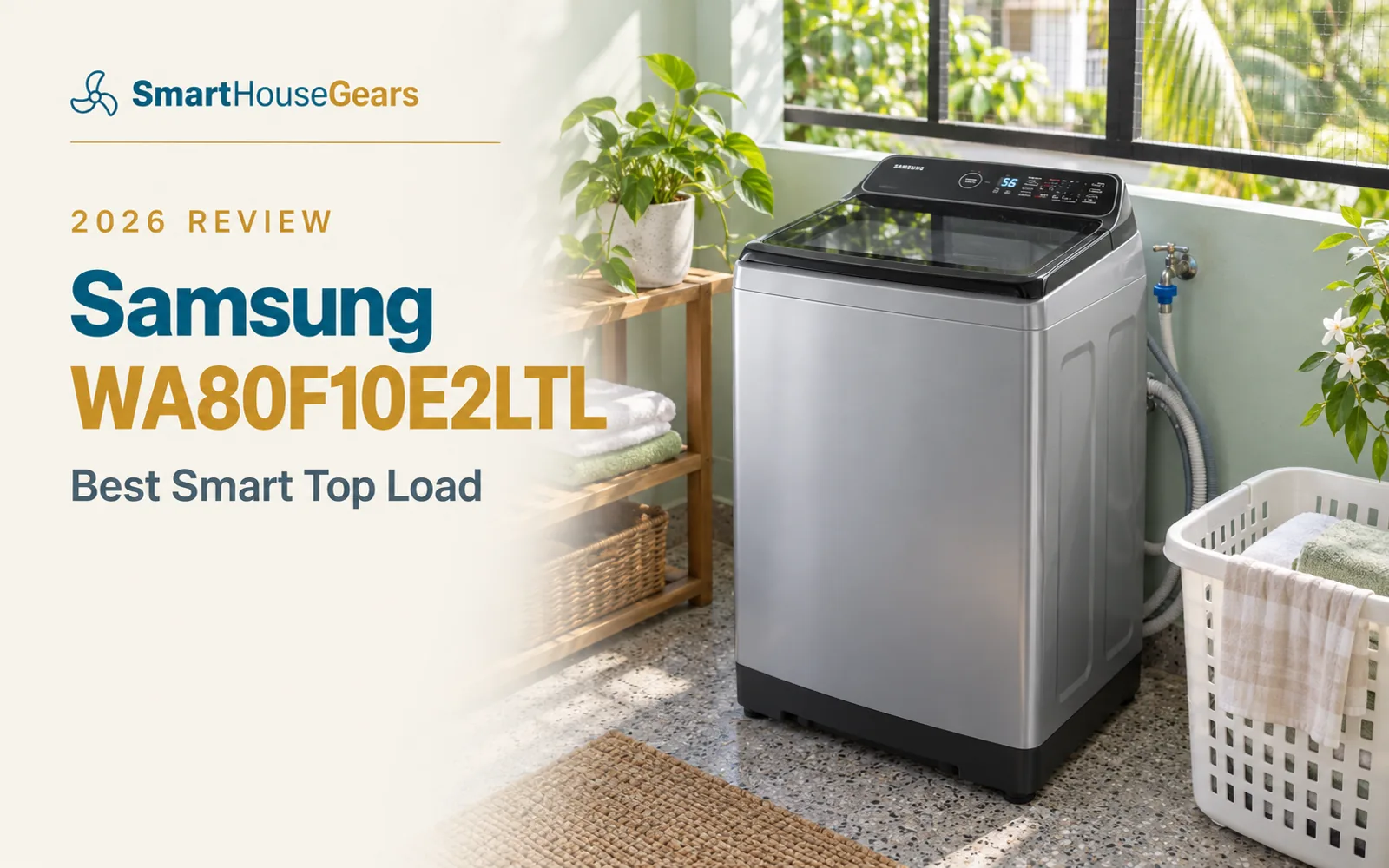
Samsung WA80F10E2LTL review India is for buyers who want a smart washing machine but do not want a front loader.
That is a legitimate need. Front loaders are efficient and premium, but they are not comfortable for everyone. Some Indian homes simply need easier loading, a taller drum and fewer bending complaints.
Who Should Buy the Samsung WA80F10E2LTL
Buy this washer if you want app-connected laundry but prefer the physical comfort of a top load. That includes homes where parents, elders or anyone with back discomfort uses the washing machine often.
It also makes sense if your utility space does not suit a front-load door swing. A top loader opens upward, so it can fit better in some narrow laundry corners.
The 10 kg capacity gives enough room for family loads, towels and daily clothes. It is generous, but not as physically demanding as a large front loader.
It is the lowest price band in the parent guide, so it also suits buyers who want SmartThings without spending front-load money.
Skip it if your priority is wash gentleness, low water use or premium heater cycles. The Samsung WW90DG6U24ASTL and LG FHP1209Z5M are better front-load options.
Why a Smart Top Load Still Makes Sense
Many premium guides treat top loads as inferior by default. That is too simplistic. A front load is technically better in several ways, but a top load can be better for the person using it.
You do not need to bend. You can load from standing height. You can often add missed items more easily. For many Indian families, that daily comfort matters more than saving a little water.
This Samsung adds SmartThings, which gives the top-load format a connected edge. You can check status, receive alerts and keep the washer inside the same app as other Samsung devices.
That is useful if the machine is in a utility balcony or wash area where you do not hear the end signal.
The key is to buy it for the right reason. Buy it for comfort, convenience and price. Do not buy it expecting it to behave like a premium front loader.
SmartThings at a Lower Price
SmartThings is the biggest feature separating this Samsung from ordinary top-load washers. It brings app visibility to a category that is usually less connected.
Finish alerts are the main win. Wet clothes left in a top load can smell just as easily as clothes left in a front loader, especially in humid weather.
Cycle status is helpful too. Instead of opening the lid or checking the display, you can see progress from the phone.
SmartThings also keeps the washer in the same ecosystem as Samsung phones, TVs and other compatible devices. If your home already uses Samsung, this is a natural entry point.
The feature is not a substitute for washing discipline. You still need to sort clothes, add detergent and choose the right cycle.
Washing Performance and Tradeoffs
This washer is best for daily family loads: cotton clothes, towels, school wear, home clothes and general mixed laundry.
A top load is usually less gentle than a front load. It also tends to use more water. That is the tradeoff you accept for easier loading and lower price.
For delicate office wear, expensive kurtas or clothes you want to protect long term, a front loader is still better. For rougher daily family laundry, this Samsung is easy to live with.
The 10 kg capacity helps with load volume, but do not overload it. Top loads also need movement, water flow and detergent distribution.
Use the right detergent type. Top-load detergent is different from front-load detergent, and using the wrong one can affect foam and rinse quality.
Installation and Space Planning
A top load needs overhead clearance. That is the detail buyers forget. If you plan to place the washer under a shelf, counter or wall cabinet, make sure the lid opens fully.
It also needs side and rear clearance for hoses and movement. Do not jam it tightly into a corner.
The floor should still be level. Top loads can vibrate on spin, especially with uneven heavy items like towels and jeans.
Water inlet and drain setup are simpler than many front-load installations, but they still need to be secure. A loose tap connection can ruin the first day.
Smart Top Load Setup Checklist
Check lid clearanceTop loads need open space above the machine
Use top-load detergentDetergent type affects foam and rinse quality
Balance heavy loadsTowels and jeans should not sit on one side
Pair SmartThings earlySet up alerts before the first full week of use
Keep tap and drain reachableService and cleaning are easier with access
Avoid cheap extensionsUse a firm, properly earthed socket
Specs at a Glance
Washer type
Fully automatic top load
Capacity
10 kg
Smart platform
Samsung SmartThings
Best home fit
Convenience-first families and elder-friendly homes
Main appeal
Easy loading with smart app alerts
Typical price band
₹25,000 to ₹28,000
Main rival
Samsung WW90DG6U24ASTL for front-load buyers
Main caution
Less efficient than a front load
What We Like, and What to Watch
The biggest strength is accessibility. A washing machine should be comfortable for the people who use it, and top loads win that part clearly.
The huge buyer base also makes this model easier to trust than many newer smart appliances. It is not a thin-listing gamble.
SmartThings support at this price is another strong point. It gives you the most useful connected features without forcing a premium front-load purchase.
What you should watch is fabric care. If your wardrobe includes delicate or expensive clothing, a front loader is kinder.
The second watch-out is water use. Front loaders are more efficient. If water scarcity or tanker water cost is a major issue, consider a front-load model.
How It Compares With Front Load Picks
Compared with the Samsung WW90DG6U24ASTL, this top load is cheaper and easier to use physically. The front loader wins on wash quality, water use and premium fabric care.
Compared with the LG FHP1209Z5M, this Samsung is less refined but more accessible. LG is better for ThinQ diagnostics and front-load washing.
Compared with the IFB Senator MBN 8012 CMS, this Samsung is easier to load and has SmartThings. IFB gives front-load efficiency and stronger fabric care.
Compared with the LG FHD1107SWM washer dryer, this Samsung is cheaper and simpler but does not dry. LG is for monsoon drying pain.
Detergent, Load Balance and Daily Habits
Use top-load detergent. It is designed for higher water levels and different foam behaviour. Front-load detergent is not always ideal here.
Balance heavy items. Towels, jeans and bedsheets can bunch on one side and create spin imbalance. Pause and redistribute if needed.
Do not use maximum water and strongest cycle for every load. Match settings to fabric and soil level. That saves water and reduces wear.
Remove clothes soon after the alert. Top loads can still develop damp smell if wet laundry sits inside too long.
Service and Long-Term Ownership
Samsung's service reach is a major advantage. For a widely sold top-load washer, parts and technician familiarity are usually easier than niche imported models.
Keep your invoice and installation record. If a vibration or drain issue appears early, it is usually easier to fix while the installation is recent.
Ask the installer to show the lint filter, cleaning routine, SmartThings pairing and water-level settings. These basics make daily use smoother.
If elders use the machine, label the two or three most-used cycles. A smart washer should still be easy to operate from the panel.
Why This Is the Most Elder-Friendly Pick
For many Indian homes, the person using the washer most often is not the person comparing specifications online. That is why physical comfort matters.
A top load avoids the bending that front loaders demand. You stand, open the lid and drop clothes in from above. For parents and elders, that can be the deciding factor.
The control panel is also easier to approach because it sits at standing height. A front loader may look more premium, but it can be awkward if the user has knee or back trouble.
SmartThings adds a second layer of convenience for the rest of the family. An elder can start the wash from the panel, while another family member gets a phone alert when the cycle ends.
That shared ownership is valuable. The person doing the physical loading does not have to be the only person tracking the wash.
If you are buying for parents, do a demo with them after installation. Save the two most-used cycles, explain the detergent level and keep the app alerts on your phone as backup.
Best Use Cases for This Samsung Top Load
This washer is best for daily family clothes, towels, bedsheets that are not too bulky and frequent medium loads. It is also good for homes where people add missed clothes after the cycle has started.
It is less ideal for delicate office wear, expensive ethnic garments and water-conscious homes. Those are front-load strengths.
If your household uses tanker water or faces water restrictions, compare the running habit carefully. A front loader may cost more upfront but use less water over time.
If comfort and convenience are the priority, this Samsung top load is the better lived-in choice.
Verdict
Samsung WA80F10E2LTL review India verdict: buy it if you want the easiest smart washing machine to live with physically. It is the best smart top load in this lineup because it adds SmartThings to a large, familiar and comfortable format.
Do not buy it if you want the best wash efficiency or fabric care. Buy a front loader for that. But if comfort, price and app alerts matter most, this Samsung is the smart top load to choose.
Frequently asked questions
Is the Samsung WA80F10E2LTL a good smart top load washer?
Yes. It is the best smart top load in this guide because it combines SmartThings control, 10 kg capacity, easy loading and a very large buyer base.
Is a top load better than a front load?
A top load is easier to load and often cheaper, but a front load usually washes better, uses less water and treats fabrics more gently. Choose based on comfort and priorities.
Does this model work with SmartThings?
Yes. SmartThings support gives you app status, alerts and connected-appliance convenience, which is rare at this price compared with front-load WiFi models.
Who should buy this instead of a front loader?
Buy it if elders use the machine, bending is uncomfortable, or you want smart control at a lower price. Choose a front loader for fabric care and water efficiency.
Is 10 kg capacity too large?
It is suitable for families with regular large loads. For couples or very small homes, it may be more capacity than needed.
What is the main downside?
The main downside is that it cannot match a premium front loader for fabric gentleness, water use or heater-led hygiene cycles.
Other picks we reviewed
More wifi washing machines with a full review each.
Discussion
Be the first to comment