Why smart home compatibility is a bigger deal in India
Amazon India lists more than 20,000 products under the "smart home" umbrella. Somewhere around a third of them do not really work with the voice assistants most Indian homes already own. The listing will say "works with Alexa" in the feature bullets, but the setup flow needs a second app, the voice commands break halfway, or the product was built for a SmartThings-first market like Korea and never properly certified for Alexa India.
The cost of getting this wrong is real. A ₹2,000 smart bulb that refuses to pair with your Echo Dot ends up as a dumb bulb in a drawer. Repeat the mistake across smart plugs, WiFi cameras and smart switches, and a perfectly good smart home setup stalls at the third device. Most people then blame "smart home tech in India" and stop.
This tool exists so that you do not have to rely on the "Works with" claim in a listing. Pick what you already own, and we show only those smart home devices that will genuinely pair with it. Tell us you are starting fresh, and we suggest a four-device starter kit with Matter-ready gear at the top.
The four smart home ecosystems that actually ship in India
Globally there are seven or eight smart home ecosystems worth naming. In India, only four have a device catalogue deep enough to build a house around. If a smart plug or bulb does not pair with at least one of these, it is not a serious option for an Indian home in 2026.
Amazon Alexa
The default ecosystem for Indian smart homes in 2026. Largest catalogue on Amazon.in across smart plugs, WiFi bulbs, cameras and Alexa-compatible locks. The Alexa app supports Hindi natively, which no other voice assistant here does well. Echo Dot 5th gen and Echo Pop are the cheapest entry points, often under ₹3,000 during Prime Day and Great Indian Festival. Recent Echo models, from the Echo 4th gen to Echo Hub and Echo Show 8, ship with a built-in Zigbee radio, so you can add Aqara sensors without buying a separate Zigbee hub.
Google Home
A close second. Google Assistant handles longer, multi-step commands more naturally than Alexa, and if you already own a Pixel or Chromecast with Google TV, setup is barely two taps. Nest Mini (2nd gen) and Nest Hub (2nd gen) are Amazon India staples, and the Nest Hub is one of the few smart displays that doubles as a Thread border router. Hindi voice support is decent, but still a step behind Alexa.
Apple HomeKit
Small footprint in India but very sticky. Essentially every Apple HomeKit home here is an iPhone household that already owns an iPhone, iPad and Apple TV 4K. The privacy story is the best in the category and the automation engine inside the Home app is genuinely excellent. The trade-off is that the HomeKit-compatible catalogue on Amazon India is the narrowest of the four, and you need an Apple TV or HomePod mini acting as a home hub for remote control.
Samsung SmartThings
The hub most people forget exists. A single SmartThings Station or SmartThings Hub covers SmartThings, Zigbee, Z-Wave, Thread and Matter protocols in one box, which is why enthusiasts doing multi-protocol home automation default to it. Mainstream buyers in India still skip it because the SmartThings app has a steeper learning curve than Alexa or Google Home.
Matter explained in plain English
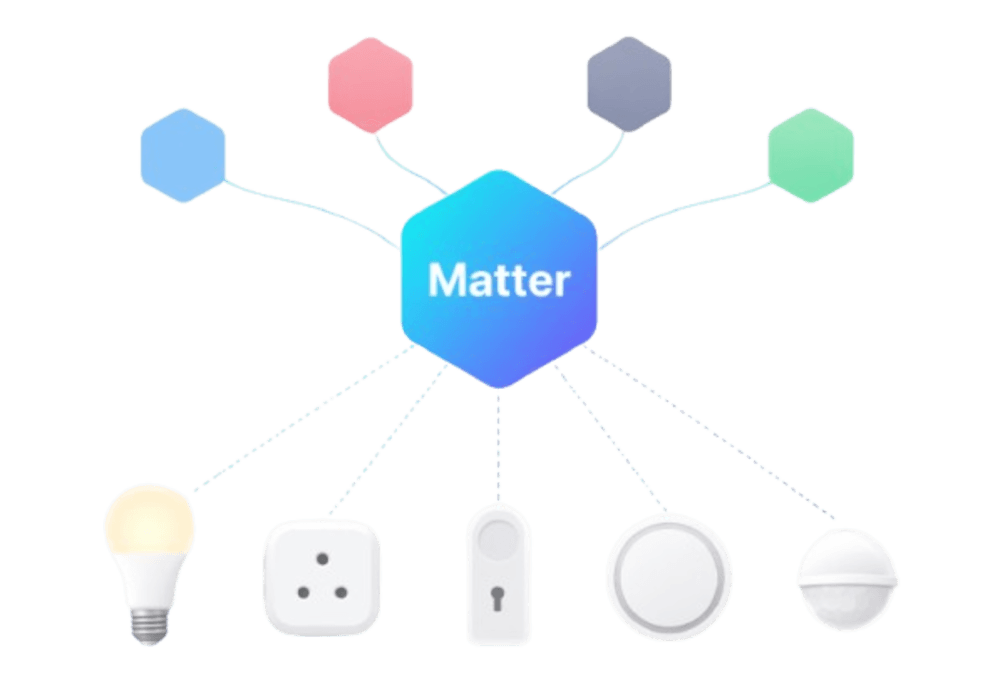
Matter is a universal smart home standard backed by Amazon, Google, Apple and Samsung. It solves the one problem that has defined home automation for a decade. A smart bulb built for Alexa historically would not pair with Apple HomeKit without a Home Assistant bridge or some other homebrew translator in the middle.
With Matter, one smart plug, lock or bulb pairs with every major voice assistant out of the box. You scan the Matter QR code on the device using the Alexa app, the Google Home app or the Apple Home app. Every hub in the house sees the same device and can control it. If you switch from an Echo to a Nest Hub next year, the Matter devices you already bought come along without re-pairing.
In 2026, Matter-ready product availability in India is still partial. Philips Hue, Nanoleaf Essentials, Eve Energy, Aqara and Amazon's own smart plugs carry the Matter logo. Most Indian brands including Wipro, Syska and Halonix have not shipped Matter firmware yet. When a product listing says "Matter Ready" or "Matter over Thread", paying the 15 to 30 percent premium is usually worth it. You are essentially buying insurance against ecosystem lock-in.
Zigbee, Z-Wave, Thread and Wi-Fi, and when each one actually matters
Under every smart home ecosystem sits a radio protocol. For most first-time buyers the protocol is invisible, but once you cross a dozen devices it starts to decide how reliable the whole network feels.
- Wi-Fi: The default for most Indian smart plugs, bulbs and WiFi cameras. No hub needed, the device connects directly to your router. The catch is that almost every budget smart device on Amazon India only supports 2.4 GHz Wi-Fi, which trips up a lot of setups on dual-band routers. Once a home crosses about 20 Wi-Fi smart devices, the router itself becomes the bottleneck.
- Zigbee: Low-power mesh network used by Philips Hue, Aqara sensors and most motion and door sensors sold in India. Needs a Zigbee hub in the middle. Echo 4th gen or later, Echo Hub, Samsung SmartThings, or a Philips Hue Bridge all work. Because every Zigbee device relays signals for the others, coverage actually improves as you add more devices.
- Z-Wave: An older mesh protocol mostly used for in-wall smart switches and smart locks. Better range than Zigbee, smaller device catalogue, and quite niche in India. Only worth considering if you already own a SmartThings hub.
- Thread: The newer IP-based mesh that Matter prefers. Lower latency than Zigbee and better behaviour when you have lots of battery-powered sensors. HomePod mini, Nest Hub 2nd gen, Apple TV 4K and Echo Hub can act as Thread border routers. It is still the smallest catalogue on Amazon India, so for 2026 most people will end up on Wi-Fi or Zigbee first, then add Thread later.
The ecosystem compatibility cheat sheet
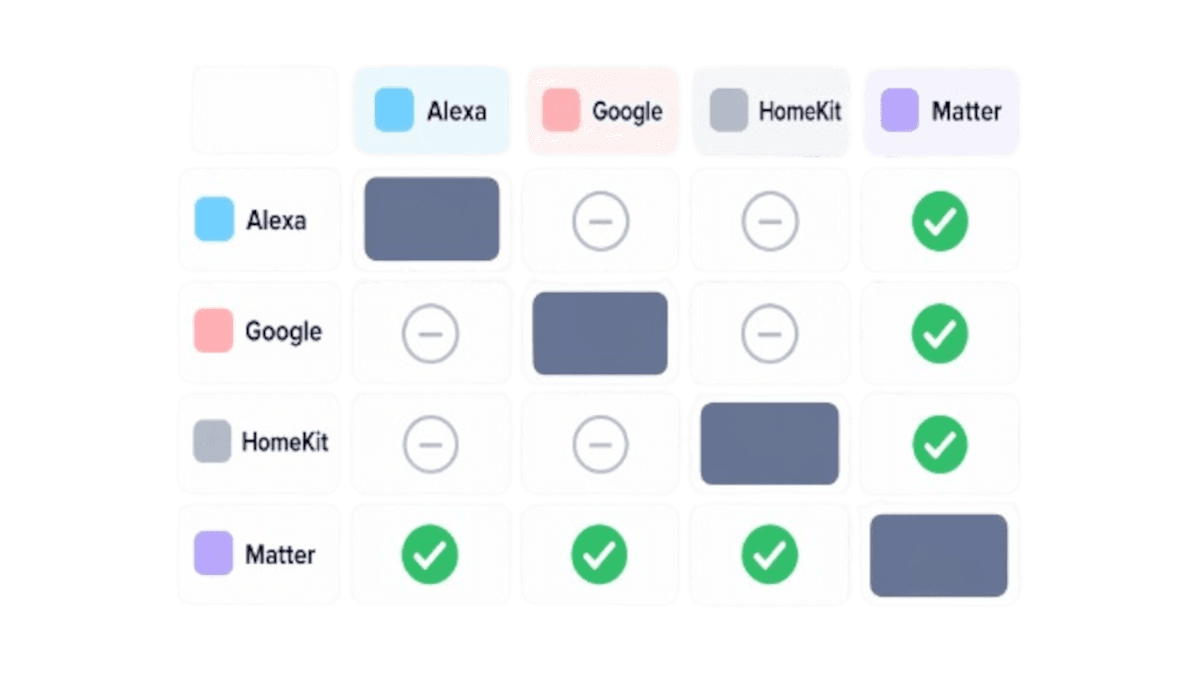
Two things jump out of the matrix. First, the Matter row and Matter column are the only ones with a green tick against every other ecosystem, which is exactly the reason Matter-ready gear is worth the premium. Second, SmartThings bridges more protocols than any single hub on the market, and that is why multi-protocol power users keep defaulting to it even though the app is fiddly.
How to pick your starter smart home ecosystem
This is a decision most people only make once, so it is worth spending ten minutes on. Three questions usually settle it.
- What phones does the household use? All iPhones, go Apple HomeKit. A mix of iPhone and Android, or Android-only, go Alexa or Google Home. HomeKit on an Android-majority household is painful.
- What is already plugged into the TV? A Fire TV Stick pulls the house toward Alexa. Chromecast with Google TV pulls you toward Google Home. An Apple TV 4K pulls you toward HomeKit. Fighting the existing streaming stack is wasted effort.
- What language do you actually speak to the assistant? Alexa has by far the best Hindi coverage in 2026, plus some Indian English accents Google still stumbles on. Google Assistant is catching up on Hinglish. Siri on HomeKit handles Indian English well but Hindi support is thin.
Still undecided after all three questions? Run the starter quiz in the card above. It picks a four-device smart home starter kit for you based on your budget band, voice assistant preference and whether you want to begin with smart lighting, home security, AC control or entertainment.
Five compatibility mistakes that cost Indian buyers real money
1. Buying HomeKit-only hardware without an Apple home hub
The Eve Energy smart plug is one of the best-reviewed plugs in the world, but on paper it works only with Apple HomeKit. Without a HomePod mini, HomePod 2nd gen or Apple TV 4K running as a home hub, you lose remote control, scenes and automations. Check the hub requirement before you add HomeKit-exclusive accessories to cart.
2. Mixing Zigbee brands without a single hub
Two Zigbee smart bulbs from different brands do not actually talk to each other directly. They need a Zigbee 3.0 hub, usually an Echo 4th gen, Echo Hub, Philips Hue Bridge or Aqara Hub M2, to coordinate them. Half the Philips Hue setups in India stall at the fifth bulb because the user assumed the bulbs would mesh by themselves.
3. Ignoring the 16A rating for water heaters and split ACs
Most smart plugs on Amazon India are 6A or 10A. A 2-litre geyser or a 1.5 ton split AC draws 13A to 16A at startup and will either refuse to switch on or melt the plug after a few weeks. For high-draw Indian appliances, buy an explicit 16A smart plug like the Wipro 16A or CP Plus 16A, or get a smart AC controller which reads the IR remote instead of switching the mains.
4. Assuming every Matter device runs on Thread
Matter is the application standard. Thread and Wi-Fi are two different transports Matter can ride on. A Matter over Wi-Fi smart plug still uses your router and shows the same 2.4 GHz quirks you already know. If you specifically want a Thread device for longer battery life, read the spec sheet and do not rely on the Matter logo alone.
5. Skipping the "Works with" line in the listing
Every Amazon India product page lists the supported voice assistants in a feature bullet near the top. Nine out of ten compatibility complaints we get by email come down to buyers who never read that line. Whenever in doubt, the Amazon listing itself is the ground truth, not a YouTube review.
When paying extra for Matter is actually worth it
Matter-ready smart home devices still carry a 15 to 30 percent premium over equivalent Wi-Fi-only products in India. The premium is worth paying in these cases.
- You genuinely are not sure which voice assistant you will stick with for the next few years. Matter buys you the option to change your mind without rebuying the hardware.
- You are buying a device that will stay in the same place for seven years or more. Smart locks, smart thermostats and in-wall smart switches fall in this bucket, and ecosystem lock-in hurts most on long-service hardware.
- The household runs on a mix of Android and iPhone, and everyone wants to control everything from their own phone without a second app.
The premium is not worth it for a ₹500 2.4 GHz Wi-Fi smart plug you expect to replace when the next Prime Day rolls around. Pay for Matter where the device will genuinely outlive your current voice assistant choice, and skip it on cheap throwaway gear.
Frequently asked
Which smart home ecosystems actually work in India in 2026?
Four ecosystems have real device availability on Amazon India: Amazon Alexa, Google Home, Apple HomeKit and Samsung SmartThings. Our compatibility checker filters products across all four, plus the underlying protocols Matter, Zigbee, Z-Wave and Wi-Fi. Most Indian homes settle on Alexa because Echo devices are the cheapest and the Hindi voice support is better than Google Assistant.
What is Matter and should I buy Matter-ready smart home devices?
Matter is a universal home automation standard backed by Amazon, Google, Apple and Samsung. A Matter-ready smart bulb, plug or lock works with every major voice assistant out of the box without the usual ecosystem lock-in. If you are setting up a smart home in 2026, paying the small Matter premium is worth it because you can switch between Alexa, Google Home or HomeKit later without rebuying every device.
Can Alexa and Google Home devices coexist in the same house?
Yes. A single smart bulb from Philips Wiz or TP-Link Tapo typically pairs with both Alexa and Google Assistant at the same time. You can say "Alexa, turn on the lights" and "Hey Google, turn off the lights" to control the same device. Our checker highlights these dual-ecosystem products with coloured badges so you can spot them at a glance.
Do I need a smart hub to get started?
For Wi-Fi smart plugs, bulbs and cameras the answer is no. They connect straight to your home router, which in most Indian homes runs on the 2.4 GHz band. Zigbee and Z-Wave devices do need a hub such as Samsung SmartThings Station or an Echo 4th gen that has a Zigbee radio built in. HomeKit accessories technically work without a hub, but you lose remote control and automations unless you add a HomePod mini or an Apple TV 4K.
Which smart home ecosystem is best for India?
For most buyers, Amazon Alexa is the most practical pick. Echo Dot 5th gen and Echo Pop go below ₹3,000 during Prime Day and Great Indian Festival, the Alexa app supports Hindi natively, and the product catalogue on Amazon India is the widest. Google Home is a close second with better natural language. Apple HomeKit works well only if every phone in the house is an iPhone.
Will my old Zigbee devices work with a new Matter hub?
Most Zigbee 3.0 sensors, bulbs and plugs can be bridged into a Matter network through a capable hub. An Echo 4th gen or Echo Hub, a Samsung SmartThings Station, or an Aqara Hub M2 can all expose existing Zigbee devices to Matter. The Zigbee device itself does not need any Matter certification for this bridging to work.
What is the difference between Thread and Zigbee?
Both are low-power mesh networks used by sensors, bulbs and locks. Zigbee has been around since 2007 and has the largest installed base in India through Philips Hue and Aqara. Thread is the newer IP-based mesh protocol, and it is the one Matter prefers. Thread gets you lower latency and slightly better range, but the current Thread product catalogue on Amazon India is still narrow.
Does Apple HomeKit work without an iPhone?
No. HomeKit setup runs through the Home app on iPhone or iPad, and iCloud is mandatory. You also need a home hub, usually a HomePod mini, HomePod 2nd gen or Apple TV 4K, to get remote access and automations. Android-only households should skip HomeKit and build around Alexa or Google Home instead.
Why do so many Indian smart devices need a 2.4 GHz Wi-Fi network?
Most budget smart home gadgets on Amazon India, from Wipro bulbs to Tapo plugs, only talk on 2.4 GHz Wi-Fi. The 5 GHz band uses a different radio and these devices do not support it. If your router broadcasts both bands under the same network name, temporarily split them during setup, or use the "Wi-Fi mode" setting in the Alexa or Google Home app to force a 2.4 GHz pairing.
Another free toolLive Amazon data
Product Face-Off: compare any 2 or 3 Amazon products liveLive prices, the real discount off MRP, sales rank popularity and specs, side by side with a plain-language verdict.