Appliances
Best Induction Cooktops That Save LPG Bills in Indian Kitchens
Subhadeep Ghosh26 min read
Introduction
Editor shortlist
Quick picks at a glance
Quick Comparison: Top 5 Induction Cooktops at a Glance
At a glance
Top 5 Induction Cooktop Comparison
Live Amazon.in prices, wattage, Indian presets and the best pick for your kitchen.
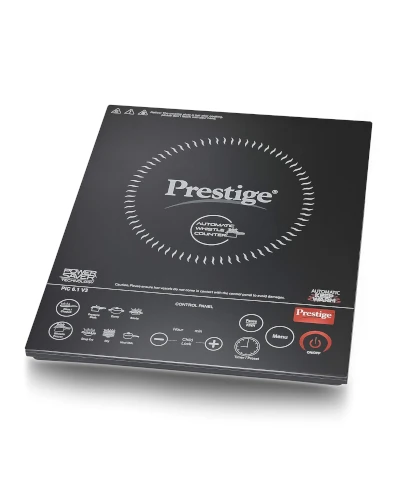
Prestige PIC 6.1 V3
Best Overall- Wattage
- 2200W
- Indian Presets
- 7 + Whistle Counter
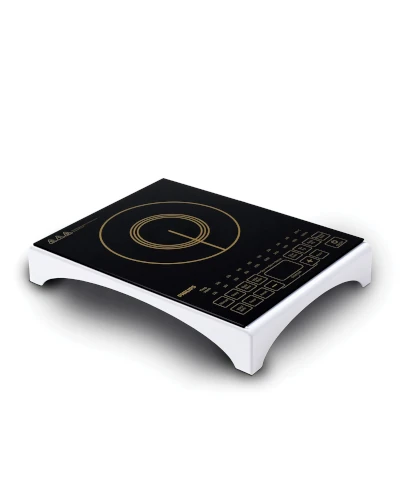
Philips HD4938
Best Premium- Wattage
- 2100W
- Indian Presets
- 10 Menus
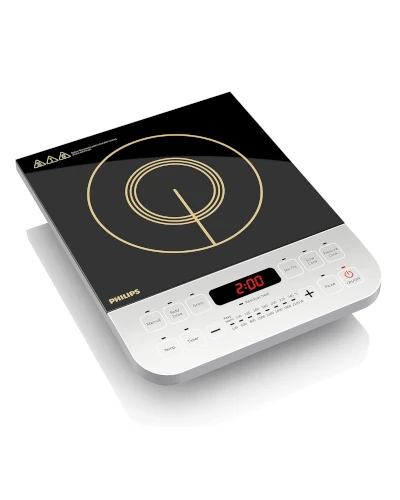
Philips HD4928
Best Value- Wattage
- 2100W
- Indian Presets
- 6 Menus
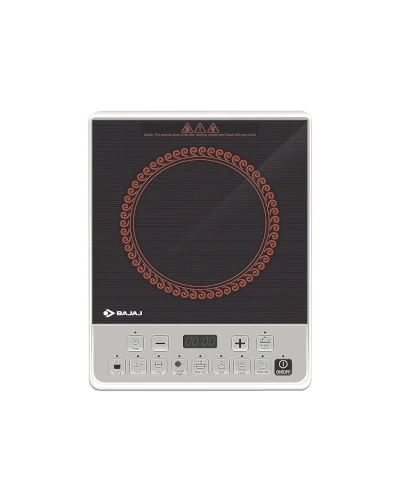
Bajaj ICX Pearl
Best Voltage Protection- Wattage
- 1900W
- Indian Presets
- 8 Menus
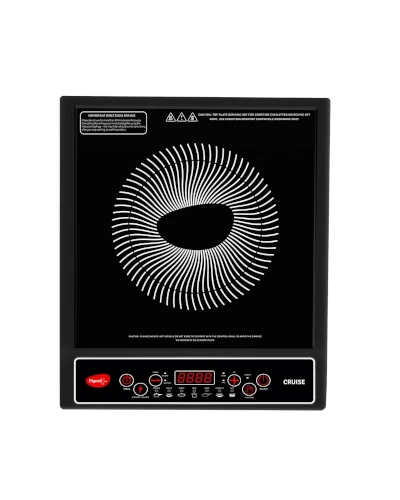
Pigeon Cruise
Best Budget- Wattage
- 1800W
- Indian Presets
- 7 Menus
| Product | Wattage | Indian Presets | Rating | Price |
|---|---|---|---|---|
01 Editor's top pick Prestige PIC 6.1 V3 Best Overall | 2200W | 7 + Whistle Counter | 4.0 Rated 4 out of 511,284 reviews | ₹4,788.00Save 22% Check Price on Amazon |
02 Philips HD4938 Best Premium | 2100W | 10 Menus | 4.2 Rated 4.2 out of 59,461 reviews | ₹5,249.00Save 8% Check Price on Amazon |
03 Philips HD4928 Best Value | 2100W | 6 Menus | 4.1 Rated 4.1 out of 553,738 reviews | ₹4,199.00Save 30% Check Price on Amazon |
04 Bajaj ICX Pearl Best Voltage Protection | 1900W | 8 Menus | 4.4 Rated 4.4 out of 5378 reviews | Rs 2,200-2,500 Check Price on Amazon |
05 Pigeon Cruise Best Budget | 1800W | 7 Menus | 4.0 Rated 4 out of 58,500 reviews | ₹1,999.00Save 37% Check Price on Amazon |
Amazon.in prices as of 03/10/2026. Details
What to Look for in Induction Cooktops for Indian Cooking
Induction Cooktop Buying Checklist
- Wattage (1800W-2200W)Higher wattage for faster cooking and pressure cookers
- Indian Menu PresetsDosa, Roti, Idli, Curry, Pressure Cook modes
- Voltage Protection4KV surge protection for Indian power conditions
- Pan DetectionAuto shut-off when cookware is removed
- Timer FunctionEssential for pressure cooking and slow cooking
- Warranty CoverageMinimum 1 year product, 2-3 years on coil
Complete Buying Guide for Induction Cooktops
Understanding How Induction Cooktops Work
Wattage Guide: What Power Do You Need?
- Light cooking like boiling water, making tea, and reheating
- Small families of 2-3 members with simple cooking needs
- Hostels, PG accommodations, and bachelor setups
- Occasional use as secondary cooking surface
- Most Indian cooking including deep frying and pressure cooking
- Families of 3-5 members with regular daily cooking
- Primary cooking surface for daily meals
- Balanced performance with moderate electricity consumption
- Large families of 5 or more members
- Heavy-duty cooking including large pressure cookers
- Professional-level heat for restaurant-style cooking
- Faster cooking times for busy households
1600W Cooktop
Rs 1,500-2,500
- Best For
- Light cooking
- Boiling Time (1L)
- 5-6 minutes
- Pressure Cooking
- Basic only
- Monthly Cost
- Rs 400-600
- Family Size
- 2-3 members
2000W Cooktop
Rs 2,500-5,000
- Best For
- All Indian cooking
- Boiling Time (1L)
- 3-4 minutes
- Pressure Cooking
- Full support
- Monthly Cost
- Rs 600-900
- Family Size
- 4-6 members
| Specification | 1600W CooktopRs 1,500-2,500 | Recommended2000W CooktopRs 2,500-5,000 |
|---|---|---|
| Best For | Light cooking | All Indian cooking |
| Boiling Time (1L) | 5-6 minutes | 3-4 minutes |
| Pressure Cooking | Basic only | Full support |
| Monthly Cost | Rs 400-600 | Rs 600-900 |
| Family Size | 2-3 members | 4-6 members |
Indian Menu Presets Explained
| Dish | Mode | Power Level | Typical Time |
|---|---|---|---|
| Dal Tadka | Curry/Slow Cook | 1000-1200W | 25-30 min |
| Pressure Cooker Rice | Pressure Cook | 1800-2000W | 3-4 whistles |
| Dosa | Dosa/Chapati | 1400-1600W | 2-3 min each |
| Deep Fried Pakoras | Deep Fry | 1800-2000W | 3-4 min batch |
| Idli | Steam/Idli | 1200-1400W | 12-15 min |
Dal Tadka
- Mode
- Curry/Slow Cook
- Power Level
- 1000-1200W
- Typical Time
- 25-30 min
Pressure Cooker Rice
- Mode
- Pressure Cook
- Power Level
- 1800-2000W
- Typical Time
- 3-4 whistles
Dosa
- Mode
- Dosa/Chapati
- Power Level
- 1400-1600W
- Typical Time
- 2-3 min each
Deep Fried Pakoras
- Mode
- Deep Fry
- Power Level
- 1800-2000W
- Typical Time
- 3-4 min batch
Idli
- Mode
- Steam/Idli
- Power Level
- 1200-1400W
- Typical Time
- 12-15 min
Voltage Protection for Indian Conditions
- 4KV Surge Protection (standard in Prestige, Philips, Bajaj)
- Auto voltage regulator that works in 130V-280V range
- IGBT chips rated for Indian power conditions
- Automatic shut-off during voltage spikes
Cookware Compatibility
Cookware Compatibility Guide
- Cast IronExcellent, traditional tawas work perfectly
- Stainless Steel (Magnetic)Most 18/10 steel with magnetic base works
- Induction-Ready Non-stickCheck for induction symbol on bottom
- Enameled Cast IronWorks well, includes brands like Le Creuset
- Aluminium (Regular)Does NOT work, not magnetic
- Copper/Glass/CeramicDoes NOT work on induction
10 Best Induction Cooktops for Indian Kitchen in India 2026
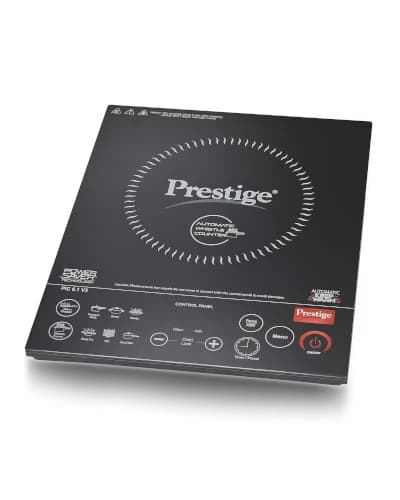
Best Overall
1. Prestige PIC 6.1 V3 2200W - Best Overall with Whistle Counter
The Prestige PIC 6.1 V3 revolutionizes Indian pressure cooking with its patented automatic whistle counter. This intelligent feature counts pressure cooker whistles and automatically turns off the cooktop once the preset count is reached, eliminating the need to monitor cooking constantly. With 2200W power output, it handles the heaviest pressure cookers with ease. The dual heat sensor technology ensures even heat distribution while the 4KV surge protection guards against Indian power fluctuations. Over 11,000 customers have rated this model, consistently praising its reliability for traditional Indian cooking. The 3-year warranty on the heating coil demonstrates Prestige confidence in their flagship model.
Key features
- Patented automatic whistle counter for hands-free pressure cooking
- 2200W high power output for fastest heating and heavy cookware
- 7 preset Indian menu options including Dosa, Idli, Curry, Pressure Cook
- Dual heat sensor technology for precise temperature control
- 4KV high voltage surge protection for Indian power conditions
- 3-year warranty on heating coil plus 1-year product warranty
- Soft touch control panel with LED display
- Anti-magnetic wall technology prevents interference with nearby electronics
What we like
- Unique whistle counter eliminates monitoring
- Highest 2200W power for fast cooking
- Excellent for pressure cooking families
- 3-year coil warranty is industry best
- Trusted Prestige service network
Watch out for
- Premium pricing compared to basic models
- Touch panel requires dry hands
- No temperature display in Celsius
- Slight fan noise during operation
Amazon.in price as of 03/10/2026. Details
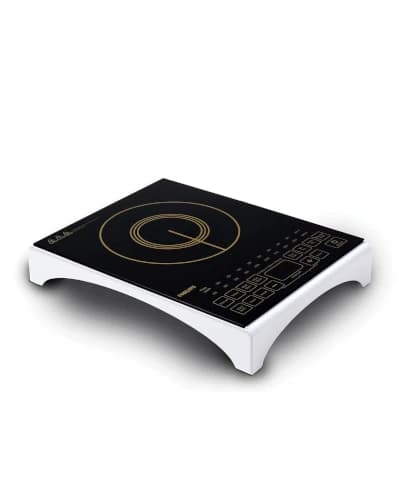
Best Premium
2. Philips HD4938/01 2100W Sensor Touch - Best Premium
The Philips Viva Collection HD4938 brings European engineering excellence to Indian kitchens with its sleek full glass panel and responsive sensor touch controls. The 2100W power output combined with 10 preset Indian menus makes it versatile for everything from delicate kheer to intense deep frying. What sets this model apart is the crystal glass surface that not only looks premium but is incredibly easy to clean, as spills cannot seep into buttons or crevices. With 4.2 stars from over 9,400 customer reviews, this Philips model has proven its reliability across thousands of Indian homes. The sensor touch responds instantly even with slightly wet hands, a practical consideration for busy kitchens.
Key features
- Full crystal glass panel with elegant black finish
- Sensor touch controls for easy operation and cleaning
- 2100W power output for fast and efficient cooking
- 10 preset Indian cooking menus programmed for local recipes
- Auto-off program for safety when unattended
- Cool-to-touch surface around cooking zone
- 1.2 meter cord length for flexible placement
- 2-year warranty with pan-India Philips service
What we like
- Premium glass panel design looks stunning
- Sensor touch is responsive and easy to clean
- 10 preset menus cover all Indian cooking
- Excellent Philips after-sales service
- Fast heating with 2100W power
Watch out for
- Higher price point for premium features
- Glass panel can crack if heavy pan dropped
- Touch controls need dry hands ideally
- No whistle counter feature
Amazon.in price as of 03/10/2026. Details
Best Value
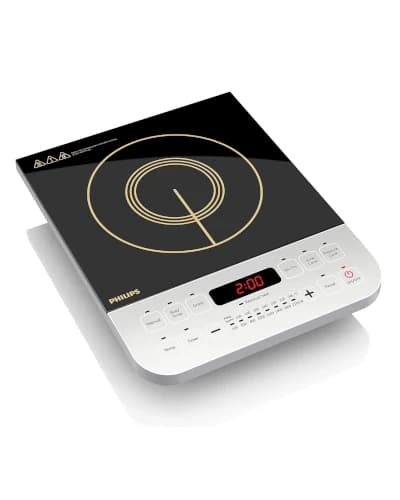
3. Philips HD4928/01 2100W Push Button - Best Value
With over 53,000 customer reviews and a 4.1 star rating, the Philips HD4928 is the most validated induction cooktop in the Indian market. This push-button variant offers the same 2100W Philips heating technology as its sensor touch sibling but at a more accessible price point. The physical buttons provide reliable tactile feedback, especially useful when your hands are wet or greasy from cooking. Six preset Indian menus cover everyday cooking needs while the soft touch button panel ensures comfortable operation. The crystal glass cooking surface is identical to the premium model, offering easy cleaning and durability. Philips nationwide service network with presence in tier-2 and tier-3 cities makes warranty claims hassle-free.
Key features
- 2100W power output identical to premium Philips models
- Soft touch push button controls with tactile feedback
- Crystal glass cooking surface for easy cleaning
- 6 preset Indian cooking menus for common dishes
- Auto-off program prevents accidents when left unattended
- Cool-to-touch surface minimizes burn risk
- 1.2 meter power cord for flexible placement
- 2-year warranty with excellent Philips service
What we like
- Most reviewed induction cooktop in India
- Push buttons work with wet or greasy hands
- Same Philips quality at lower price
- Over 53,000 reviews validate reliability
- Strong service network across India
Watch out for
- 6 presets versus 10 in sensor touch model
- Push buttons harder to clean than touch panel
- No temperature display feature
- Basic design compared to premium models
Amazon.in price as of 03/10/2026. Details
Budget Prestige
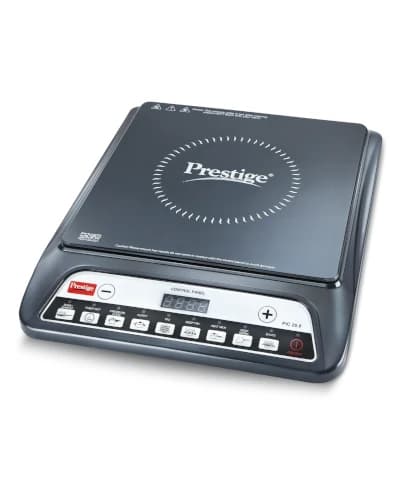
4. Prestige PIC 20 1600W - Best Budget Prestige
The Prestige PIC 20 delivers trusted Prestige quality and Indian cooking presets at an entry-level price point. With 8 preset Indian menu options and 1600W power, it handles everyday cooking tasks from morning chai to evening dinner with ease. The automatic power and temperature adjustment feature maintains optimal cooking conditions without manual intervention. While 1600W limits heavy pressure cooking, it is perfectly adequate for families of 3-4 members with moderate cooking needs. Over 3,000 positive reviews highlight its reliability and value for money. The 4KV surge protection ensures longevity even with Indian power fluctuations, a feature often missing in budget alternatives.
Key features
- 1600W power suitable for everyday cooking needs
- 8 preset Indian menu options including Roti, Dosa, Curry
- Automatic power and temperature adjustment
- 4KV high voltage surge protection
- Soft touch button control panel
- Easy to clean flat cooking surface
- Portable compact design for small kitchens
- 1-year warranty with Prestige service network
What we like
- Trusted Prestige brand at budget price
- 8 Indian presets cover most cooking
- Surge protection included
- Compact design fits small kitchens
- Reliable Prestige service network
Watch out for
- 1600W limits heavy pressure cooking
- Basic feature set compared to premium
- Some durability concerns in reviews
- No timer display in minutes
Amazon.in price as of 03/10/2026. Details
Best Mid-Range
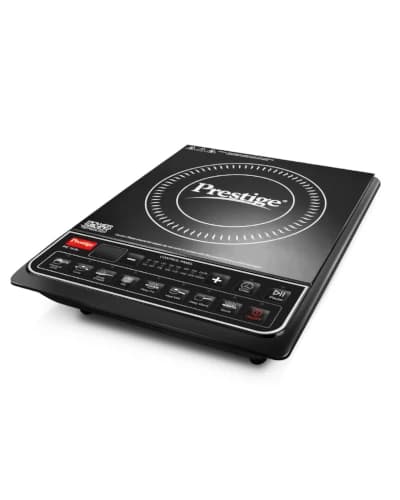
5. Prestige PIC 16.0 Plus 2000W - Best Mid-Range
The Prestige PIC 16.0 Plus strikes the perfect balance between features and price with its 2000W power output and 8 Indian preset menus. This mid-range model offers the power needed for pressure cooking and deep frying while maintaining the reliability that Prestige is known for. The automatic power and temperature adjustment ensures consistent results across different dishes. With Indian menu presets optimized for local cooking styles, you can prepare traditional dishes without manual temperature guessing. The push button interface provides reliable operation in busy kitchens where touch panels might struggle with wet or greasy fingers.
Key features
- 2000W power output handles pressure cookers easily
- 8 preset Indian menu options optimized for local cooking
- Automatic power and temperature adjustment
- 4KV surge protection for Indian power conditions
- Soft touch push button controls
- Timer function for precise cooking
- Protection against insects entering the unit
- 1-year warranty with Prestige service
What we like
- 2000W power at mid-range pricing
- Handles pressure cooking well
- Insect protection is practical for India
- Push buttons reliable in busy kitchens
- Good value for features offered
Watch out for
- Some reports of slow warranty service
- Basic display without temperature readout
- Fan noise noticeable during operation
- Cord length could be longer
Amazon.in price as of 03/10/2026. Details
Best Voltage Protection
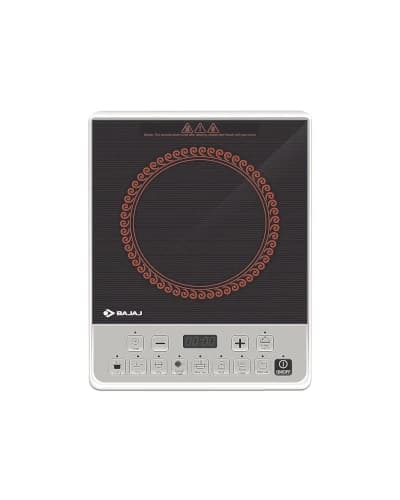
6. Bajaj Majesty ICX Pearl 1900W - Best for Voltage Fluctuations
The Bajaj Majesty ICX Pearl stands out with its Voltage Pro Technology that handles the extreme 130V-260V range common in Indian homes, especially in areas with unstable power supply. This makes it the safest choice for tier-2 and tier-3 cities where voltage fluctuations are frequent. With 1900W power and 8 preset cooking functions, it delivers reliable performance for everyday Indian cooking. The pan sensor technology automatically detects cookware and prevents operation without proper induction-compatible pots. Customer reviews consistently highlight its durability and performance under challenging power conditions where other brands fail.
Key features
- Voltage Pro Technology handles 130V-260V range
- 1900W power output for standard Indian cooking
- 8 preset cooking functions with Indian dishes
- Pan sensor technology for automatic detection
- Crystal glass top for easy cleaning
- IGBT technology for efficient power conversion
- Automatic shut-off for safety
- 1-year warranty with Bajaj service network
What we like
- Best voltage fluctuation handling
- Works in 130V-260V extreme range
- Reliable Bajaj brand quality
- Pan sensor prevents accidents
- Good value at this price point
Watch out for
- 1900W slightly less than competitors
- Basic feature set
- Mixed reviews on long-term durability
- Fan can be noisy
Best Budget
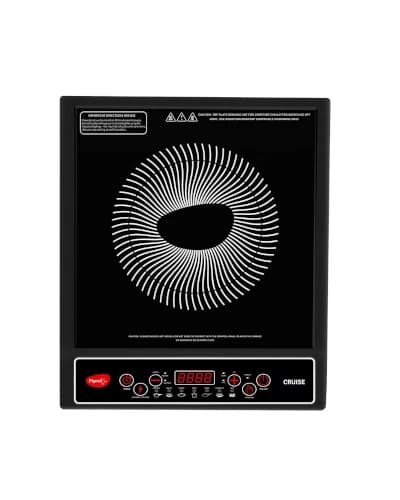
7. Pigeon by Stovekraft Cruise 1800W - Best Budget Option
The Pigeon Cruise 1800W delivers essential induction cooking features at the lowest price point in our selection, making it perfect for budget-conscious buyers, students, and those trying induction cooking for the first time. Despite the budget pricing, it includes 7 preset menus, a 7-segment LED display, and auto switch-off for safety. The crystal glass top is the same quality as more expensive models, ensuring durability and easy cleaning. With 93% energy saving technology, it delivers the cost benefits of induction cooking without the premium price tag. Ideal for PG accommodations, hostels, or as a backup cooking option.
Key features
- 1800W power output at budget-friendly pricing
- 7 preset cooking menus for Indian dishes
- 7-segment LED display for clear visibility
- Auto switch-off for safety when unattended
- Crystal glass top for durability and easy cleaning
- 93% energy saving technology
- Smart timer function for precise cooking
- 1-year warranty with Stovekraft service
What we like
- Lowest price for a quality induction
- Essential features all included
- 7 presets cover basic cooking needs
- Crystal glass same as premium models
- Perfect for students and bachelors
Watch out for
- 1800W limits heavy cooking
- Build quality reflects budget segment
- Short cable length reported
- Customer service can be slow
Amazon.in price as of 03/10/2026. Details
Best Havells
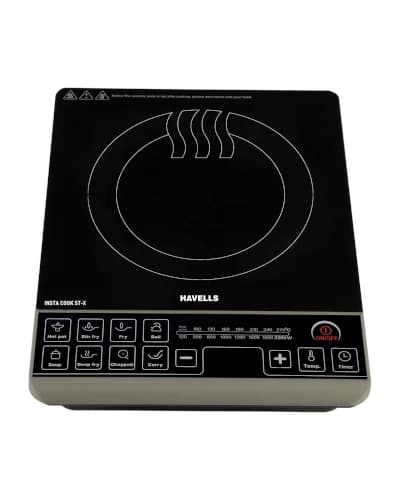
8. Havells Insta Cook ST-X 2000W - Best Havells Option
Havells brings its trusted home appliance expertise to the induction cooktop segment with the Insta Cook ST-X. The 2000W power output combined with 8 pre-set cooking menu controls makes it versatile for all Indian cooking needs. The soft touch control panel provides comfortable operation while the LED display shows power levels clearly. One reviewer noted using this model for almost 6 years without any complaints, highlighting the durability Havells is known for. The 3-hour timer function is particularly useful for slow cooking dishes like rajma or chole that require extended simmering.
Key features
- 2000W power output for efficient cooking
- 8 pre-set cooking menu controls
- Soft touch control panel with LED display
- 3-hour timer for precise cooking control
- Auto pan detection sensor
- Automatic shut-off for safety
- Sleek black design fits modern kitchens
- 1-year warranty with Havells service network
What we like
- Trusted Havells brand quality
- 6+ year lifespan reported by users
- 8 presets cover Indian cooking
- 3-hour timer is useful feature
- Good service network
Watch out for
- Premium pricing for Havells brand
- Some reports of initial adhesive issues
- Mixed reviews on durability
- Basic display without temperature
Best Usha
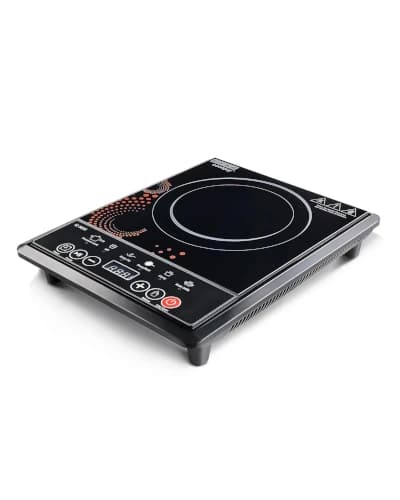
9. Usha Cook Joy 3616 1600W - Best Usha Option
The Usha Cook Joy 3616 combines traditional Usha reliability with modern induction technology. With 1600W power and 5 preset cooking options, it handles everyday Indian cooking tasks efficiently. What sets this model apart is the multiple power level options from 120W to 1600W, giving you precise control over heat intensity for different cooking requirements. Customers praise its quick heating, noting that water boils faster than on gas stoves. The sleek design with LED digital display adds a modern touch to any kitchen. At its price point, it offers excellent value for families looking for a reliable secondary cooking option or primary induction for light cooking.
Key features
- 1600W power with variable settings from 120W-1600W
- 5 preset cooking options for everyday dishes
- Digital LED display for easy monitoring
- Timer function for precise cooking control
- Overheat protection for safety
- Sleek modern design in black finish
- Compact and portable for small kitchens
- 1-year warranty with Usha service
What we like
- Wide power range from 120W-1600W
- Fast heating praised by customers
- Sleek modern design
- Good value for money
- Reliable Usha brand
Watch out for
- 1600W limits heavy cooking
- Only 5 preset options
- Basic feature set
- Less known in induction segment
Amazon.in price as of 03/10/2026. Details
Energy Efficient
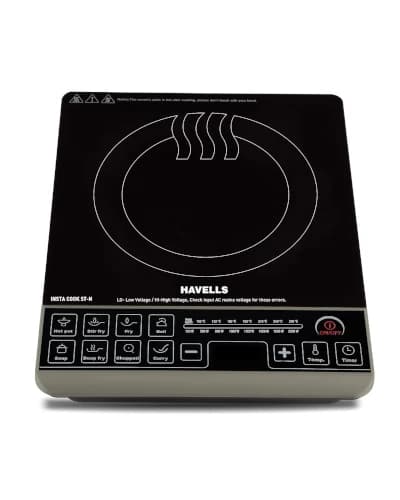
10. Havells Insta Cook ST-N 2000W - Best Energy Efficient
The Havells Insta Cook ST-N is marketed as an energy efficient induction cooktop, designed to minimize electricity consumption while delivering full cooking performance. The 2000W copper coil with 3-year warranty ensures long-term reliability and efficient heat transfer. Nine cooking options cover a wide range of Indian dishes from quick stir-fries to slow-cooked curries. The digital LED display provides clear visibility of settings while the auto pan detection prevents operation without proper cookware. The crystal glass surface is both durable and easy to clean, maintaining its appearance even after years of use.
Key features
- Energy efficient design with 2000W copper coil
- 9 cooking options for versatile Indian cooking
- Digital LED display for clear visibility
- Auto pan detection sensor for safety
- Crystal glass surface for durability
- 3-year warranty on copper coil
- Sleek modern design
- 1-year product warranty with Havells service
What we like
- 3-year coil warranty is excellent
- Energy efficient design
- 9 cooking options are generous
- Crystal glass is durable
- Trusted Havells quality
Watch out for
- Premium pricing
- Some availability issues reported
- Basic temperature control
- Fan noise during operation
Understanding Induction Cooktop Technology for Indian Cooking
How Indian Cooking Benefits from Induction
Energy Efficiency Calculations for Indian Homes
| Cooking Method | Efficiency | Monthly Cost | Annual Cost |
|---|---|---|---|
| LPG Gas (2 cylinders) | 40% | Rs 1,800-2,000 | Rs 21,600-24,000 |
| Induction (2000W, 3hr/day) | 90% | Rs 1,000-1,200 | Rs 12,000-14,400 |
| Electric Coil Stove | 55% | Rs 1,400-1,600 | Rs 16,800-19,200 |
LPG Gas (2 cylinders)
- Efficiency
- 40%
- Monthly Cost
- Rs 1,800-2,000
- Annual Cost
- Rs 21,600-24,000
Induction (2000W, 3hr/day)
- Efficiency
- 90%
- Monthly Cost
- Rs 1,000-1,200
- Annual Cost
- Rs 12,000-14,400
Electric Coil Stove
- Efficiency
- 55%
- Monthly Cost
- Rs 1,400-1,600
- Annual Cost
- Rs 16,800-19,200
India-Specific Considerations
Power Supply Challenges
Regional Cooking Considerations
Safety Features Explained
Essential Safety Features
Safety Features Comparison
- Auto Pan DetectionAll models include this essential feature
- Overheat ProtectionStandard in quality brands like Prestige, Philips
- 4KV Surge ProtectionCritical for Indian power - check before buying
- Child LockAvailable in premium models like Philips HD4938
- Timer Auto Shut-offMost models include basic timer function
- Whistle CounterUnique to Prestige PIC 6.1 V3
Installation and Setup Guide
Induction Cooktop Setup Process
- 1
Choose the Right Location
Place on a flat, stable, heat-resistant surface near a power outlet. Ensure adequate ventilation for the cooling fan. Keep away from water sources and ensure nothing blocks the air vents underneath.
Pro tip: Leave at least 10cm clearance on all sides for proper air circulation.
- 2
Check Electrical Requirements
Verify your socket is rated for the cooktop wattage. A 2000W cooktop needs a minimum 10A socket, preferably 16A for safety margin. Check earthing is proper using a socket tester.
Warning: Never use extension cords or multi-plug adapters with induction cooktops. Direct wall socket connection is mandatory.
- 3
Gather Compatible Cookware
Test your existing pots and pans with a magnet. If it sticks firmly, the cookware is compatible. You may need to invest in new induction-ready cookware, especially if you have aluminium utensils.
Pro tip: Start with a good quality induction-compatible pressure cooker and flat tawa, the most used items in Indian kitchens.
- 4
Initial Setup and Testing
Place the cooktop, plug in, and turn on. Most models have a demo mode or will beep to confirm power. Place a compatible pan with water and test heating. Verify all preset modes work correctly.
- 5
Learn the Controls
Spend time understanding each preset mode and manual controls. Test different power levels to understand how they affect cooking. Read the manual for specific tips on your model.
Cookware Investment Guide
| Item | Best Material | Price Range | Recommended Brands |
|---|---|---|---|
| Pressure Cooker 5L | Stainless Steel | Rs 2,000-4,000 | Prestige, Hawkins, Pigeon |
| Kadhai/Wok | Cast Iron/Tri-ply | Rs 1,000-3,000 | Lodge, Meyer, Vinod |
| Flat Tawa | Cast Iron | Rs 500-1,500 | Lodge, Hawkins, Local |
| Saucepan Set | Stainless Steel | Rs 1,500-4,000 | Vinod, Meyer, Bergner |
| Non-stick Pan | Induction-ready | Rs 800-2,500 | Prestige Omega, Hawkins |
Pressure Cooker 5L
- Best Material
- Stainless Steel
- Price Range
- Rs 2,000-4,000
- Recommended Brands
- Prestige, Hawkins, Pigeon
Kadhai/Wok
- Best Material
- Cast Iron/Tri-ply
- Price Range
- Rs 1,000-3,000
- Recommended Brands
- Lodge, Meyer, Vinod
Flat Tawa
- Best Material
- Cast Iron
- Price Range
- Rs 500-1,500
- Recommended Brands
- Lodge, Hawkins, Local
Saucepan Set
- Best Material
- Stainless Steel
- Price Range
- Rs 1,500-4,000
- Recommended Brands
- Vinod, Meyer, Bergner
Non-stick Pan
- Best Material
- Induction-ready
- Price Range
- Rs 800-2,500
- Recommended Brands
- Prestige Omega, Hawkins
Maintenance and Care Guide
Daily Care
- Wipe after each use: Let the cooktop cool, then wipe with a damp cloth. This prevents food residue from hardening.
- Clean spills immediately: Sugar and syrup spills can damage the glass if heated repeatedly. Clean as soon as possible.
- Check ventilation: Ensure the air vents are not blocked by cloths or papers.
Weekly Maintenance
- Deep clean glass surface: Use a ceramic cooktop cleaner or a paste of baking soda and water for stubborn stains.
- Clean control panel: Wipe gently with a slightly damp cloth, avoiding excess moisture.
- Check power cord: Inspect for any damage or wear.
What to Avoid
- Abrasive cleaners: Can scratch the glass surface permanently.
- Excess water: Never let water seep into control panels or vents.
- Dragging cookware: Always lift pans to avoid scratching the glass.
- Oversized cookware: Pans extending beyond the cooking zone waste energy and can overheat handles.
- Empty pan heating: Never heat an empty pan as it can damage both the cooktop and cookware.
Induction Cooktop Comparison Table
| Model | Wattage | Price Range | Presets | Best For |
|---|---|---|---|---|
| Prestige PIC 6.1 V3 | 2200W | Rs 5,500-6,200 | 7 + Whistle Counter | Pressure cooking |
| Philips HD4938 | 2100W | Rs 3,700-4,400 | 10 Menus | Premium touch panel |
| Philips HD4928 | 2100W | Rs 3,300-3,700 | 6 Menus | Best value overall |
| Bajaj ICX Pearl | 1900W | Rs 2,200-2,500 | 8 Menus | Voltage protection |
| Pigeon Cruise | 1800W | Rs 1,200-1,500 | 7 Menus | Budget buyers |
| Havells ST-X | 2000W | Rs 3,200-3,800 | 8 Menus | Durability |
Prestige PIC 6.1 V3
Rs 5,500-6,200Wattage: 2200W
Presets: 7 + Whistle Counter
Best For: Pressure cooking
Philips HD4938
Rs 3,700-4,400Wattage: 2100W
Presets: 10 Menus
Best For: Premium touch panel
Philips HD4928
Rs 3,300-3,700Wattage: 2100W
Presets: 6 Menus
Best For: Best value overall
Bajaj ICX Pearl
Rs 2,200-2,500Wattage: 1900W
Presets: 8 Menus
Best For: Voltage protection
Pigeon Cruise
Rs 1,200-1,500Wattage: 1800W
Presets: 7 Menus
Best For: Budget buyers
Common Issues and Troubleshooting
Cooktop Not Detecting Pan
Ensure the cookware is induction compatible by testing with a magnet. The pan must be flat-bottomed and centered on the cooking zone. Some cooktops require minimum pan diameter of 12cm. If using correct cookware, the pan detection sensor may need servicing.Cooktop Turning Off Unexpectedly
This usually indicates overheating protection activating. Ensure ventilation vents are not blocked. Let the cooktop cool for 10-15 minutes before resuming. If problem persists, check if your pan is warped, as uneven contact can trigger safety shutoff. Voltage fluctuations can also cause this - consider a stabilizer.Error Codes Displaying
Consult your user manual for specific error codes. Common codes indicate pan detection failure (E0/E1), overheating (E4/E5), voltage issues (E6/E7), or sensor problems (E8/E9). Most errors clear after addressing the cause and restarting. Persistent errors require service center visit.Uneven Heating
Check if the cookware bottom is flat - warped pans cause uneven contact. Ensure the pan is centered on the cooking zone. Some induction cooktops have hot spots near the center. Using a heavy-bottomed pan like cast iron provides more even heat distribution.Loud Humming or Buzzing
Some noise is normal, especially with lightweight cookware. The magnetic field can cause vibration in thin pan bottoms. Using heavier cookware like cast iron or tri-ply stainless steel reduces noise significantly. High-pitched whining at high power is common and not a defect.Best Picks by Category
Best Overall
Prestige PIC 6.1 V3 at Rs 5,500-6,200. The patented whistle counter revolutionizes pressure cooking. 2200W power, 7 Indian presets, 3-year coil warranty. Ideal for families who frequently use pressure cookers.
Best Premium
Philips HD4938 at Rs 3,700-4,400. Elegant sensor touch glass panel with 10 preset Indian menus. Perfect for modern kitchens wanting both performance and aesthetics.
Best Value
Philips HD4928 at Rs 3,300-3,700. Over 53,000 positive reviews validate its reliability. Philips quality at accessible pricing with practical push buttons.
Best for Unstable Power
Bajaj ICX Pearl at Rs 2,200-2,500. Voltage Pro Technology handles 130V-260V range. Perfect for tier-2 cities and areas with frequent voltage fluctuations.
Best Budget
Pigeon Cruise 1800W at Rs 1,200-1,500. Essential features at the lowest price. Perfect for students, bachelors, and those trying induction cooking for the first time.
Best for Durability
Havells Insta Cook ST-X at Rs 3,200-3,800. Users report 6+ years of reliable operation. Trusted Havells quality with comprehensive service network.
Conclusion
Quick answers
Discussion
Be the first to comment