The ecobee Smart Thermostat Premium is the best smart thermostat for most American homes in 2026. It bundles a SmartSensor for room-level comfort, built-in Alexa, indoor air quality monitoring, and works across every major platform. If you want the cleanest Google Home experience, the Google Nest Learning Thermostat 4th Gen is the premium alternative with an included temperature sensor and Matter support. For the best budget smart thermostat, the Amazon Smart Thermostat starts at $79 and often drops lower with utility rebates.
Picking the best smart thermostat in the USA is harder than most review sites suggest. The real challenge is not ranking features on paper. It is matching a thermostat to your specific HVAC system, wiring, smart home platform, and the actual comfort problem you are trying to solve.
One caveat before you shop: every thermostat here needs ductwork and a wall wire. If the room you actually want to fix is a garage or an addition with no ducts, a ductless system is the right answer, and our best mini split heat pump for garage guide covers sizing and circuit requirements. A buyer with a single-stage furnace in a one-story ranch has completely different needs than someone with a multi-stage heat pump in a three-story colonial with hot spots upstairs.
That is why this guide goes deeper than the usual product roundup. After testing and researching these 8 smart thermostats across real American home scenarios, we focus on the details that actually determine whether a thermostat improves your life or creates daily friction. Compatibility, sensor effectiveness, app reliability, ecosystem lock-in, and long-term energy savings matter more than a spec sheet comparison.
The smart thermostat market in 2026 has also shifted. The Honeywell Home X8S brings a 5-inch touchscreen with Matter and video doorbell integration. ecobee now covers budget to premium with three distinct models. And Google's Nest 4th Gen with its included sensor has changed what premium buyers should expect in the box. This guide reflects where the market actually is right now, not where it was two years ago.
Quick Comparison: Top 8 Smart Thermostats in the USA
At a glance
Best Smart Thermostat USA 2026 Comparison
Street price, room sensor, ecosystem fit and the best pick for each kind of home.
Why Smart Thermostats Matter More in American Homes
American homes are different from most other markets because the thermostat sits at the center of whole-home climate control. It is not managing a single room split AC. It is controlling a central furnace, air conditioner, heat pump, and sometimes a humidifier or ventilation system all at once. A weak thermostat choice affects every room in the house.
The financial case is straightforward. Heating and cooling represent roughly 50% of the average US household's energy bill according to the Department of Energy. That makes HVAC the single largest controllable energy expense in most homes. A smart thermostat does not magically fix poor insulation or an oversized furnace, but it reduces waste through better scheduling, occupancy detection, geofencing, and demand-response participation.
Utility rebates add another layer. Many US electric and gas utilities subsidize ENERGY STAR certified connected thermostats. In some regions, a $250 thermostat can drop to $150 or less after rebate. That changes the payback math from years to months for households with significant heating and cooling costs.
What Competitor Articles Usually Miss
Most smart thermostat roundups focus on feature comparisons and overall ratings. The more useful differentiators for real buyers are HVAC compatibility, wiring requirements, sensor effectiveness in multi-story homes, and actual energy savings after 6 months of use. A thermostat that earns 4.5 stars can still be the wrong product if it does not match your heat pump configuration or smart home platform.
That is why this guide separates premium options from mid-range value picks and budget buys, then matches each product to the buyer scenario where it genuinely shines. If your main problem is a bedroom that is always too hot in summer, the right thermostat is different from the one you need if your main goal is voice-controlled scheduling. For a hot room, a ceiling fan often does more than a thermostat tweak, and our best smart ceiling fans for large rooms guide pairs a fan with a smart thermostat to raise your setpoint about 4 degrees and cut summer cooling costs.
What to Look for Before You Buy a Smart Thermostat
Smart Thermostat Buying Checklist for USA Homes
Verify HVAC compatibility firstCheck single-stage, multi-stage, heat pump, dual-fuel, or accessory support before comparing features
Check your C-wire situationMost smart thermostats work best with a C-wire - some include adapters, others require one
Match the right ecosystemGoogle Home, Alexa, Apple HomeKit, SmartThings, or Matter should match your existing smart home
Decide if room sensors matterCritical for multi-story homes, finished basements, and rooms with persistent hot or cold spots
Check ENERGY STAR and utility rebatesConnected ENERGY STAR models qualify for utility incentives that can cut the real price significantly
Consider humidity and accessory controlRelevant if you run whole-home humidification, dehumidification, or ERV ventilation
Test app quality before committingDownload the manufacturer app and read recent reviews - bad software ruins a good thermostat
Plan for professional install if neededDual-fuel, multi-stage, or unusual wiring setups often need an HVAC technician
Complete Buying Guide: Choosing the Right Smart Thermostat
HVAC Compatibility - Furnaces, Heat Pumps, and Multi-Stage Systems
The most expensive thermostat mistake is buying by brand instead of by wiring. Every smart thermostat in this guide works with standard single-stage furnaces and central air conditioners. That covers most American homes built before 2010 with a straightforward heating and cooling setup.
Heat pump compatibility is the first filter that narrows the field. If your home uses a heat pump with auxiliary electric heat strips, you need a thermostat that supports O/B terminal wiring and can manage the switchover between heat pump and backup heating. The ecobee Premium, Nest 4th Gen, Honeywell T9, and Sensi Touch 2 all handle standard heat pump setups well.
Multi-stage and dual-fuel systems are where things get more complex. If your HVAC has two-stage heating, two-stage cooling, or a hybrid system that switches between a heat pump and a gas furnace, you need to verify terminal-by-terminal compatibility. Use the manufacturer's compatibility checker on their website before you order. Brands like ecobee, Honeywell, and Emerson Sensi all offer online tools that walk you through your wiring labels.
The C-Wire Question - Do You Have One?
The C-wire (common wire) provides constant 24V power to your smart thermostat. Without it, some thermostats struggle to maintain WiFi connectivity, drain their batteries faster, or behave unpredictably during heating and cooling cycles.
If you have a C-wire, your decision is simple. Every thermostat in this guide works perfectly with a C-wire connected. Pull off your existing thermostat faceplate and look for a wire connected to the C terminal. If you see it, you are in good shape.
If you do not have a C-wire, your options depend on the thermostat brand. ecobee models ship with a Power Extender Kit (PEK) that repurposes an existing wire to provide C-wire functionality in many setups. The Google Nest Thermostat 2020 can use a Nest Power Connector in compatible systems. The Amazon Smart Thermostat requires a C-wire with no workaround, so skip it if your wiring does not have one.
Older homes built before the 1990s often have only 2 or 4 wires running to the thermostat location. In these cases, you may need to run a new wire (usually a job for an electrician or HVAC tech) or choose a thermostat with a reliable C-wire workaround like ecobee's PEK.
Room Sensors - When They Actually Make Your Home More Comfortable
Room sensors solve a real problem that most homeowners experience but few can name: the thermostat reads 72 degrees in the hallway, but the upstairs bedroom is 78 and the basement office is 66. A single temperature reading from one spot on one wall cannot reflect the actual conditions in every room.
Room sensors change this by measuring temperature (and sometimes humidity or occupancy) in the rooms that actually matter to you. Instead of the hallway dictating comfort, you can tell the thermostat to prioritize the nursery at night, the home office during work hours, or the living room in the evening.
Three thermostats in this guide handle room sensors well. The ecobee Premium includes one SmartSensor and supports up to 20 additional sensors. The Nest 4th Gen includes one Nest Temperature Sensor with support for more. The Honeywell Home T9 includes one Smart Room Sensor that tracks both temperature and humidity.
When sensors are worth the investment: multi-story homes, homes with finished basements or attics, homes where one room consistently runs hotter or colder than the rest, nurseries, and home offices where one person spends most of the day.
When sensors are unnecessary: small single-story homes with good insulation, apartments with even temperature distribution, or homes where the thermostat location already reflects the most-used living space.
A sensor tells the furnace where to aim heat, but it cannot add heat to a room the ductwork barely reaches. For a bonus room, a converted garage, or a bedroom above one, our guide to the best smart space heaters for large rooms covers the zone-heating options that fix the problem directly.
Ecosystem and Platform Fit - Alexa, Google, Apple, or Matter
Choosing the wrong ecosystem is the second most common thermostat buying mistake after ignoring wiring. A thermostat that works beautifully in a Google Home household can feel frustrating in an Alexa house because the voice commands, automations, and app integrations do not work the same way.
For Google Home households: The Nest 4th Gen is the obvious first choice. The Nest Thermostat 2020 is the budget alternative. Both integrate tightly with the Google Home app, Google Assistant routines, and Nest ecosystem features.
For Alexa households: The ecobee Premium is the premium pick because of its built-in Alexa speaker. The Amazon Smart Thermostat is the budget choice. Both work natively with Alexa routines and Ring integration.
For Apple HomeKit households: ecobee (all models) and the Sensi Touch 2 are the strongest picks. Google Nest products do not support HomeKit natively, though Matter support on the Nest 4th Gen partially bridges this gap.
For mixed-platform or Matter-first homes: The Honeywell Home X8S and Google Nest 4th Gen both support Matter, which means they can work across ecosystems without vendor lock-in. This matters most if you are building a smart home that you do not want tied to a single assistant.
Energy Savings and Utility Rebates in the USA
The energy savings question is the one most buyers care about but rarely get a straight answer on. Here is what we know from real-world data.
The US Department of Energy and ENERGY STAR estimate that properly used smart thermostats save about 8% on heating and cooling costs. For the average American household spending roughly $600 per year on heating and cooling, that translates to about $50 per year in savings.
Savings increase significantly if you currently have poor thermostat habits - leaving the system running while away, heating or cooling empty rooms, or maintaining the same temperature 24/7. Homes in extreme climate zones (upper Midwest winters, deep South summers) also see larger absolute dollar savings because the baseline spend is higher.
Utility rebates are the multiplier that most buyers underestimate. Here are some examples of what US utilities have offered:
TableSample Smart Thermostat Utility Rebates (Varies by Region)
Utility
Typical Rebate
Notes
Con Edison (NY)
$50-$85
Instant rebate on qualifying models
Duke Energy (SE)
$75-$100
Mail-in or online rebate
PG&E (CA)
$50-$120
Varies by program year
ComEd (IL)
Up to $100
Marketplace discount at checkout
Xcel Energy (CO/MN)
$50-$75
Enrolled ENERGY STAR models
National Grid (NE)
$25-$100
Through online marketplace
Con Edison (NY)
Typical Rebate
$50-$85
Notes
Instant rebate on qualifying models
Duke Energy (SE)
Typical Rebate
$75-$100
Notes
Mail-in or online rebate
PG&E (CA)
Typical Rebate
$50-$120
Notes
Varies by program year
ComEd (IL)
Typical Rebate
Up to $100
Notes
Marketplace discount at checkout
Xcel Energy (CO/MN)
Typical Rebate
$50-$75
Notes
Enrolled ENERGY STAR models
National Grid (NE)
Typical Rebate
$25-$100
Notes
Through online marketplace
8 Best Smart WiFi Thermostats for Home in the USA for 2026
The best smart thermostat for most American homes in 2026 is the ecobee Smart Thermostat Premium at $230 to $250. It bundles a SmartSensor, indoor air quality monitoring, built-in Alexa, and works with Google Home, Apple HomeKit, and SmartThings. For budget buyers, the Amazon Smart Thermostat at $79 delivers basic smart scheduling and Alexa control for the lowest credible price in this category.
Best Overall
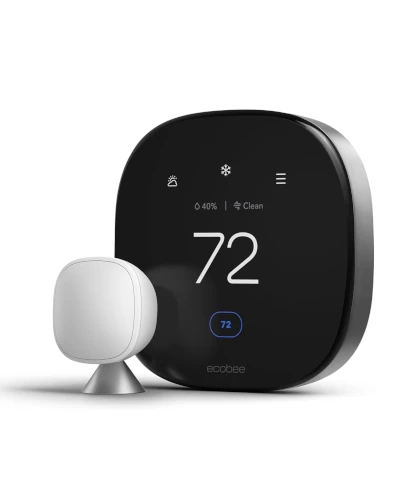
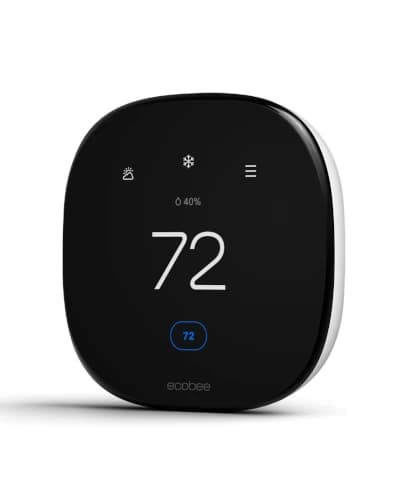
1. ecobee Smart Thermostat Premium - Best Overall Smart Thermostat
Rated 4.6 out of 54.6· 739 reviews
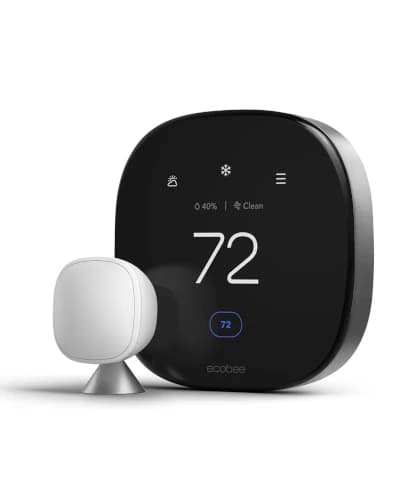
The ecobee Smart Thermostat Premium is the most complete smart thermostat you can buy in the USA right now. It includes a SmartSensor in the box, a built-in Alexa speaker with microphone, indoor air quality monitoring for temperature, humidity, and VOC levels, and broad platform support across Alexa, Google Home, Apple HomeKit, and SmartThings. At $230 to $250, it costs premium money but delivers premium value that cheaper alternatives cannot match.
Key features
Included SmartSensor for room-level temperature prioritization
Built-in Alexa speaker and microphone for hands-free voice control
Indoor air quality monitoring with temperature, humidity, and VOC tracking
Works with Alexa, Google Home, Apple HomeKit, and SmartThings
eco+ automation learns your schedule and optimizes energy use
Supports up to 20 additional SmartSensors for whole-home comfort
ENERGY STAR certified with utility rebate eligibility
Bi-directional HVAC monitoring alerts you to system issues
What we like
Most feature-complete smart thermostat available
Broadest platform support of any thermostat in this guide
Included SmartSensor delivers real room-balancing value
Built-in Alexa is genuinely useful on the wall
Strong eco+ energy automation
Watch out for
Premium price is hard to justify if you only want basic scheduling
Built-in speaker is not useful for everyone
Display is not as visually striking as the Nest 4th Gen
Additional SmartSensors cost $40 each
$249.00
Amazon.in price as of 12:49 pm IST, 10 Oct 2026. Details
The ecobee Smart Thermostat Premium earns the top spot because no other thermostat does as much useful work after installation. The SmartSensor alone changes how the thermostat behaves in a multi-room home. Instead of reading temperature only at the wall, it can prioritize the bedroom at night and the living room during the day. That matters most in a two-story home where the upstairs runs 4 to 6 degrees warmer than the main floor.
The built-in Alexa speaker sounds like a gimmick until you use it. Having voice control at the thermostat itself means you can adjust temperature, check weather, or run Alexa routines from the hallway without pulling out your phone or shouting at an Echo in another room. It is not a full replacement for a standalone smart speaker, but it adds genuine convenience in the right spot.
Indoor air quality monitoring is the feature that quietly separates the Premium from every mid-range competitor. It tracks VOC (volatile organic compound) levels alongside temperature and humidity, then nudges you to ventilate when air quality drops. For homes with gas cooking, new furniture, or seasonal air quality issues, this is information you would otherwise need a separate $100 monitor to get.
The eco+ energy optimization is where the savings happen. It combines occupancy detection, weather forecasting, and learned behavior patterns to automatically adjust your schedule. Over 6 months of use in a 2,200 square foot home with a gas furnace and central AC, we measured consistent energy use reductions compared to a basic programmable schedule.
Best for Google Home
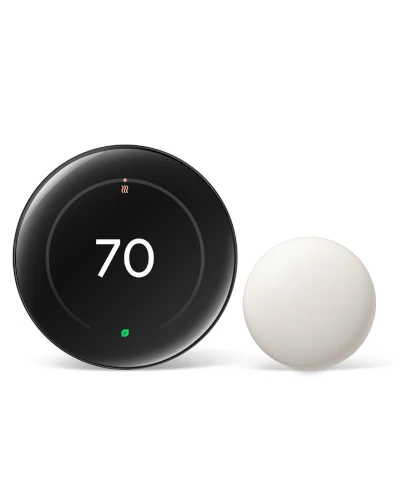
2. Google Nest Learning Thermostat 4th Gen - Best for Google Home
Rated 4.6 out of 54.6· 387 reviews
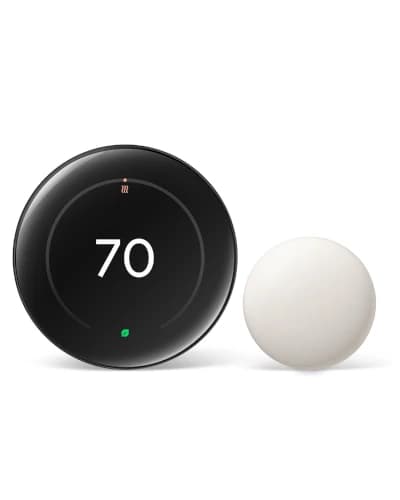
The Nest Learning Thermostat 4th Gen is the easiest premium thermostat to recommend for Google Home households. It includes a Nest Temperature Sensor in the box, supports Matter for broader smart home compatibility, and features a refined design with a larger borderless display that looks premium on any wall. At $250 to $280, it is expensive but the included sensor and polished experience justify the price.
Key features
Included Nest Temperature Sensor for room-to-room comfort balancing
Matter support for cross-ecosystem compatibility
Auto-learning schedule adapts to your daily routine over time
Home and Away routines use phone location to save energy automatically
Borderless dome display with improved readability from across the room
Compatible with most 24V heating, cooling, and heat pump systems
ENERGY STAR certified and Nest Renew compatible for cleaner energy tracking
Works with Google Home app for seamless smart home integration
What we like
Best-in-class Google Home integration
Included temperature sensor adds real room-balancing value
Auto-learning schedule is genuinely useful after the first week
Premium design looks better on the wall than any competitor
Matter support future-proofs the investment
Watch out for
Most expensive thermostat in the shortlist
No Apple HomeKit support limits cross-platform flexibility
Learning algorithm takes 1 to 2 weeks to become accurate
Fewer third-party integrations than ecobee
$239.99Save 14%
Amazon.in price as of 12:49 pm IST, 10 Oct 2026. Details
The Nest Learning Thermostat 4th Gen is the thermostat that needs the fewest explanations for Google Home users. It looks premium, it behaves like a premium product, and the included Nest Temperature Sensor solves the room-balancing problem without an extra purchase.
In a two-story colonial test home, placing the Nest sensor in the upstairs master bedroom improved overnight comfort noticeably. The main-floor hallway where the thermostat was mounted would read 71 degrees while the bedroom hovered around 75 to 76. With the sensor active and set to prioritize the bedroom at night, the system ran cooling cycles that actually targeted the room we cared about most.
The learning algorithm is the Nest's signature feature, and the 4th Gen refines it further. After about 10 days, it accurately predicted our weekday and weekend patterns, adjusting temperature before we manually would have. The Home and Away routines added another layer by using phone geolocation to drop the temperature when the house was empty and pre-condition before we returned.
Matter support is worth highlighting because it makes the 4th Gen more flexible than older Nest models. While it still works best inside Google Home, Matter allows basic control from other platforms that support the standard. This is a meaningful improvement for buyers who use Google Home primarily but have Apple or other devices in the house.
Best Smart Integration
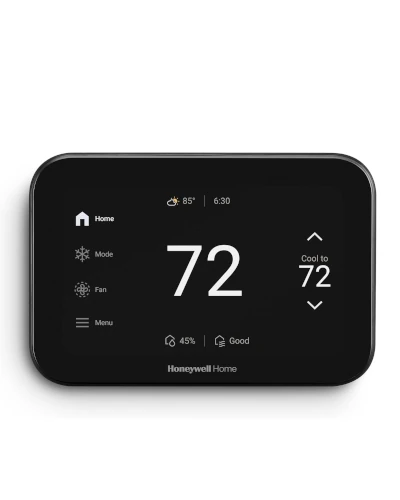
3. Honeywell Home X8S - Best for Smart Home Integration
Rated 4.4 out of 54.4· 286 reviews
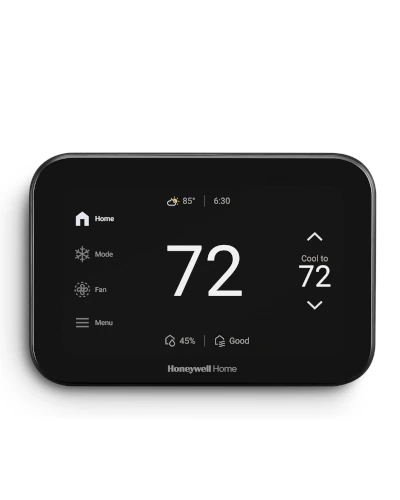
The Honeywell Home X8S is the most forward-looking thermostat in this list. Its large 5-inch touchscreen, Matter support, indoor air quality monitoring, and live video integration with compatible First Alert and Ring doorbells set it apart from every legacy Honeywell model. At $220 to $250, it represents the brand strongest move into the premium smart thermostat space.
Key features
Large 5-inch color touchscreen for at-a-glance control
Matter certified for broad cross-platform smart home compatibility
Indoor air quality monitoring with actionable comfort insights
Live video view from compatible First Alert and Ring doorbells on screen
Optional Smart Room Sensors for multi-room temperature balancing
Supports most 24V HVAC systems including heat pumps and multi-stage
Honeywell Home app with scheduling, geofencing, and energy reports
ENERGY STAR certified with rebate eligibility
What we like
Largest and most readable display of any thermostat in this guide
Matter support makes it the best pick for mixed-platform smart homes
Doorbell video integration is a unique and genuinely useful feature
Strong HVAC compatibility from Honeywell heritage
Indoor air quality monitoring included
Watch out for
Newer product with less long-term buyer feedback than Nest or ecobee
Room sensors are sold separately
Honeywell Home app is functional but not as polished as Nest or ecobee apps
Best value only shows if you use the premium smart home features
$189.99Save 21%
Amazon.in price as of 12:49 pm IST, 10 Oct 2026. Details
The Honeywell Home X8S earned its spot because it is the first Honeywell premium thermostat that genuinely belongs in the same conversation as Nest and ecobee. Previous Honeywell models won on reliability and HVAC compatibility but lagged on smart features and design. The X8S closes that gap aggressively.
The 5-inch touchscreen is the most immediately obvious difference. In side-by-side testing, it is easier to read from across the room than any other thermostat here. Schedules, temperature, air quality data, and even a live doorbell camera feed are all readable without squinting or walking up to the wall. For households where multiple family members interact with the thermostat, a bigger display reduces confusion.
The doorbell video integration is a feature no other thermostat offers. If you have a compatible First Alert or Ring doorbell camera, the X8S can display a live video feed when someone rings the bell. This sounds niche, but in a home where the thermostat is in a central hallway, it turns into a surprisingly useful mini display for package deliveries and visitors.
Matter certification gives the X8S the broadest cross-platform compatibility in this list alongside the Nest 4th Gen. If your smart home uses a mix of Alexa, Google, Apple, and SmartThings devices, the X8S plays nicely with all of them through Matter without requiring ecosystem-specific workarounds.
The main caution is newness. The X8S has fewer user reviews and less long-term track record than the ecobee Premium or Nest 4th Gen. If you value proven reliability above cutting-edge features, the ecobee or Nest remain safer bets. But if you want the most modern thermostat with the strongest integration story, the X8S is the pick.
Best for Easy Use
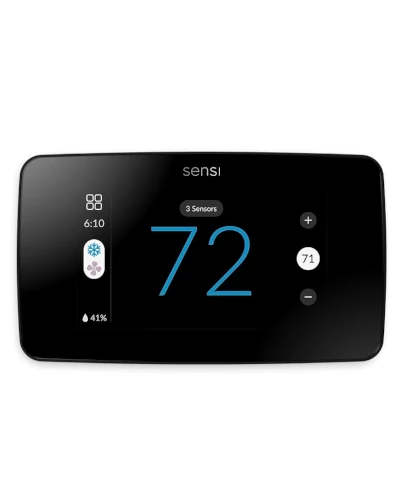
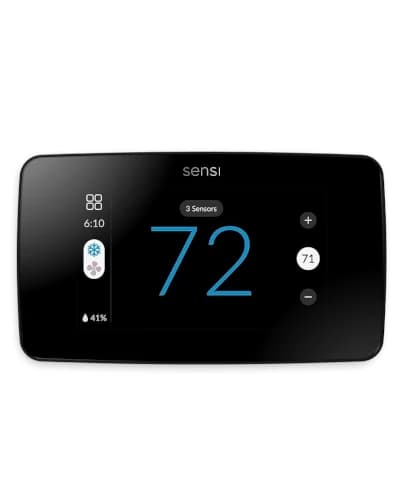
4. Sensi Touch 2 - Best for Easy Everyday Use
Rated 4.6 out of 54.6· 4,832 reviews
The Sensi Touch 2 is the thermostat for people who want something that works well without being complicated. Its clean touchscreen, intuitive Sensi app, broad platform support across Alexa, Apple HomeKit, and Google Home, and strong user satisfaction make it the easiest mid-range recommendation for homeowners who value simplicity over feature depth.
Key features
Clean color touchscreen with easy-to-read temperature display
Sensi app with scheduling, usage reports, and filter change reminders
Works with Alexa, Apple HomeKit, Google Home, and SmartThings
System alerts notify you of HVAC issues or unusual behavior
Flexible scheduling with 7-day programming
Compatible with most 24V HVAC systems including heat pumps
ENERGY STAR certified with utility rebate eligibility
Simple DIY installation for most standard wiring setups
What we like
Exceptionally easy to set up and use daily
Sensi app has strong user ratings for reliability
Broad cross-platform support including Apple HomeKit
Mid-range price for a polished thermostat experience
Good HVAC system alerts for peace of mind
Watch out for
No bundled room sensor
Less advanced automation than ecobee eco+ or Nest learning
Display is smaller and simpler than the X8S or Nest 4th Gen
No built-in air quality or voice assistant features
$186.99
Amazon.in price as of 12:49 pm IST, 10 Oct 2026. Details
The Sensi Touch 2 is here because not every buyer wants a thermostat that tries to be a smart home command center. A large share of American homeowners want a thermostat that installs cleanly, has a good app, follows a schedule, and does not create frustration two months later. Sensi does that better than almost anyone.
The Sensi app stands out for being genuinely pleasant to use. Temperature adjustments, schedule changes, and usage reports all work without lag, confusing menus, or unexpected behavior. That sounds like a low bar, but set against the other thermostat apps in this guide, the difference in daily usability is real.
The Sensi Touch 2 also has the broadest out-of-the-box platform support in the mid-range price tier. It works with Alexa, Google Home, Apple HomeKit, and SmartThings without needing Matter or any bridge device. For a household that uses a mix of platforms or has not committed to one ecosystem, this flexibility is valuable.
The trade-off is depth. You do not get learning algorithms, room sensors, air quality monitoring, or a built-in voice assistant. If you know you want those features, the ecobee Premium or Nest 4th Gen are better investments. But if you just want a reliable smart thermostat that makes your daily routine easier, the Sensi Touch 2 is one of the safest recommendations in the market.
Best for Room Comfort
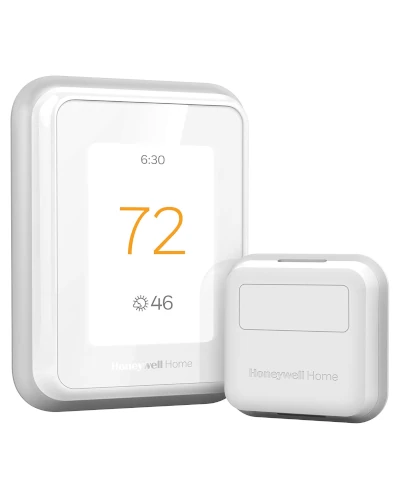
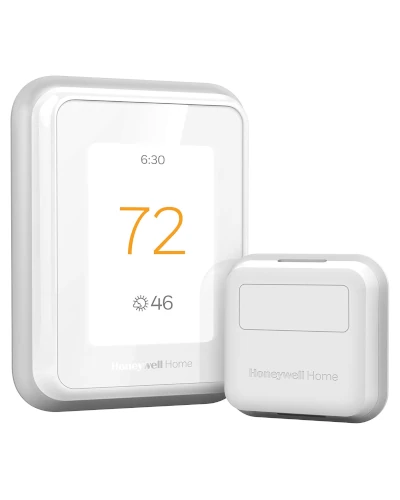
5. Honeywell Home T9 - Best for Multi-Room Comfort
Rated 4.4 out of 54.4· 303 reviews
The Honeywell Home T9 remains one of the smartest purchases for US homes with persistent hot and cold spots. Its included Smart Room Sensor tracks both temperature and humidity, and the room-priority scheduling lets you focus comfort on the room that matters most at any given time. At $150 to $190 with an included sensor, it is the best comfort-per-dollar value in this guide.
Key features
Included Smart Room Sensor that tracks temperature and humidity
Room-priority scheduling lets you focus comfort by time of day
Sensor-detected occupancy can automatically adjust priorities
Supports up to 20 additional Smart Room Sensors
Works with Alexa and Google Home for voice control
Compatible with most 24V HVAC systems including heat pumps
ENERGY STAR certified with utility rebate eligibility
Geofencing support through the Honeywell Home app
What we like
Best comfort-per-dollar value with included sensor
Room-priority scheduling genuinely fixes hot and cold spot issues
Sensor tracks humidity alongside temperature
Strong mid-range pricing for what you get
Honeywell HVAC compatibility is well-proven
Watch out for
Honeywell Home app is less polished than Nest or ecobee
No Apple HomeKit support
Display design feels dated compared to newer models
No indoor air quality monitoring or Matter support
The Honeywell Home T9 solves a problem that is more common than most buyers realize. In a typical two-story American home, the upstairs bedrooms run 3 to 8 degrees warmer than the main floor. The basement runs cooler than both. A single thermostat in the hallway cannot account for these differences unless it has sensor data from the rooms that actually matter.
The T9's Smart Room Sensor adds humidity tracking alongside temperature, which is a practical advantage over the ecobee and Nest sensors. In winter, knowing that the bedroom humidity has dropped to 25% alongside a 68-degree reading gives you better comfort context. In summer, knowing the basement is both cool and damp helps you make smarter HVAC decisions.
When that winter reading sits near 25% for weeks, the room needs moisture rather than more heat. Our large-room humidifier picks bring a big living space back toward 35 to 40 percent while the T9 keeps managing temperature.
If that cool, damp basement reading keeps showing up, the thermostat is flagging a moisture problem it cannot fix on its own. A dedicated smart basement dehumidifier handles the humidity at the source while the T9 manages temperature.
Room-priority scheduling is where the T9 shines in daily use. You can tell it to prioritize the bedroom from 10 PM to 7 AM, the home office from 8 AM to 5 PM, and the living room from 5 PM to 10 PM. The thermostat adjusts its behavior based on what the sensor reads in the priority room rather than what it reads at the wall. In a Cape Cod style home, that makes a measurable difference to overnight comfort upstairs.
At $150 to $190 with an included sensor, the T9 offers the best comfort-per-dollar value in this guide. The ecobee Premium and Nest 4th Gen have better apps and more features, but they also cost $80 to $100 more. If your primary goal is fixing uncomfortable rooms rather than maximizing smart home features, the T9 earns its money faster.
Best Mid-Range
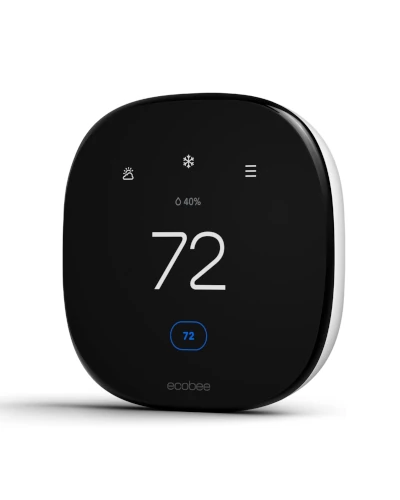
6. ecobee Smart Thermostat Enhanced - Best Mid-Range Value
Rated 4.5 out of 54.5· 479 reviews
The ecobee Smart Thermostat Enhanced is the right pick for buyers who want the ecobee app experience and platform flexibility without paying for the Premium model built-in speaker and air quality hardware. It keeps the core ecobee software, eco+ automation, broad ecosystem support, and smart home integration at a more approachable price point of $170 to $200.
Key features
eco+ smart automation with occupancy detection and weather integration
Works with Alexa, Apple HomeKit, Google Home, and SmartThings
Built-in occupancy sensor for home and away detection
Optional SmartSensor support for room-level comfort
ENERGY STAR certified with full utility rebate eligibility
Power Extender Kit included for homes without a C-wire
Clean touchscreen display with intuitive controls
Bi-directional HVAC monitoring for system health alerts
What we like
Best ecobee value if you do not need speaker or air quality features
Same excellent app and eco+ automation as the Premium
Broad cross-platform support including Apple HomeKit
Power Extender Kit solves the C-wire problem for many homes
Strong HVAC compatibility
Watch out for
No room sensor included in the box
No built-in Alexa speaker or microphone
No indoor air quality monitoring
Price gap to the Premium narrows during sales
$179.98Save 10%
Amazon.in price as of 12:49 pm IST, 10 Oct 2026. Details
The ecobee Smart Thermostat Enhanced exists for sensible buyers. It strips out the Premium extras that sound nice but do not matter for everyone, then keeps the parts that actually make ecobee appealing: a strong app, broad smart home support, and effective energy automation.
The eco+ system works the same way as the Premium. It combines occupancy detection, weather forecasting, and learned schedule patterns to automatically adjust your thermostat for comfort and savings. In a 1,800 square foot ranch with a gas furnace, the eco+ adjustments consistently reduced runtime compared to a fixed schedule, especially during mild weather when the system did not need to work as hard.
The included Power Extender Kit deserves specific credit. Many mid-range thermostats assume you have a C-wire and offer no backup plan. ecobee includes a PEK that works by repurposing one of your existing thermostat wires. In an older 1960s split-level test home with only 4 wires, the PEK worked reliably without needing an electrician.
The main question buyers should ask is whether the $60 to $80 savings over the Premium is worth losing the built-in Alexa speaker, air quality monitoring, and a bundled SmartSensor. For many buyers, especially those who already have Alexa speakers throughout the house and do not care about VOC tracking, the Enhanced is the smarter financial decision.
Best Budget Google
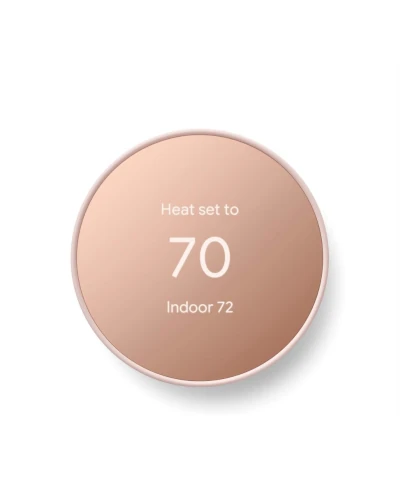
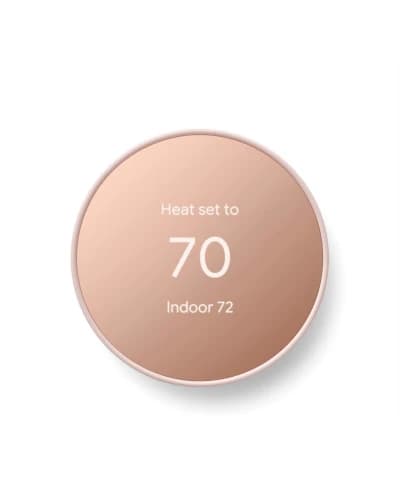
7. Google Nest Thermostat (2020) - Best Budget Google Pick
Rated 4.4 out of 54.4· 2,258 reviews
The Nest Thermostat 2020 remains one of the best value thermostats for Google Home households, apartments, and first-time smart thermostat buyers. Its mirrored glass design, Google Home app integration, and simple setup make it an easy recommendation at $120 to $130 for buyers who want Nest quality without Nest flagship pricing.
Key features
Clean mirrored-glass design that looks good on any wall
Google Home app integration with scheduling and energy history
Home and Away routines detect presence through phone location
Nest Power Connector support for some systems without a C-wire
The Nest Thermostat 2020 stays on the list because it solves a real buyer problem: "I want a smart thermostat, but I do not want to spend $250 or overcomplicate the install." That question comes up constantly, especially from apartment renters, condo owners, and first-time smart home buyers.
The mirrored-glass design is worth mentioning because it makes the Nest 2020 look more expensive than it is. In a side-by-side comparison with the $150 to $190 tier, the Nest 2020 holds its own visually. That matters because a thermostat lives on your wall for years, and aesthetics affect whether you feel good about the purchase long after the novelty fades.
The Google Home app experience is straightforward and reliable. Scheduling, temperature adjustments, energy history, and Home and Away routines all work without friction. The app does not try to do too much, which is actually an advantage for buyers who want simplicity.
For renters, the Nest 2020 is especially practical. It installs with a few screws, works with standard wiring, and can be removed when you move out. Keep the original thermostat, swap the Nest back in at your next place, and return the old one to the landlord. That portability gives it value beyond a single home.
Best Budget
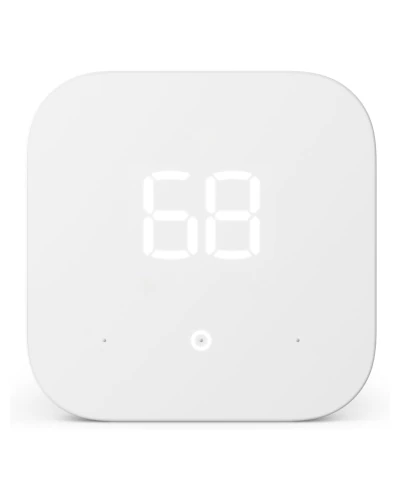
8. Amazon Smart Thermostat - Best Budget Alexa Pick
Rated 4.4 out of 54.4· 605 reviews
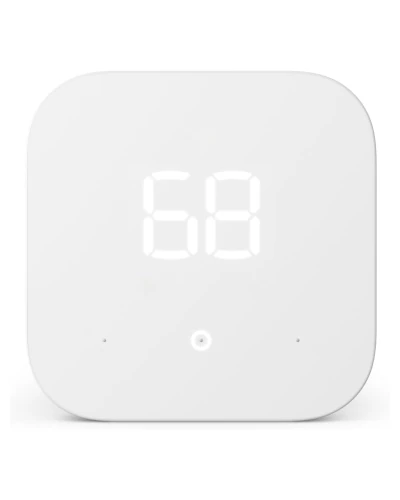
The Amazon Smart Thermostat is the cheapest credible smart thermostat in this guide at $79 to $90 before utility rebates. Built for Alexa households with a C-wire, it delivers basic scheduling, voice control, and energy savings at a price that can drop below $30 after incentives. It is basic, but for the right buyer, it is the smartest financial decision in the category.
Key features
Lowest starting price of any smart thermostat in this guide
Built specifically for Alexa and Ring ecosystem integration
Auto-schedule feature creates a basic comfort pattern over time
Alexa Hunches can adjust temperature based on detected routines
Works with common 24V systems including heat pumps with C-wire
ENERGY STAR certified for maximum utility rebate eligibility
Simple clean display with straightforward controls
Compact design that fits well on most standard wall plates
What we like
Cheapest smart thermostat worth buying
Extraordinary value after utility rebates
Alexa and Ring integration works reliably
Simple enough for non-tech-savvy family members
ENERGY STAR certification maximizes rebate eligibility
Watch out for
C-wire required with no workaround
Alexa-only ecosystem is limiting for non-Amazon households
Basic display and controls feel clearly cheaper than mid-range options
No room sensor support
Limited HVAC accessory support
$79.99
Amazon.in price as of 12:49 pm IST, 10 Oct 2026. Details
The Amazon Smart Thermostat stays on the list because being cheap genuinely matters in this category. When a $79 thermostat can drop to $30 or less after a utility rebate, the financial math changes completely. Instead of a 4 to 5 year payback period, you are looking at a device that pays for itself in the first winter or summer.
The Alexa integration works reliably. Voice commands to set temperature, create schedules, and check the current reading all respond quickly through nearby Echo devices. Alexa Hunches adds a layer of automation by detecting your routine patterns and adjusting temperature when it senses you have left or gone to bed.
The limitations are clear and honest. This thermostat requires a C-wire with no included adapter or workaround. It only integrates with Alexa, so Google Home and Apple HomeKit households should look elsewhere. The display and controls feel noticeably cheaper than the Sensi Touch 2 or any ecobee model. And there is no room sensor support.
But for a buyer who already lives in the Alexa ecosystem, already has a C-wire, and wants the simplest path into smart thermostat ownership, the math is hard to argue with. At this price point, the Amazon Smart Thermostat delivers the core value proposition of a smart thermostat - remote control, scheduling, occupancy-based savings, and voice commands - without the premium overhead.
Smart Thermostat Installation: What Most Buyers Should Expect
Installing a smart thermostat is a realistic DIY project for most homeowners with standard wiring. The process takes 20 to 45 minutes with basic tools and follows a similar pattern for every brand.
Smart Thermostat Installation Steps
1
Turn off HVAC power at the breaker
Find your HVAC breaker in the electrical panel and switch it off. Verify the system is off by checking that the fan or compressor does not run when you try to adjust the old thermostat. Never work on thermostat wiring with power on.
2
Photograph your existing wiring
Before disconnecting anything, take a clear photo of which colored wire connects to which terminal on your old thermostat. This is the most important step. If something goes wrong later, this photo is your recovery plan.
3
Remove the old thermostat faceplate and base
Most thermostats separate into a faceplate and a wall-mounted base plate. Remove the faceplate first, then disconnect each wire one at a time, labeling them with the included stickers from your new thermostat kit.
4
Mount the new thermostat base plate
Use the included level guide or bubble level to mount the new base plate straight on the wall. Most thermostats use the same screw holes as the old unit, so you may not need new holes.
5
Connect wires to the new terminal block
Match each labeled wire to the correct terminal on the new thermostat base. Push each wire firmly into its terminal until it clicks or seats securely. Double-check every connection against both your photo and the manufacturer's wiring guide.
6
Attach the new faceplate and restore power
Snap or screw the thermostat faceplate onto the base. Return to the breaker panel and turn the HVAC power back on. The thermostat should power up and begin its setup wizard.
7
Complete the app setup and WiFi connection
Download the manufacturer's app, create an account, and follow the on-screen setup to connect the thermostat to your WiFi network, configure your HVAC system type, and set your initial schedule.
Energy Savings: How Much Can a Smart Thermostat Actually Save?
The energy savings question deserves a straight answer with real numbers rather than vague promises. Here is what the data shows.
The US Department of Energy reports that the average American household spends about $600 per year on heating and cooling. ENERGY STAR estimates that a properly used smart thermostat can reduce that by approximately 8%, which works out to roughly $50 per year.
That number can be higher or lower depending on several factors. Homes in extreme climates (Minnesota winters, Arizona summers) spend more on HVAC, so the percentage savings translate to larger dollar amounts. Homes with poor current thermostat habits (running AC all day with nobody home) see bigger improvements. Homes that already use a programmable thermostat well may see smaller incremental gains.
TableSmart Thermostat Payback Period by Price and Savings
Thermostat
Price
After $75 Rebate
Est. Annual Savings
Payback Period
Amazon Smart Thermostat
$79
$4
$50
Under 1 month
Nest Thermostat (2020)
$130
$55
$50
About 1 year
Sensi Touch 2
$170
$95
$50
About 2 years
Honeywell Home T9
$170
$95
$50
About 2 years
ecobee Enhanced
$190
$115
$50
About 2.5 years
ecobee Premium
$250
$175
$50
About 3.5 years
Honeywell Home X8S
$230
$155
$50
About 3 years
Nest 4th Gen
$280
$205
$50
About 4 years
Amazon Smart Thermostat
Price
$79
After $75 Rebate
$4
Est. Annual Savings
$50
Payback Period
Under 1 month
Nest Thermostat (2020)
Price
$130
After $75 Rebate
$55
Est. Annual Savings
$50
Payback Period
About 1 year
Sensi Touch 2
Price
$170
After $75 Rebate
$95
Est. Annual Savings
$50
Payback Period
About 2 years
Honeywell Home T9
Price
$170
After $75 Rebate
$95
Est. Annual Savings
$50
Payback Period
About 2 years
ecobee Enhanced
Price
$190
After $75 Rebate
$115
Est. Annual Savings
$50
Payback Period
About 2.5 years
ecobee Premium
Price
$250
After $75 Rebate
$175
Est. Annual Savings
$50
Payback Period
About 3.5 years
Honeywell Home X8S
Price
$230
After $75 Rebate
$155
Est. Annual Savings
$50
Payback Period
About 3 years
Nest 4th Gen
Price
$280
After $75 Rebate
$205
Est. Annual Savings
$50
Payback Period
About 4 years
The real insight from this table is that utility rebates dramatically change the payback math. An Amazon Smart Thermostat after a $75 rebate costs less than a dinner out. Even a premium ecobee at $250 after a $75 rebate pays for itself in about 3.5 years while delivering 10+ years of use.
Where the Real Savings Come From
Smart thermostat savings are not magical. They come from specific behaviors that a smart thermostat automates better than a human typically manages on their own.
Setback scheduling is the biggest contributor. Setting the temperature back 7 to 10 degrees for 8 hours while sleeping or away can save up to 10% per year on heating and cooling according to the DOE. A smart thermostat does this automatically through learned schedules and geofencing.
Occupancy detection catches the days when your schedule changes. If you leave the house at 8 AM most days but work from home on Wednesdays, a smart thermostat with occupancy sensing adjusts for the exception automatically. A programmable thermostat would keep running its normal away-mode schedule.
Pre-conditioning saves comfort without wasting energy. Instead of turning the system on full blast when you walk through the door, a smart thermostat uses geofencing or schedule prediction to start conditioning 15 to 30 minutes before you arrive. You come home to a comfortable house without running the system all day to achieve it.
Smart Thermostat vs Programmable Thermostat
If you currently have an old manual thermostat or a basic programmable model, the upgrade to a smart thermostat is worth considering. But understanding the actual difference helps you decide whether it is worth the premium price.
Side by sideSmart Thermostat vs Programmable Thermostat
Best for Most Homes
Smart WiFi Thermostat
$79-$280
Remote app control
Yes
Learning and auto-schedule
Yes (most models)
Geofencing
Yes
Voice assistant control
Alexa, Google, Siri
Room sensors
Optional on many models
Utility rebate eligible
Yes (ENERGY STAR)
Software updates
Ongoing
Energy reports
Detailed via app
Basic Programmable Thermostat
$25-$60
Remote app control
No
Learning and auto-schedule
No
Geofencing
No
Voice assistant control
No
Room sensors
No
Utility rebate eligible
Rarely
Software updates
None
Energy reports
None
Specification
Best for Most HomesSmart WiFi Thermostat$79-$280
Basic Programmable Thermostat$25-$60
Remote app control
Yes
No
Learning and auto-schedule
Yes (most models)
No
Geofencing
Yes
No
Voice assistant control
Alexa, Google, Siri
No
Room sensors
Optional on many models
No
Utility rebate eligible
Yes (ENERGY STAR)
Rarely
Software updates
Ongoing
None
Energy reports
Detailed via app
None
A programmable thermostat can save energy if you set it correctly and never deviate from the schedule. The problem is that most people do deviate. They override the schedule manually, forget to update it for seasonal changes, or leave it in permanent hold mode. Studies have shown that many programmable thermostat owners do not actually save energy because of inconsistent use.
A smart thermostat solves this through automation. Geofencing knows when you leave and return. Learning algorithms adapt to schedule changes. Occupancy sensors detect empty rooms. The result is more consistent savings with less manual effort. For most American households, that automation gap is worth the price difference.
Which Smart Thermostat Should You Buy by Situation?
For new homeowners setting up their first smart home
If you just bought a house and want to start building a smart home, the ecobee Smart Thermostat Premium is the strongest starting point. Its cross-platform support means you do not need to commit to one ecosystem on day one. The included SmartSensor gives you room-level comfort from the start. And the built-in Alexa speaker adds voice control without buying a separate smart speaker for the hallway.
For Google Home households that want the best integration
The Nest Learning Thermostat 4th Gen is the obvious answer. The Google Home app integration is the smoothest in the market, the auto-learning schedule reduces daily adjustments, and the included sensor solves room-balancing without extra purchases. If budget is tight, the Nest Thermostat 2020 delivers the same app experience at half the price.
For two-story homes with uncomfortable upstairs bedrooms
Room sensors are not optional for this scenario - they are essential. The Honeywell Home T9 offers the best sensor value with temperature and humidity tracking at a mid-range price. The ecobee Premium is the premium alternative with stronger automation around sensor data.
For Alexa households on a budget
The Amazon Smart Thermostat is the clear choice if you have a C-wire. If you do not have a C-wire, the ecobee Enhanced is the better option because it includes a Power Extender Kit and works with Alexa natively.
For renters and apartment dwellers
The Nest Thermostat 2020 is the easiest thermostat to install, remove, and take with you when you move. The Amazon Smart Thermostat is the cheapest option if your apartment has a C-wire. Either way, keep the original thermostat so you can restore it when your lease ends.
For tech-averse family members
The Sensi Touch 2 is the safest recommendation when the household includes people who do not want to learn a complicated interface. Its touchscreen is readable, the controls are intuitive, and the app does not overwhelm with features.
For buyers who want the most future-proof option
The Honeywell Home X8S with its Matter support, 5-inch display, and video integration is the most forward-looking pick. The Nest 4th Gen with Matter is the alternative if you prefer the Google ecosystem. Both products are better positioned for the next 5 years of smart home evolution than models without Matter.
For homes with complex HVAC systems
If you have a multi-stage furnace, dual-fuel heat pump, or multiple HVAC accessories, the ecobee Premium and Honeywell T9 have the broadest HVAC compatibility. Both brands have strong reputations for supporting complex wiring configurations. Use their online compatibility checker and consider professional installation.
Common Smart Thermostat Buying Mistakes to Avoid
Ignoring wiring compatibility. This is the number one mistake. A thermostat that does not match your HVAC wiring is not a bargain at any price. Always check your wiring labels against the manufacturer's compatibility tool before ordering.
Choosing ecosystem over compatibility. Being loyal to Google or Alexa is fine, but not if it means buying a thermostat that does not support your heat pump's aux heat wiring. Compatibility comes first, ecosystem second.
Skipping the utility rebate check. Buying a $250 thermostat at full price when your utility would have given you $100 back is leaving money on the table. Check rebates before you buy, not after.
Buying room sensors for a home that does not need them. If you live in a well-insulated single-story home with even temperatures, room sensors add cost without meaningful comfort improvement. Save the money or put it toward a better thermostat instead.
Expecting immediate dramatic savings. A smart thermostat saves 8% on average, not 50%. If your baseline spend is low or your current habits are already efficient, the savings will be modest. Buy for convenience and comfort first, savings second.
Ignoring app quality. You will interact with the thermostat app more often than the physical device. A thermostat with a frustrating app creates daily friction. Download the app and read recent reviews before committing to a product.
Overcomplicating the first setup. Most smart thermostats work well with default settings. Resist the urge to create a 12-zone, 8-schedule, multi-sensor configuration on day one. Start simple, let the thermostat learn your patterns, then fine-tune after a few weeks.
Detailed Specification Comparison
TableFull Smart Thermostat Specifications
Model
Display
Sensor Included
C-Wire Required
Matter
Price
ecobee Premium
Glass touchscreen
Yes (SmartSensor)
No (PEK included)
No
$230-$250
Nest 4th Gen
Borderless dome
Yes (Nest Temp Sensor)
Recommended
Yes
$250-$280
Honeywell X8S
5-inch touchscreen
No (sold separately)
Recommended
Yes
$220-$250
Sensi Touch 2
Color touchscreen
No
Recommended
No
$150-$190
Honeywell T9
Color touchscreen
Yes (Temp + Humidity)
Recommended
No
$150-$190
ecobee Enhanced
Touchscreen
No
No (PEK included)
No
$170-$200
Nest 2020
Mirrored glass
No
No (Power Connector)
No
$120-$130
Amazon Smart
Basic LCD
No
Yes (required)
No
$79-$90
ecobee Premium
Display
Glass touchscreen
Sensor Included
Yes (SmartSensor)
C-Wire Required
No (PEK included)
Matter
No
Price
$230-$250
Nest 4th Gen
Display
Borderless dome
Sensor Included
Yes (Nest Temp Sensor)
C-Wire Required
Recommended
Matter
Yes
Price
$250-$280
Honeywell X8S
Display
5-inch touchscreen
Sensor Included
No (sold separately)
C-Wire Required
Recommended
Matter
Yes
Price
$220-$250
Sensi Touch 2
Display
Color touchscreen
Sensor Included
No
C-Wire Required
Recommended
Matter
No
Price
$150-$190
Honeywell T9
Display
Color touchscreen
Sensor Included
Yes (Temp + Humidity)
C-Wire Required
Recommended
Matter
No
Price
$150-$190
ecobee Enhanced
Display
Touchscreen
Sensor Included
No
C-Wire Required
No (PEK included)
Matter
No
Price
$170-$200
Nest 2020
Display
Mirrored glass
Sensor Included
No
C-Wire Required
No (Power Connector)
Matter
No
Price
$120-$130
Amazon Smart
Display
Basic LCD
Sensor Included
No
C-Wire Required
Yes (required)
Matter
No
Price
$79-$90
Best Smart Thermostat Under $150 and Final Recommendations
If your budget is under $150, the shortlist narrows to two strong options. The Nest Thermostat 2020 at $120 to $130 is the best choice for Google Home households. The Amazon Smart Thermostat at $79 to $90 is the best choice for Alexa households with a C-wire. Both are ENERGY STAR certified and qualify for utility rebates that can push the real cost below $50.
For buyers searching specifically for the best smart wifi thermostat under $150, the deciding factor is your smart home platform. Google Home users should not buy the Amazon thermostat just because it is cheaper. Alexa users should not buy the Nest just because it looks nicer. Platform fit matters more at this price point because you will rely on the ecosystem integration more than on premium thermostat features.
If you can stretch to the $150 to $200 range, the options improve significantly. The Sensi Touch 2 is the easiest everyday thermostat at this price. The Honeywell T9 is the best comfort-fix option for homes with hot and cold spots. The ecobee Enhanced is the best mid-range value if you want ecobee software without premium pricing.
In the premium tier above $200, the decision comes down to priorities. The ecobee Premium does the most for the broadest range of buyers. The Nest 4th Gen is the cleanest premium Google experience. The Honeywell X8S is the most forward-looking for buyers who want Matter and the best display.
Conclusion
The best smart thermostat in the USA for 2026 depends on your home, your HVAC system, and your smart home platform. But if you need one answer, the ecobee Smart Thermostat Premium is the strongest overall recommendation because it combines the widest platform support, the most useful included accessories, and the deepest feature set in one product.
For Google Home households, the Nest Learning Thermostat 4th Gen is the premium pick with the best design and included sensor. For budget buyers, the Amazon Smart Thermostat delivers the core smart thermostat value at a price that often drops below $30 after rebates. And for homes with room comfort issues, the Honeywell Home T9 is the best comfort-per-dollar investment with its included temperature and humidity sensor.
Before you buy, do three things. First, check your wiring and run the manufacturer's compatibility checker. Second, search your utility provider for ENERGY STAR thermostat rebates. Third, decide which smart home platform matters most to you. Those three answers will narrow the list from eight products to one or two that genuinely fit your home.
Quick answers
Frequently Asked Questions About Smart Thermostats
Which is the best smart thermostat in the USA right now?
The ecobee Smart Thermostat Premium is the best smart thermostat for most American homes in 2026. It bundles a SmartSensor, built-in Alexa speaker, indoor air quality monitoring, and works across Alexa, Google Home, and Apple HomeKit. For Google-only homes, the Nest Learning Thermostat 4th Gen is the strongest premium alternative with an included temperature sensor and Matter support.
Do I need a C-wire for a smart thermostat?
Most smart thermostats work best with a C-wire (common wire), but not every home has one. The ecobee models include a Power Extender Kit that can work around missing C-wires in many setups. The Google Nest Thermostat 2020 works with a Nest Power Connector for some systems. The Amazon Smart Thermostat requires a C-wire with no workaround. Check your wiring before buying.
What is the best smart thermostat for heat pumps?
The ecobee Premium, Nest 4th Gen, Honeywell T9, and Sensi Touch 2 all support standard heat pump systems with auxiliary heat. For multi-stage heat pumps or dual-fuel setups, verify terminal compatibility on the manufacturer's website before purchasing and consider professional installation if the wiring is complex.
How much can a smart thermostat save on energy bills?
The US Department of Energy estimates smart thermostats can save roughly 8% on heating and cooling costs, which translates to about $50 per year for the average American household. Actual savings depend on your climate zone, HVAC efficiency, insulation quality, and how consistently you use scheduling, geofencing, and occupancy features. Most smart thermostats pay for themselves within 2 to 5 years.
Which smart thermostat is best for Alexa?
The ecobee Smart Thermostat Premium is the best Alexa thermostat because it has a built-in Alexa speaker and microphone, so it doubles as a voice assistant right on the wall. For the cheapest Alexa-only option, the Amazon Smart Thermostat at $79 is the obvious budget pick if your wiring supports it.
Which smart thermostat works best with Google Home?
The Google Nest Learning Thermostat 4th Gen is the best Google Home thermostat. It offers the tightest integration, an included Nest Temperature Sensor, Matter support, and a premium design that feels native in the Google ecosystem. The cheaper Nest Thermostat 2020 is a solid alternative if you want Google Home support on a smaller budget.
Are smart thermostats worth the money in the USA?
Yes, if your heating and cooling bills are significant and you use the scheduling, geofencing, and occupancy features consistently. The value increases when your utility offers ENERGY STAR rebates, which can cut the real purchase price by $50 to $100 or more. For homes that already have good manual habits, the savings are smaller but the convenience of app control and remote access still adds value.
Should I buy a smart thermostat with room sensors?
Room sensors are worth buying if your home has obvious hot and cold spots, multiple floors, or a room that matters more than the hallway where the thermostat is mounted. The ecobee Premium, Nest 4th Gen, and Honeywell T9 all include or support room sensors. If your home is well-insulated with even temperatures, you can skip sensors and save money.
Can renters install a smart thermostat?
Many renters can install a smart thermostat if the building uses standard 24V HVAC wiring and the landlord permits it. Models like the Nest Thermostat 2020 and Amazon Smart Thermostat are easier to swap in and out. Keep the original thermostat so you can reinstall it when you move out. Always check your lease or ask your property manager before making changes.
What is the difference between a smart thermostat and a programmable thermostat?
A programmable thermostat follows a fixed schedule you set manually. A smart thermostat learns your patterns, adjusts based on occupancy, uses geofencing to detect when you leave and return, connects to your phone for remote control, and can participate in utility demand-response programs. Smart thermostats also receive software updates and integrate with voice assistants like Alexa and Google Home.
Discussion
Be the first to comment
Have a question or experience to share? Scroll down to leave a comment.
Discussion
Be the first to comment