Security & Surveillance - Guest post
How CCTV Systems Are Evolving in India (AI, Cloud & Smart Surveillance)
Kartik Shanwani10 min read
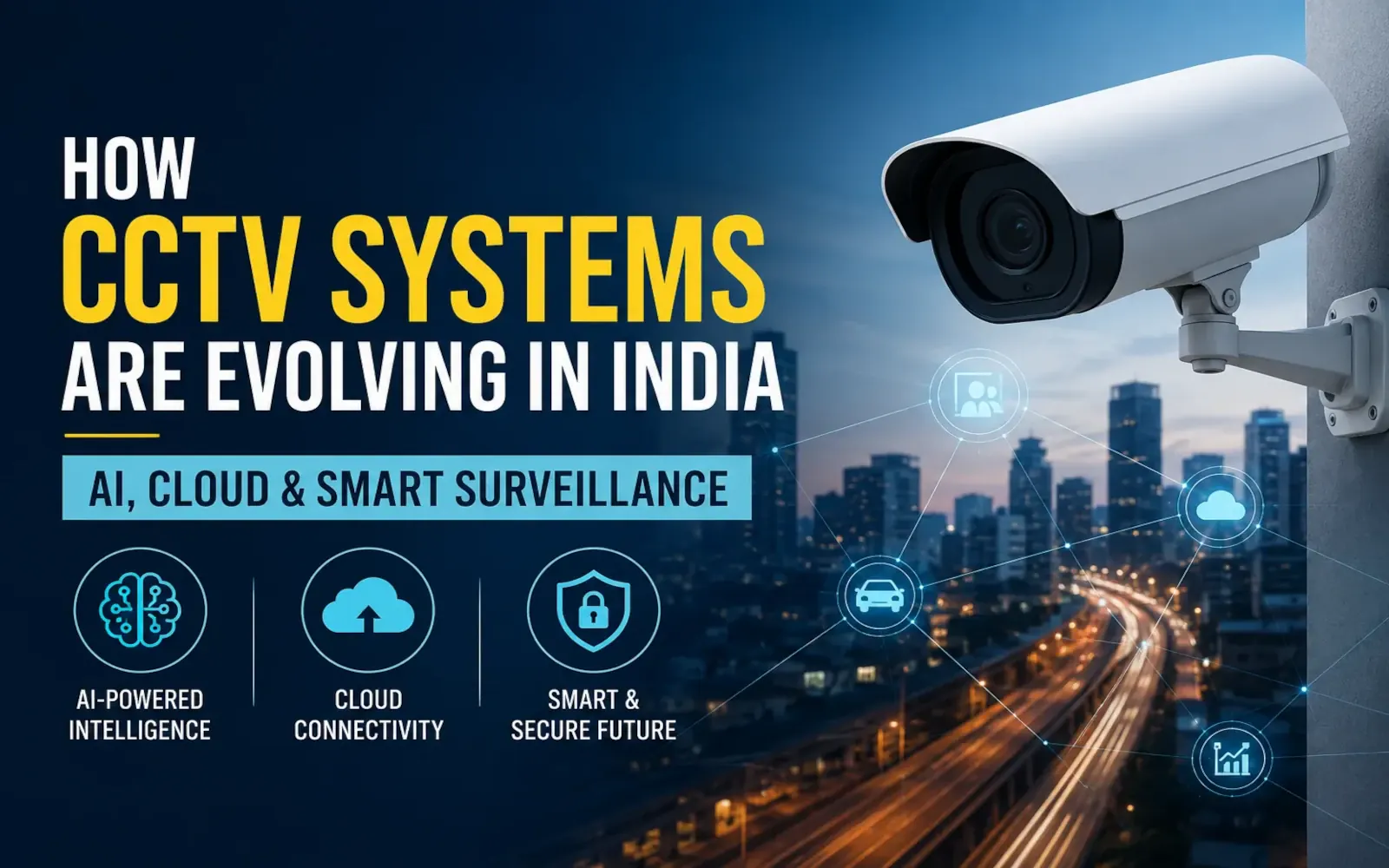
From residential apartments and retail stores to warehouses, schools, hospitals, and smart city projects, the expectations from modern surveillance systems have changed significantly. Businesses today are looking for smarter, more secure, and easier-to-manage solutions rather than basic camera setups.
Three major forces are driving this shift:
- Artificial Intelligence (AI)
- Cloud-based surveillance
- Smart and connected security infrastructure
India's CCTV industry is entering a smarter era
According to industry reports, India is among the fastest-growing surveillance markets globally, especially in IP-based and AI-powered systems. Demand is increasing not only for higher image quality but also for intelligent features such as:
- Human and vehicle detection
- Facial recognition
- Perimeter protection
- Real-time mobile alerts
- Remote monitoring
- Cloud storage access
- Smart search capabilities
The rise of AI-powered surveillance in India
Artificial Intelligence is one of the biggest drivers of modern CCTV systems becoming more intelligent and efficient.
Earlier, security teams had to manually monitor multiple screens for hours. Today, AI-enabled cameras can automatically analyze movement patterns, filter false alarms, and identify suspicious activities.
AI surveillance systems are now commonly being used for:
- Intrusion detection
- Crowd monitoring
- Traffic analysis
- Employee safety
- Visitor tracking
- Vehicle management
- Retail analytics
Edge AI is also becoming increasingly important in India. Instead of sending all footage to a central server, processing happens directly inside the camera itself. This improves speed, reduces bandwidth usage, and supports faster decision-making.
Cloud surveillance is making security more flexible
Cloud technology is another major trend reshaping the Indian surveillance market.
Traditional CCTV setups relied heavily on local storage devices such as DVRs and NVRs. While these systems are still widely used, cloud-enabled surveillance offers additional flexibility and accessibility.
With cloud-connected systems, users can:
- Access live footage remotely
- Receive instant mobile notifications
- Store backups securely
- Manage multiple locations centrally
- Reduce dependence on physical storage devices
Introducing HIT TECHNOLOGY by HIFOCUS: a step toward secure surveillance
As cybersecurity concerns rise in connected surveillance systems, manufacturers are increasingly focusing on secure-by-design infrastructure. One such development in the Indian surveillance market is HIT TECHNOLOGY by HIFOCUS, also known as HIFOCUS Integrated Trust.
Rather than being positioned as a single feature, HIT Technology is designed as a layered cybersecurity framework for modern IP and network surveillance systems.
The technology focuses on areas such as:
- Device integrity
- Secure communication
- Controlled access mechanisms
- Firmware validation
- Structured update governance
Why cybersecurity matters more than ever in CCTV systems
The evolution of smart surveillance has brought convenience, but it has also introduced new security risks. Connected CCTV systems can become vulnerable if they lack proper cybersecurity architecture.
Globally, there have been multiple incidents where insecure surveillance devices were targeted due to weak passwords, outdated firmware, or unsecured communication channels. As India moves toward connected infrastructure and smart monitoring systems, cybersecurity standards are becoming increasingly important.
This is one reason why India's surveillance industry is now seeing a stronger focus on compliance frameworks like STQC certification and BIS Essential Requirements (ER).
Businesses today are not only evaluating camera quality but also asking questions such as:
- Is the system secure against unauthorized access?
- Are firmware updates protected?
- Is communication encrypted?
- Does the brand follow cybersecurity standards?
Smart IP cameras are becoming the new standard
IP cameras are now leading the next phase of surveillance growth in India. Unlike traditional analog systems, IP cameras support:
- Higher image quality
- AI integration
- Remote access
- Smart analytics
- Better scalability
- Network connectivity
Businesses are increasingly choosing IP cameras for offices, factories, retail spaces, educational institutions, and warehouses because they support modern surveillance requirements more effectively.
Surveillance is becoming more than just security
One of the most interesting changes in the CCTV industry is how surveillance data is now supporting business intelligence and operational efficiency.
Modern surveillance systems are being used for:
- Customer behavior analysis in retail
- Workforce monitoring in factories
- Queue management in public spaces
- Traffic optimization
- Warehouse movement tracking
- Safety compliance monitoring
About HiFocus
HiFocus is a leading Indian CCTV brand offering a wide range of advanced CCTV cameras, like IP Cameras, HD CCTV Cameras, Wifi CCTV Cameras, video management systems, smart security products, and surveillance technologies for residential, commercial, and enterprise applications.
With a focus on innovation, reliability, and user-centric solutions, HiFocus aims to deliver intelligent security systems that help create safer homes, businesses, and public spaces through modern monitoring and CCTV surveillance solutions.
Conclusion: the future of CCTV in India
India's surveillance industry is moving toward a future defined by intelligent automation, cybersecurity, compliance, and connected infrastructure.
Over the next few years, the market is expected to see stronger adoption of:
- AI-powered edge surveillance
- Secure cloud-based monitoring
- Smart city integrations
- Compliance-ready CCTV infrastructure
- Cybersecurity-focused surveillance architecture
- Advanced remote management systems
As this transition continues, brands investing in AI innovation, cybersecurity frameworks, and trusted surveillance ecosystems are likely to shape the next generation of security infrastructure in India.
The evolution of CCTV systems in India is no longer just a technology trend. It is becoming an essential part of how modern organizations manage safety, operations, and digital trust.
Quick answers
FAQ: CCTV evolution in India
How is AI changing CCTV systems in India?
AI lets cameras analyze footage in real time instead of just recording it. Indian businesses are using AI surveillance for intrusion detection, vehicle and human detection, facial recognition, perimeter protection, crowd monitoring, and retail analytics. Edge AI processes video inside the camera itself, which cuts bandwidth use and supports faster alerts.
What is cloud surveillance and why does it matter?
Cloud surveillance lets users store CCTV footage and manage cameras over the internet instead of relying only on local DVRs or NVRs. It supports remote live viewing, mobile alerts, secure backups, and central management of multiple sites. Cloud setups work well alongside on-premise storage rather than fully replacing it.
Are IP cameras better than analog CCTV cameras?
IP cameras offer higher resolution, AI integration, remote access, smart analytics, and easier scaling than analog cameras. Analog systems are still common in older installations, but most new commercial and residential surveillance projects in India are moving to IP.
How important is cybersecurity in modern CCTV systems?
Very important. Connected cameras can be exploited through weak passwords, outdated firmware, or unencrypted communication. Buyers should look for encrypted communication, secure firmware updates, controlled device access, and compliance with frameworks like STQC certification and BIS Essential Requirements.
What is HIT TECHNOLOGY by HIFOCUS?
HIT TECHNOLOGY, short for HIFOCUS Integrated Trust, is a layered cybersecurity framework for IP and network surveillance systems. It covers device integrity, secure communication, controlled access, firmware validation, and structured update governance instead of being a single feature.
Can CCTV cameras help with business operations beyond security?
Yes. Modern surveillance data is used for customer behavior analysis in retail, workforce monitoring in factories, queue management in public spaces, traffic optimization, warehouse movement tracking, and safety compliance. Surveillance has become an operations and business intelligence tool, not just a security one.