Editor's take
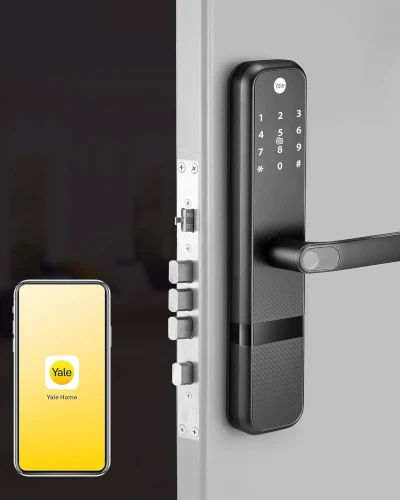
After testing multiple smart locks on Indian doors, the Yale Zuri stands out for one simple reason - it just works. The capacitive fingerprint sensor unlocks in about half a second even during Mumbai monsoons when our hands were damp, something optical sensors on cheaper locks consistently failed at. At Rs 11,999, you are paying roughly double what a LAVNA LA16 costs, but the build quality gap is immediately obvious the moment you hold both locks side by side.
The free professional installation across 200+ cities is a genuine differentiator. Smart lock installation on Indian doors can be tricky because door thickness and mortise standards vary wildly between builders, and getting it wrong means a compromised lock or damaged door frame. Yale's trained technicians handle this headache entirely, and having seen a few DIY smart lock installations go sideways, this service alone is worth Rs 1,500-2,000.
Running costs are minimal - the 4 AA batteries last about 8-10 months with a family of four using it 15-20 times daily. That works out to roughly Rs 200-300 per year on batteries. Keep a spare set in your drawer because the low-battery warning gives you about 2 weeks of buffer before the lock stops working, and you always have the mechanical key backup.
The biggest limitation compared to the QUBO and LAVNA LA24 is the absence of Wi-Fi. You cannot check who entered your home while you are at work or generate remote OTPs for guests. For a standard Indian household where family members carry their own fingerprints, this rarely matters. But if you manage a rental property or frequently have visitors arriving when nobody is home, spend a bit more on the QUBO instead. The Yale Zuri is purpose-built for reliability over connectivity, and for most Indian families, that is exactly the right trade-off.


Discussion
Be the first to comment