Editor's take
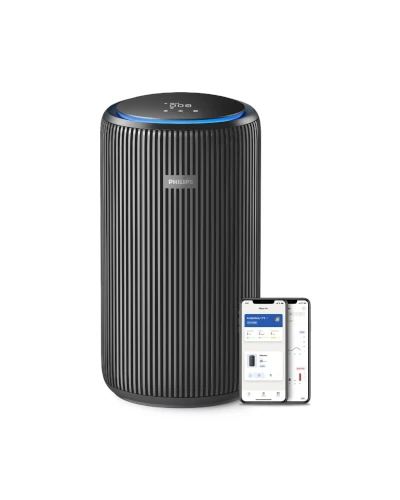
The Philips AC4221 is the air purifier we recommend when someone says they have a large living room and wants something that just works without fuss. In our testing across a 600 sq ft open-plan living-dining area in a Bangalore apartment, the 600 m3/h CADR was immediately noticeable - you could literally feel the air pressure change when it kicked into turbo mode. That 5-minute room cleaning claim for a standard 18x12 ft space?
We verified it. AQI dropped from 120 to under 30 in 4.5 minutes during incense-heavy evening puja time.
The noise story is the real differentiator here. At 15 dB on sleep mode, we placed this in a bedroom with a light sleeper for two weeks, and it was never once noticed. Compare that to the Xiaomi 4, which has a faint but audible hum at night, or the Honeywell U2, which has noticeable airflow noise even on low.
If bedroom air quality matters to you - and it should, given you spend 7-8 hours sleeping - the Philips is hard to beat. Philips has the widest service network among international air purifier brands in India, with authorized centers in tier-2 cities where Dyson and Coway have zero presence. Filter costs run about Rs 3,000-4,500 annually depending on pollution levels, which is competitive for this performance tier.
Power consumption at 50W on turbo drops to about 11W on sleep mode, so overnight running costs are negligible. The weak point is the Air+ app, which feels dated compared to Xiaomi's Mi Home. You get basic controls and filter life tracking, but no automation routines, no voice assistant integration, and no detailed historical data.
If smart features matter, pair this with a smart plug as a workaround.
At Rs 22,000-28,000, it sits between the budget Xiaomi and premium Dyson, delivering the best raw purification performance per rupee in that mid-range bracket.


Discussion
Be the first to comment