Appliances - Guest post
Sensor Pet Fountains as Connected-Home Appliances: How to Choose One
Jaykm8 min read
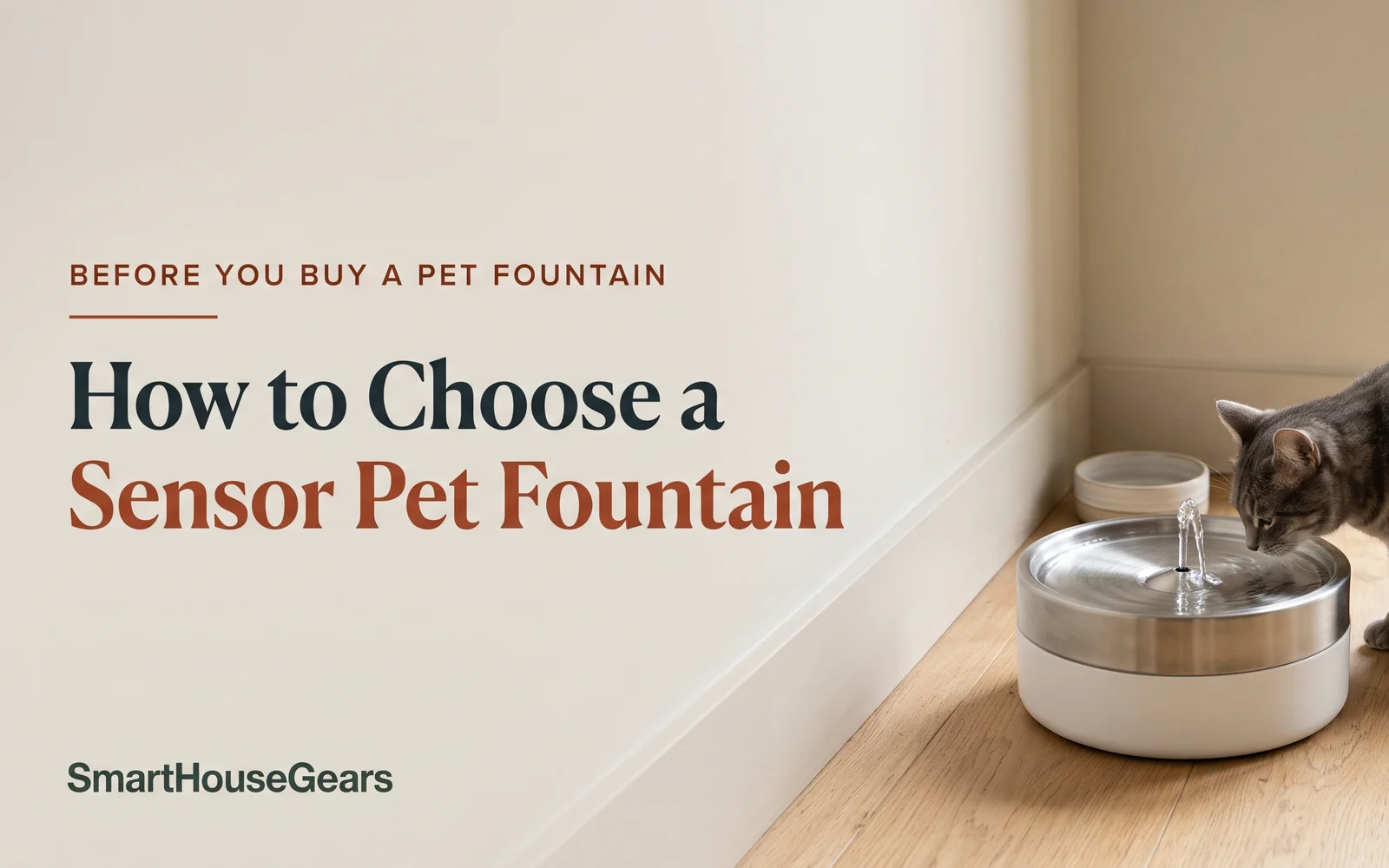
A pet water fountain does not look like a smart home device. It has no app, no voice assistant and no place on a dashboard.
But the sensor pet fountain belongs in the same conversation as smart plugs and robot vacuums for pet hair: a small appliance that runs quietly in the background and takes a daily chore off your list.
A good fountain keeps water moving, filtered and fresh, and it does so only when your pet is actually there.
This guide compares the two main designs, the two main materials, and the day-to-day details that decide whether a fountain earns its place on your counter.
Sensor vs gravity-feed: two ways to move water
Gravity-feed fountains are the simplest design. A reservoir sits above a bowl, and water flows down as the level drops.
There is no pump, no power and nothing to make noise. The trade-off is that the water sits still.
Still water goes stale faster, and without a pump there is no filtration unless the design adds it separately. You also refill more often, because the bowl level is the only reserve.
A sensor fountain works the other way around. A motion or infrared sensor watches for a pet, and the pump runs only when one is nearby.
Water circulates through a filter while the pet drinks, then the pump stops. That on-demand pattern has three practical benefits:
- Fresher water. It moves and filters right when it is needed.
- Less noise and wear. The pump runs fewer hours, so it is quieter overall and lasts longer.
- Free placement. A battery-powered sensor model can sit anywhere, away from an outlet.
Sensor models have their own trade-offs. They need power, either a plug or a rechargeable battery, and a dead battery means no flow until you recharge it.
Some cautious pets take a few days to trust the sound of the pump starting, and a very shy animal may avoid the fountain at first.
Which one to choose? Gravity-feed wins on simplicity: nothing to charge, nothing to break. Sensor wins on freshness and filtration, and for households that want the fountain working only when the pet is there.
| Compared on | Sensor fountain | Gravity-feed waterer |
|---|---|---|
| How water moves | A pump circulates it when a pet comes near | It flows down from the reservoir as the bowl empties |
| Filtration | Built in, runs while the pet drinks | None, unless the design adds a separate filter |
| Noise | A short pump hum, only when triggered | Silent |
| Power | Plug-in or rechargeable battery | None needed |
| Water freshness | Moving and filtered on demand | Sits still and goes stale faster |
| Best for | Homes that want fresh, filtered water with little effort | A first trial, or a backup next to a fountain |
How water moves
- Sensor fountain
- A pump circulates it when a pet comes near
- Gravity-feed waterer
- It flows down from the reservoir as the bowl empties
Filtration
- Sensor fountain
- Built in, runs while the pet drinks
- Gravity-feed waterer
- None, unless the design adds a separate filter
Noise
- Sensor fountain
- A short pump hum, only when triggered
- Gravity-feed waterer
- Silent
Power
- Sensor fountain
- Plug-in or rechargeable battery
- Gravity-feed waterer
- None needed
Water freshness
- Sensor fountain
- Moving and filtered on demand
- Gravity-feed waterer
- Sits still and goes stale faster
Best for
- Sensor fountain
- Homes that want fresh, filtered water with little effort
- Gravity-feed waterer
- A first trial, or a backup next to a fountain
304 stainless steel vs plastic: what the bowl is made of matters
The material of the bowl decides how easy the fountain is to keep clean.
Plastic is light, cheap and comes in every shape and color. Its weakness is scratching.
A scratched plastic surface holds onto biofilm, the slippery layer that builds up in standing water, and once the scratches are there, no amount of scrubbing fully removes it.
Plastic can also hold odors over time, and a chewed or heavily scratched bowl should be replaced.
Stainless steel solves most of that. A smooth steel surface resists scratches, wipes clean with little effort and does not hold odors.
It is heavier, so a large dog is less likely to tip it, and it lasts for years rather than months. The downsides are weight and price: steel costs more, and it can show water spots if your tap water is hard.
The grade to look for is 304, the food-grade stainless steel used in kitchenware. If a listing does not name the grade, ask.
A fountain that only says "stainless steel" without a grade has not told you much.
For a first fountain, plastic is a fair way to find out whether your pet likes drinking from one at all. For a fountain you plan to keep for years, stainless steel is the easier material to live with, because it stays smooth and clean with a weekly wipe.
Quiet pumps: what to listen for
Noise is the reason most fountains get unplugged. A pump that hums or buzzes in a quiet kitchen will not stay plugged in for long, and a fountain that is switched off is just a bowl.
Three things keep a pump quiet:
- Design. A submerged pump is quieter than one sitting in air, and rubber feet or a silicone base cut vibration.
- Water level. A pump running low on water gets louder, so topping up the reservoir is the simplest noise fix there is.
- The sensor itself. Because the pump runs only when a pet is near, the total noise in the room is lower than from a pump running around the clock.
Before buying, check owner reviews for noise complaints rather than trusting the box.
A listing that says "quiet" means little; a dozen owners saying they cannot hear it from the next room means a lot.
Place the fountain on a level surface, away from walls that can amplify vibration, and keep the water topped up.
Battery life and power: plug-in vs wireless pet fountains
Plug-in fountains are set and forget. They run as long as they have power, and there is nothing to recharge.
The cost is placement: the fountain has to live near an outlet, and the cable needs to be kept out of reach of chewing pets.
Wireless models use a rechargeable battery, so the fountain can sit anywhere in the room.
Battery life varies widely by model, pump size and how often the sensor triggers, so check the rated runtime rather than assuming a number.
Also check whether the fountain keeps working while it charges. Some models do and some do not, and that matters on the day the battery runs out.
A practical rule: if the fountain is the only water your pet has, a plug-in model or a large battery is the safer choice. For households with more than one water source, a wireless model is the more flexible one.
Either way, keep a spare bowl out for power cuts and charging days.
Cleaning and maintenance: the weekly habit that decides everything
A fountain is only as good as its cleaning routine. Standing water grows biofilm, and a dirty pump works harder and louder.
The routine itself is simple:
The weekly pet fountain clean
- Take the fountain apart and rinse every partBowl, reservoir, lid and pump housing.
- Wipe the bowl and the pump housingA slippery feel means biofilm has started, so clean sooner next time.
- Replace the filter on the maker's scheduleThe manual gives the interval for your model.
- Descale with a vinegar rinse if hard water leaves depositsRinse well with plain water afterward.
- Refill to the line before switching it back onA low water level makes the pump louder.
Design decides how painless that routine is. Look for parts that come apart without tools, openings wide enough to reach into, and a pump that lifts out for cleaning.
Dishwasher-safe parts help where the manufacturer states them.
The fountains that get abandoned are usually the ones that are hard to take apart, not the ones that are hard to use.
Hard water deserves a mention. If your tap water leaves white deposits on kettles and taps, it will do the same inside a fountain.
The SmartHouseGears guide to humidifiers for large rooms covers how hard water behaves in home appliances, and the same logic applies here: a fountain that is easy to descale is worth more in a hard-water home than one with a bigger tank.
How to choose a pet water fountain: a short checklist
Start with your pets. How many drink from it, and how much? A single cat needs less capacity than two large dogs.
Watch how your pet approaches new objects. A bold pet will trigger a sensor on day one, while a cautious one may need a few days with the fountain switched off first.
Then look at the room. Is there an outlet nearby, or do you need wireless? Will the fountain sit in a bedroom, where noise matters most? Is your tap water hard, which makes descaling a regular job?
Finally, weigh the budget against the cleaning habit. A low-cost plastic gravity model is a fair trial.
If your pet takes to it, a sensor model in stainless steel is the upgrade that lasts, because it is the combination that stays clean with the least effort.
For a wider view of matching filtration to water problems, the whole-house water filter guide for well water shows the same principle at house scale: the right media for the right problem, rather than more stages for their own sake.
The bottom line
A sensor fountain is a small appliance that earns its place by doing one job well: keeping water moving, clean and available.
Pick the design and material that fit your home, keep up the weekly clean, and the fountain will mostly take care of itself.
Quick answers
FAQ: sensor pet water fountains
Do cats really prefer running water?
Many do, and that is the reason fountains exist. Some cats ignore fountains entirely, though, and a fountain never replaces a plain bowl of water. Give your pet both and let them choose.
How often should I clean a pet fountain?
Follow the manufacturer's guidance. A weekly rinse and wipe is a common routine, with filter changes on the schedule in the manual. If the water smells or the bowl feels slippery, clean it sooner.
Is a stainless steel pet fountain worth the extra cost?
Yes, if you want fewer scratches, easier cleaning and a longer service life. Look for 304 food-grade steel. For a trial or a second fountain, plastic costs less and tells you whether your pet likes fountains at all.
What if my pet is scared of the fountain?
Let them approach it switched off first, and place it near their old bowl. Most pets take a few days. If yours still avoids it after a week, a gravity model or a plain bowl is the better answer.
Do sensor pet fountains use much electricity?
No. The pump runs only when the sensor is triggered, and most use a small low-voltage pump. Battery models need recharging on the rated schedule, and plug-in models draw very little power.
Does a wireless pet fountain work while it charges?
It depends on the model. Some keep running on the charging cable and some stop until the battery is full. Check the manual before you buy, and keep a spare bowl out on charging days.