Choosing the best whole house water filter for well water is not really a shopping problem. It is a matching problem.
The EPA counts more than 43 million Americans on private wells, and none of those wells are regulated under the Safe Drinking Water Act. The filter that clears orange staining in Pennsylvania does almost nothing for the rotten egg smell in central Florida.
That is why this guide is organized around water problems rather than brand loyalty. We compared manufacturer specifications, published third-party laboratory results, current Amazon.com listings, owner rating patterns, and EPA guidance for private well owners.
Our pick for the widest range of American wells is iSpring WGB32BM.
It wins because it does the one thing most whole house filters quietly skip. It carries a dedicated iron and manganese cartridge rated to 3.0 ppm iron and 1.0 ppm manganese, while still handling sediment and chlorine.
It also does that at 15 GPM on 1 inch ports, so your showers do not pay for the filtration.
If your water report comes back clean on metals, save money with iSpring WGB32B. If it comes back positive for coliform bacteria, no cartridge on this page is enough and you want Aquasana WH-WELL-CT-UVS-B with its NSF/ANSI 55 certified UV stage.
Well Water Filters Compared on Iron, Flow and Certification
At a glance
Ten Well Water Filters Compared for American Homes
Amazon.com owner ratings, the contaminant each system actually targets, and the flow rate it holds.
Read that table as a menu of problems, not a ranking of quality. The 4.7 star system is not the best buy for a well with orange staining, because it has no iron stage at all.
One pattern is worth naming honestly. iSpring holds four of the ten places here because it genuinely dominates this Amazon.com category on both owner volume and cartridge availability, not because we ran out of brands to consider.
Why Well Owners Are Filtering Differently in 2026
Two things changed the conversation this year, and neither is a product launch. The first is that the federal PFAS story finally became clear enough for well owners to act on.
The EPA set maximum contaminant levels for PFOA and PFOS in 2024, then in May 2026 proposed extending the utility compliance deadline from April 2029 to April 2031.
Every part of that rule applies to public water systems. Private wells are outside it completely, which means no agency is monitoring your water and no deadline protects you.
At the same time the EPA made $1 billion available through the Infrastructure Investment and Jobs Act for PFAS testing and treatment, and that funding explicitly includes help for private well owners. Well owners who assumed somebody was watching are now testing for the first time.
The second change is on the hardware side. Cartridge systems that used to be sediment and carbon only now ship with iron-specific media, KDF compound stages and pressure gauges as standard.
That is why Waterdrop WHF3T-FG can publish SGS results of 95.9% iron reduction at a price that would have bought a plain sediment housing three years ago.
There is a third shift that is easier to see on Amazon.com than in the news. Cartridge systems from Waterdrop, iSpring and Express Water have quietly taken over a category that used to belong entirely to local water treatment dealers.
That is good for price and bad for advice. A dealer tested your water before selling you anything, while a listing page will happily sell a chlorine filter to someone with 5 ppm iron.
Seasonality matters for the buying decision too. Late September through November is the right window because fall is when most state extension labs push annual well testing, and because anything installed in an unheated crawlspace needs to be in and insulated before the first hard freeze.
Holiday load is a genuine reason not to wait until December. A house that normally runs two showers a day suddenly runs six with guests in it, and a marginal sediment cartridge picks Thanksgiving week to clog.
What Is a Whole House Water Filter for Well Water?
A whole house water filter for well water is a point-of-entry system installed on your main supply line that treats every drop entering the house, usually through two or three replaceable cartridges sized for sediment, chemicals and dissolved metals. Plumbers call it POE filtration.
That placement is the whole point. A pitcher filter protects one glass of water, while a point-of-entry system protects every outlet: your water heater, washing machine, dishwasher, toilets, showers and every fixture at once.
Well water changes the job description. City water arrives already disinfected and largely free of sediment, so a municipal filter is mostly chasing chlorine taste. Well water arrives untreated, carrying whatever the aquifer and your well casing contribute.
That means a well filter is usually fighting particles, dissolved iron and manganese, hydrogen sulfide gas and sometimes bacteria. Those four problems need four different kinds of media, and this is exactly where generic filters disappoint people.
It is worth being blunt about the four things a whole house filter cannot do, because every one of them generates refunds. It does not soften hard water, it does not disinfect unless it has a UV stage, it does not reduce nitrate, and it does not remove dissolved solids.
Each of those needs a different technology. Hardness needs ion exchange, bacteria need UV or chlorination, and nitrate and TDS need reverse osmosis at the point of use.
The upside is what it does do extremely well. It keeps sediment out of your fixtures, iron out of your laundry, chlorine and organics out of your showers, and scale off your water heater element, which is where most of the money in a house is.
Think of it as plumbing insurance with a taste benefit attached. A single sediment-fouled water heater or a set of stained fixtures costs more than several years of cartridges.
How Do You Choose a Well Water Filter Without a Lab Report?
You do not, and that is the honest answer. Get a water test first, because iron, manganese, sulfide and bacteria each require different media, and a system matched to the wrong contaminant will not fix your water no matter how many stages it has.
The EPA recommends that private well owners test annually for total coliform bacteria and nitrate, with a full chemical panel every 3 to 5 years.
The CDC adds four triggers for testing off schedule: a pregnancy in the household, a child moving in, any change in taste, color or smell, and flooding or land disturbance near the well.
A state-certified lab panel typically runs $50 to $200 and pays for itself the first time it stops you buying the wrong system. If you genuinely cannot wait, your own senses narrow it down further than most people expect.
Orange or brown staining in toilets and tubs means iron. Black specks and dark staining on laundry point to manganese. A rotten egg smell means hydrogen sulfide, and grit in the aerator screens means sediment.
Numbers to Have in Hand Before You Buy a Well Filter
Iron in ppmCartridge systems here top out near 3.0 ppm, above that you need a backwashing filter
Manganese in ppm1.0 ppm is the practical ceiling on cartridge media
Coliform resultAny positive result means you need UV, not more cartridges
Hardness in gpgFiltration does not soften, and the Aquasana well system wants under 15 gpg
Peak flow in GPMAdd every fixture that could run at once, then size above it
Main line sizeMost systems here use 1 inch NPT ports, so a 3/4 inch line needs adapters
Static and working pressureThese systems want 25 to 80 psi, and low pressure gets worse after filtration
Space at the install pointA 20 inch housing needs 6 to 8 inches of clearance below it to change
Read your test result down the left, then follow it across to the filter stage that actually treats it.
The 10 Best Whole House Water Filters for Well Water in 2026
Best Overall
1. iSpring WGB32BM 3-Stage Iron and Manganese System - Best Overall
Rated 4.6 out of 54.6· 1,408 reviews
The best whole house water filter for well water in most American homes, because it treats the two contaminants that define well water complaints while holding 15 GPM on 1 inch ports.
Key features
Third stage FM25B cartridge reduces iron to a rated maximum of 3.0 ppm and manganese to 1.0 ppm
First stage polypropylene sediment filter rated to 5 microns, second stage coconut shell carbon block
20 inch by 4.5 inch cartridges with 1 inch NPT ports, rated up to 15 GPM
Operating window of 25 to 80 psi and a pH range of 6 to 11, which suits most untreated wells
One year manufacturer warranty with lifetime tech support from the US team after online registration
What we like
The iron stage is rated media rather than a marketing claim, with published ppm ceilings
iSpring says the FM25B lasts up to three times longer than greensand alternatives
4.6 stars across 1,408 Amazon.com ratings on a system that has been sold for years
Cartridges are easy to source, which matters more than it sounds on a well
Watch out for
Full 20 inch housings are heavy and awkward to change, which owners consistently mention
Housing and head leaks appear in owner reports often enough to be a known pattern
Does nothing for hardness or bacteria, and will not reduce TDS
The iSpring WGB32BM earns the top spot for a simple reason. It is the cheapest system here that credibly addresses iron and manganese, which are the two complaints that bring well owners to this category in the first place.
The stack is sensible rather than clever. Sediment at 5 microns first, coconut shell carbon block second, then the FM25B iron and manganese cartridge third, so the expensive media is protected by the cheap media.
Those published ceilings of 3.0 ppm iron and 1.0 ppm manganese are the most useful numbers on this page. They tell you when this system is the right answer and, just as importantly, when your well has outgrown cartridges entirely.
For an American home this lands well. A 2,400 sq ft two-story house with two full baths, a laundry and a dishwasher rarely exceeds 12 GPM at peak, so the 15 GPM rating on 1 inch ports leaves headroom instead of throttling the shower when the washer fills.
Owner sentiment is consistent across Amazon.com and retailer review pages. People with orange staining report it clearing, they report the annual change being a genuine chore because a wet 20 inch cartridge is heavy and the housings sit low, and a recurring minority report leaks at a housing or head.
That leak pattern is worth taking seriously rather than dismissing. Reports also consistently note that iSpring replaced failed parts quickly and without charge, which is the difference between a defect and an abandonment.
Be clear about the boundaries, because they are where expectations break. This system does not soften water, does not disinfect, does not reduce nitrate and does not remove TDS, and iSpring says so on the listing rather than hiding it.
That honesty is worth something in a category full of vague contaminant lists. A filter that tells you what it cannot do is a filter you can actually plan around.
Running costs are moderate and predictable. Expect a full three-cartridge set roughly annually at around $120 to $170, with the sediment stage sometimes needing an extra change in a bad spring.
Buy it if your water test shows iron at or below 3.0 ppm, manganese at or below 1.0 ppm, and no coliform. Skip it if your iron reads higher, because you will be changing cartridges monthly and hating it.
Best Rated
2. iSpring WGB32B 3-Stage Whole House System - Best Rated
Rated 4.7 out of 54.7· 2,240 reviews
The highest rated system in this guide and the right pick for a well that tested clean on metals, with two carbon stages devoted to taste, odor and chemistry rather than iron.
Key features
Three stages: 5 micron sediment followed by two CTO coconut shell carbon block filters
Reduces up to 99% of chlorine along with sediment, rust, herbicides, tastes and odors
100,000 gallon rated capacity, roughly a year of supply for a family of four
20 inch by 4.5 inch cartridges, 1 inch female NPT ports, up to 15 GPM
Carbon blocks third-party tested to meet NSF/ANSI standards, pH range 6 to 9
What we like
4.7 stars across 2,240 ratings, the strongest owner verdict of any system here
Two carbon stages instead of one means better chemical contact time
Keeps healthy minerals in the water because it is not a reverse osmosis system
Cheaper than the WGB32BM while using the same housings and bracket
Watch out for
No iron or manganese media at all, so it cannot fix staining
pH range stops at 9, which rules out some naturally alkaline wells
Same heavy 20 inch cartridge changes as the rest of the iSpring range
The iSpring WGB32B is the same chassis as our top pick with the iron cartridge swapped for a second carbon block, and it is the better buy for a specific and common situation.
Plenty of wells test clean on metals. Shallow wells in sandy soil, and wells downstream of agricultural land, tend to arrive with sediment, organic taste and chemical contamination rather than orange staining.
For that water, two carbon blocks beat one carbon block and one iron cartridge every time. Doubling the carbon roughly doubles the contact time, which is what actually drives chemical reduction.
The 4.7 star average across 2,240 ratings is the highest owner verdict in this guide, and on a product that has been on sale long enough for the complaints to surface. That combination is rarer than it sounds.
Watch the pH ceiling. This system is specified for pH 6 to 9 while the WGB32BM goes to 11, so a naturally alkaline well pushes you toward the iron version even if you have no iron.
Carbon depth is the thing this system is quietly good at. Volatile organic compounds, agricultural chemicals and general musty taste all respond to contact time, and doubling the carbon bed is the cheapest way to buy more of it.
That makes this a strong fit for wells near cropland, old fuel tanks or septic fields. Those are chemistry problems rather than metals problems, and they are exactly what a double carbon stack is for.
The 100,000 gallon rating is roughly a year for a family of four at typical American indoor use of about 60 gallons per person per day. Irrigation from the same well will shorten that considerably, so plan on gauge readings rather than the calendar.
Buy it if your test shows no iron, no manganese and no coliform, and your complaints are taste, smell, sediment or chemistry. It is the value play hiding in plain sight, because most buyers assume the more expensive sibling is automatically better.
Best Value
3. iSpring WGB21BM 2-Stage Iron Reducing System - Best Value
Rated 4.6 out of 54.6· 4,270 reviews
Two stages, iron and manganese media included, and the deepest owner base of any system in this guide at a price that undercuts every three-stage option by hundreds.
Key features
FM15B second stage reduces iron from a 3.0 ppm maximum down to 0.01 ppm and manganese from 1.0 ppm to 0.01 ppm
First stage CTO coconut shell carbon block handles chlorine, taste and odor
10 inch by 4.5 inch cartridges on 1 inch NPT ports, so it is far more compact than the 20 inch systems
Ships pre-assembled on its mounting bracket with a filter wrench included
Operating window of 25 to 80 psi, pH range 6 to 9
What we like
4.6 stars across 4,270 ratings, by far the largest owner base in this guide
Pre-assembled bracket makes this the easiest install of any system here
Compact 10 inch housings fit utility closets that cannot take a 20 inch system
Rated iron reduction at roughly 40% of the price of the three-stage version
Watch out for
Smaller cartridges mean shorter service life and more frequent changes
No dedicated sediment stage, so the carbon block takes the particle load
Higher pressure drop risk on high-sediment wells than a 20 inch system
The iSpring WGB21BM is the system we would recommend to someone who is not sure they want to spend $500 on a water problem they only half understand. It gives you rated iron media for the price of a decent sediment housing.
The headline number is the owner base. At 4,270 ratings it has more owner feedback than any other system in this guide, and it holds 4.6 stars across all of it.
The compromise is physical, not chemical. Ten inch cartridges hold roughly half the media of 20 inch cartridges, so you change them about twice as often and they clog faster on a sediment-heavy well.
There is no separate sediment stage either, which means the carbon block absorbs the particle load. On a clean deep well that is fine, and on a shallow well with spring turbidity it is a recipe for pressure complaints by April.
The pre-assembled bracket genuinely matters for a DIY install. Everything arrives mounted and squared with the wrench in the box, so the job reduces to plumbing two connections rather than building a manifold on a basement wall.
Think of it as the right answer to a smaller question. A one-bath ranch, a lake cabin used six months a year, or an accessory dwelling unit on the same well as the main house all suit this far better than a triple 20 inch stack.
It is also the sensible way to buy while you wait on a lab result. You get rated iron media and real filtration for under $240, and if the panel later shows you need more you have not sunk $600 into the wrong stack.
Cartridge economics are the honest downside. Two smaller cartridges twice a year lands close to the annual cost of three large cartridges once a year, so the saving is on the hardware rather than the consumables.
Buy it for a condo, a cabin, a small ranch, or as a first system while you wait on a full lab panel. Step up to the 20 inch systems if your water is visibly dirty or your household runs more than two bathrooms.
Best for Heavy Metals and Scale
4. Express Water WH300SCKP Ultimate Protection - Best for Heavy Metals and Scale
Rated 4.5 out of 54.5· 2,706 reviews
A three-stage system built around heavy metal reduction and scale control rather than iron, with pressure gauges on every housing and a free-standing frame option.
Key features
Targets lead, arsenic, mercury, chromium and cadmium through a dedicated heavy metal stage
Laboratory-packed polyphosphate media works on scale before water reaches your pipes and appliances
Pressure gauges on each stage plus individual pressure release buttons for servicing
Heavy duty stainless steel bracket with a free-standing frame included
20 inch by 4.5 inch housings sized for whole-home flow
What we like
4.5 stars across 2,706 ratings, the second deepest owner base here
Gauges on every stage turn cartridge replacement from guesswork into a reading
The free-standing frame solves installs where the wall cannot carry the weight
Polyphosphate scale control is unusual at this price and protects the water heater
Watch out for
No iron-specific media, so orange staining is not its job
Polyphosphate conditions scale rather than softening water, which confuses buyers
Costs more than the iSpring WGB32BM while treating fewer well-specific problems
The Express Water WH300SCKP is the pick for a well with a chemistry problem rather than a metals problem. Its dedicated stage goes after lead, arsenic, mercury, chromium and cadmium.
That matters more in some places than others. Arsenic occurs naturally in bedrock aquifers across New England, parts of the Southwest and the upper Midwest, and it has no taste, smell or color to warn you.
The engineering touch we value most is the gauges. A pressure reading on each housing tells you which stage is clogging and when, which is the single most useful piece of feedback a cartridge system can give you.
The polyphosphate stage deserves a plain explanation because the marketing muddles it. It sequesters hardness minerals so they stay in solution instead of plating out as scale inside your water heater, and it does not make the water soft.
The free-standing frame is a quietly practical inclusion. Three full 20 inch housings are heavy, and older homes with plaster, block or stud spacing that does not cooperate often cannot take that load on a wall bracket.
Arsenic deserves a specific warning because it behaves unlike every other contaminant here. It is odorless, tasteless and colorless, it occurs naturally in bedrock rather than arriving from pollution, and the only way to know is a laboratory test.
The US Geological Survey has mapped elevated arsenic across parts of New England, the upper Midwest and the Southwest. If you live in those areas and have never tested, that is the single test to order first.
Gauges change how you own a filter, which is the part buyers underrate. Instead of guessing at six months, you watch the differential climb, replace the stage that is actually loaded, and leave the other two alone.
That alone can cut a cartridge bill by a third over a few years. Most people replace all three stages together because they have no way to tell which one is spent.
Buy it if your panel flagged heavy metals or you are on hard water and protecting a new water heater. Choose iSpring WGB32BM instead if your actual complaint is staining.
Best Set and Forget
5. A.O. Smith AO-WH-Filter 600,000 Gallon System - Best Set and Forget
Rated 4.3 out of 54.3· 1,968 reviews
A tank-style filter that runs 600,000 gallons or 6 years before it needs replacing, aimed squarely at people who will never remember to change a cartridge.
Key features
Reduces 96.9% of chlorine taste and odor from every tap in the house
Central filter rated for 600,000 gallons or 6 years, backed by a 6-year limited warranty
No drainage line, no back flushing and no water waste during operation
Ships with the filter, shut-off valve, hose adapter and nipple for a DIY install
A.O. Smith states it will not reduce TDS, sulfur or iron, and recommends a pre-filter
What we like
Six years between service events is a completely different ownership experience
4.3 stars across 1,968 ratings from a major American water heater brand
No backwash cycle means no drain plumbing and no wasted well water
Six-year warranty matches the rated filter life, which is unusually honest
Watch out for
Explicitly does not reduce iron or sulfur, so it is not a well water fix on its own
Needs a separate sediment pre-filter on any well, adding cost and maintenance
Not a softener, and the listing has to say so because buyers keep assuming otherwise
The A.O. Smith AO-WH-Filter solves a human problem rather than a chemistry problem. Cartridge systems fail because people forget them, and a filter rated for 600,000 gallons or 6 years removes that failure mode almost entirely.
Be clear-eyed about what it does. A.O. Smith states plainly that the system will not reduce TDS, sulfur or iron, and that a pre-filter is recommended. On a well, that is not a footnote.
So read this as half a system for a well household. It handles chlorine, taste and odor for six years while you handle sediment with a spin-down or cartridge pre-filter upstream.
That pairing is genuinely appealing for a vacation home or a rental. The expensive, long-life stage needs no attention, and the cheap upstream cartridge is the only thing anyone has to remember.
Owner sentiment rewards the maintenance story and punishes the expectation gap. People who bought it for taste are happy years later, and people who bought it expecting it to fix well iron or sulfur are not.
The pairing worth building is specific. Put a spin-down sediment pre-filter or a single 20 inch sediment housing ahead of it, and you have a system where the only recurring task is one cheap cartridge.
Do the warranty math before you dismiss the price. Six years of coverage matched to a six-year filter life means the expensive part is guaranteed for its whole rated service window, which almost nothing else in this category offers.
There is also no drain line and no backwash cycle, and on a well that is a genuine advantage. Backwashing systems send treated water down a drain, which means your pump works harder and a septic field takes the discharge.
Buy it for a well that tests clean on metals where nobody will reliably service a filter. Do not buy it as your answer to staining or a rotten egg smell.
Best Entry Point
6. Waterdrop WHF21-FG 2-Stage System - Best Entry Point
Rated 4.4 out of 54.4· 1,582 reviews
The cheapest way onto this page that still carries real iron and manganese media, with published third-party reduction figures and a leak-resistant build.
Key features
Third-party tested to reduce up to 96.4% of iron, 98.2% of manganese and 95.63% of chlorine
Second stage coconut shell GAC, with particle reduction down to 5 microns
10 inch by 4.5 inch cartridges on 1 inch NPT ports, rated up to 15 GPM
Both cartridges meet NSF/ANSI 372 lead-free standards, with media meeting 42, 53, 58, 61 and 44
Filters rated for 50,000 gallons or 6 months, whichever comes first
What we like
Published percentage reduction figures rather than vague contaminant lists
Reinforced brass threads and dual O-rings, tested past 100,000 water hammer cycles
4.4 stars across 1,582 ratings at the lowest price in this guide
Works on municipal and well water, so it moves with you
Watch out for
A 50,000 gallon or 6 month rating is the shortest service interval here
Two stages only, so sediment and chemistry share cartridges
NSF/ANSI 372 covers lead-free materials, not contaminant removal performance
The Waterdrop WHF21-FG is the lowest-cost credible entry to whole house well filtration, and what makes it credible is that Waterdrop publishes numbers instead of adjectives.
Third-party figures of 96.4% iron, 98.2% manganese and 95.63% chlorine reduction are the kind of claim you can hold a company to. Most systems in this price band list contaminants and leave the percentages to your imagination.
The build details suggest the engineering budget went somewhere useful. Reinforced brass threads, two high-sealing O-rings and more than 100,000 water hammer cycles of testing speak directly to the leak complaints that dog this whole category.
The honest limitation is service interval. At 50,000 gallons or 6 months, a family of four will be changing both cartridges twice a year, which is double the work of a 20 inch system.
Do not over-read the NSF/ANSI 372 badge. That standard certifies the wetted materials are lead free and says nothing about removal performance, and Waterdrop is clear that the reduction figures come from separate third-party testing.
Run the yearly numbers before you decide it is the cheap option. Two cartridge sets a year puts consumables in the $80 to $130 range, which is close to what a 20 inch three-stage system costs annually despite this one costing far less to buy.
So the real saving is on entry, not on ownership. That still matters if the alternative is putting off filtration entirely for another year.
The water hammer testing is a detail worth appreciating on a well. Pump cycling creates pressure spikes that city plumbing rarely sees, and 100,000 cycles of validation speaks to the exact stress a well household applies.
Buy it to get started, to treat a cabin or an ADU, or to confirm that filtration fixes your complaint before committing $500. Move up if six-month cartridge changes start to annoy you.
Best With UV
7. Aquasana WH-WELL-CT-UVS-B With UV - Best for Bacteria
Rated 4.2 out of 54.2· 690 reviews
The only system here that addresses bacteria, pairing carbon and KDF filtration with a UV stage certified to NSF/ANSI 55 Class B and salt-free scale control.
Key features
UV stage NSF tested and certified to NSF/ANSI Standard 55 Class B for bacteria, viruses and cysts
Multi-stage design combining pre-filter, carbon, KDF, UV, salt-free scale control and a post-filter
Reduces 97% of chlorine while preserving minerals, rated to 500,000 gallons or 5 years
Salt-free scale control needs no salt bags, no backwashing and no drain line
Aquasana specifies it for water under 15 gpg hardness, alkalinity under 250 mg/L, pH below 8.3 and iron under 0.3 ppm
What we like
The only certified answer to a positive coliform test in this guide
Five years or 500,000 gallons between major service events
Salt-free scale control protects plumbing without a softener or a drain
Aquasana publishes its operating limits openly instead of burying them
Watch out for
Specified for iron under 0.3 ppm, so it is wrong for most iron-affected wells
By far the most expensive system here, at several times the price of the iSpring options
4.2 stars across 690 ratings is the lowest owner average in this guide
UV needs continuous power and an annual lamp change, which cartridges do not
The Aquasana WH-WELL-CT-UVS-B exists for one situation that no cartridge can address. If your well tested positive for total coliform, you have a microbiology problem, and carbon does not disinfect.
Its UV stage is certified to NSF/ANSI Standard 55 Class B, which is the certification that backs a real disinfection claim. That is a meaningfully different kind of evidence from a manufacturer contaminant list.
Then read the specification that most buyers miss. Aquasana states this system is optimized for iron under 0.3 ppm, which means the product with "well water" in its name is not built for the iron most wells actually have.
That is not a flaw so much as a positioning trap, and it explains the 4.2 star average. Some owners bought a bacteria and scale system to solve a staining problem, and it was never going to work.
The UV stage also changes ownership. It needs continuous power and an annual lamp replacement, and a power cut leaves your house unprotected until the lamp warms back up, which is a real consideration on rural circuits.
Understand the order of operations that state health departments actually recommend. A coliform positive usually means the well itself needs shock chlorination and a look at the casing, cap and grouting before any equipment goes in.
UV is what keeps the water safe afterwards, not what fixes the original breach. Installing UV on a well with a cracked cap treats the symptom while the cause keeps reinfecting the supply.
Ownership cost is lower than the purchase price suggests. Five years or 500,000 gallons between major service events, plus an annual UV lamp at roughly $70 to $120, works out to less per year than several cartridge systems here.
Buy it for a coliform-positive well with low iron and moderate hardness, especially if your family includes young children or someone pregnant. Otherwise put the money into a cartridge system matched to your metals and shock chlorinate under professional guidance.
Find your iron and sulfide numbers on the ladder to see whether cartridges are still the right tool.
Best Big-Housing Build
8. HQUA WF3-01 3-Stage System - Best Big-Housing Build
Rated 4.5 out of 54.5· 200 reviews
Oversized 20 by 5.5 inch housings, gauges, countdown timers and service valves on a heavy metal focused three-stage system built for people who plan to maintain it properly.
Key features
Three 20 inch by 5.5 inch cartridges, larger than the 4.5 inch standard used by most rivals
Compound GAC and KDF stage reduces lead, mercury, arsenic, cadmium, chromium and chlorine
Flow rated from a 3 GPM minimum to a 15 GPM maximum, operating at 25 to 116 psi
Multiple pressure gauges plus built-in 180-day countdown timers on each stage
Pressure relief and drain valves pre-installed, with a housing cleaning brush included
What we like
Larger 5.5 inch housings hold more media, which stretches service intervals
A 116 psi pressure ceiling is the highest here, useful on aggressive well pumps
Countdown timers and gauges together make maintenance genuinely hard to ignore
Drain valves and a housing brush show someone thought about the service visit
Watch out for
Large footprint at roughly 30 inches high by 22 inches wide and 44 lb
200 Amazon.com ratings is a thinner owner record than the established options
No iron-specific media despite the well-water framing of the category
The HQUA WF3-01 is the most serviceable system here, and serviceability is what actually determines whether a well filter is still working in year three.
Start with the housings. At 20 by 5.5 inches they hold noticeably more media than the 4.5 inch standard, which buys longer intervals between changes on the same water.
Then the instrumentation. Pressure gauges tell you which stage is loading up, 180-day countdown timers tell you how long each cartridge has been in, and pre-installed relief and drain valves mean you can service a stage without flooding the floor.
The 116 psi operating ceiling is a genuine differentiator for well households. Well pumps with a badly adjusted pressure switch or a waterlogged tank can spike well past the 80 psi limit that most systems here specify.
Plan for the size before you buy. Roughly 30 inches high, 22 inches wide and 44 lb empty is a real piece of equipment, and it is much heavier full.
Check cartridge availability before you commit, because this is the one real risk. The 20 by 5.5 inch format is less common than the 20 by 4.5 inch standard that iSpring, Express Water and most rivals use.
That means fewer third-party cartridge options and more dependence on one supplier. On a filter you will own for a decade, cartridge supply is a feature.
The counterweight is that bigger cartridges genuinely last longer on the same water. More media means more capacity before breakthrough, which is why the service intervals stretch rather than shrink despite the well-water duty.
Buy it if you have basement or utility room space, a heavy metal result on your panel, and the temperament to actually read a gauge. Its thinner 200-rating record is the trade-off against the established iSpring and Express Water options.
Best New Well-Specific Design
9. Waterdrop WHF3T-FG 3-Stage Well System - Best New Well-Specific Design
Rated 4.5 out of 54.5· 91 reviews
A recent three-stage design that doubles up on iron and manganese cartridges instead of running one, with SGS-tested reduction figures and NSF/ANSI 372 certified materials.
Key features
SGS tested to reduce 95.9% of iron and 99.7% of manganese, the highest manganese figure here
Two iron and manganese removal cartridges rather than one, plus a carbon fiber stage
NSF/ANSI 372 certified lead-free materials, validated past 100,000 water hammer tests
Rated for 15 GPM steady flow, suitable for both well and municipal supplies
Iron and manganese cartridges rated for 6 to 12 months, GAC stage for 12 months
What we like
Doubling the iron media is the right engineering answer for a metals-heavy well
99.7% manganese reduction is the strongest published figure in this guide
SGS laboratory testing is real third-party evidence rather than a materials certification
Explicitly engineered for well water rather than adapted from a city water system
Watch out for
91 Amazon.com ratings is the thinnest owner record here apart from the sulfur system
Two iron stages mean two cartridges to buy every 6 to 12 months
Waterdrop publishes percentages rather than the ppm ceilings iSpring gives you
The Waterdrop WHF3T-FG is the most interesting recent arrival in this category because its designers made a decision most competitors avoid. They spent the third stage on more iron media rather than on a broader contaminant claim.
That is the correct call for a well with real metals. Iron and manganese reduction is driven by contact time and media volume, so two cartridges genuinely outperform one on the same water.
The SGS figures back it up. 95.9% iron and 99.7% manganese reduction are laboratory results on sampled units, which is stronger evidence than a materials certification and weaker than an ongoing NSF audit.
Waterdrop also states plainly that this system is engineered for well water rather than adapted from a municipal product, and the cartridge schedule reflects that. Iron stages every 6 to 12 months, carbon every 12.
What we cannot give you is iSpring's clarity on ceilings. Percentages tell you how well it performs on the test water, while iSpring's 3.0 ppm figure tells you when to stop considering cartridges at all.
The doubled iron stage has a cost implication you should price in. You are buying two iron cartridges every 6 to 12 months instead of one, which puts annual consumables toward the upper end of this guide.
That is a fair trade if metals are genuinely your problem. It is a waste if your report came back with iron at 0.2 ppm and a musty taste.
The Pacific Northwest and coastal Southeast are where we would reach for this first. Both combine manganese with seasonal turbidity, and manganese is the contaminant this system handles better than anything else here at 99.7% reduction.
Buy it if metals are your main problem and you want the most iron media available in a cartridge format. Choose iSpring WGB32BM instead if a deeper owner record matters more to you than an extra iron stage.
Best for Sulfur Odor
10. iSpring WGB32B-MKS Iron, Manganese and H2S System - Best for Sulfur Odor
Rated 4.6 out of 54.6· 62 reviews
The only system here that names hydrogen sulfide as a target, stacking sediment, a KDF compound stage and dedicated iron media for wells with a rotten egg smell.
Key features
Three stages: FP25B 5 micron sediment, FG25B-KS compound filter, FM25B iron and manganese filter
The FG25B-KS compound stage targets chlorine, chloramine, lead, mercury and hydrogen sulfide
20 inch by 4.5 inch cartridges on 1 inch NPT ports, rated up to 15 GPM with minimal pressure drop
Rated for roughly a year of clean water for a family of four, depending on source quality
Operating window 25 to 80 psi, pH 6 to 11, with US support from iSpring in Atlanta, Georgia
What we like
The only pick here that addresses sulfur smell, iron and manganese in one system
KDF media is the right technology for light hydrogen sulfide, not just carbon
4.6 stars across 62 ratings on a comparatively recent configuration
Same housings, bracket and cartridge supply as the rest of the iSpring range
Watch out for
62 Amazon.com ratings is a thin record for a $600 purchase
The iSpring WGB32B-MKS is the answer to the complaint that sends more people searching than any other. A well that smells like rotten eggs is miserable to live with, and almost no cartridge system will name that problem.
This one does. The FG25B-KS compound stage uses KDF media, which reduces hydrogen sulfide through a redox reaction rather than simple adsorption, and that is the right mechanism for the job.
The three-stage layout is well ordered. Sediment protects the compound stage, the compound stage handles sulfide and chemistry, and the FM25B finishes on iron and manganese so all three classic well complaints get treated.
Set your expectations at the right level though. KDF handles light sulfide well and heavy sulfide poorly, and if you can smell the water from across the room you need an air injection or peroxide system rather than a cartridge.
There is a useful diagnostic before you spend anything. If the smell appears only on hot water, your well is probably fine and the culprit is the magnesium anode rod in your water heater reacting with sulfate-reducing bacteria.
KDF is worth understanding because it is not carbon and behaves differently. It is a copper and zinc alloy that drives a redox reaction, converting hydrogen sulfide and chlorine into less objectionable compounds rather than adsorbing them onto a surface.
That mechanism matters for service life. Carbon fills up and stops working, while KDF media also inhibits bacterial growth inside the housing, which is a real benefit on a well.
The hot-water test is the first thing to do before spending anything. Run cold water into a glass and smell it, then run hot into another glass, and if only the hot smells then a water heater anode replacement costs a fraction of this system.
Buy it for a well with a mild but persistent smell alongside staining. Its 62-rating record is thin, so weigh that against the fact that nothing else here treats all three problems at once.
How to Size a Well Water Filter for Your Home and Pump
Sizing is where most well filter disappointment starts, and it comes down to three numbers that have nothing to do with contaminants. Flow, port size and pressure.
What Flow Rate Does a Well Water Filter Need?
Size the filter to your peak simultaneous demand in GPM, not to your household size or square footage. Budget roughly 2.5 GPM per shower, 2.2 GPM for a kitchen faucet, 3 GPM for a washing machine fill and 1.5 GPM for a dishwasher, then add the fixtures that realistically overlap.
A two-bath home with a laundry rarely exceeds 10 to 12 GPM at peak, which is why the 15 GPM rating shared by most systems here is adequate rather than marketing. A four-bath home with irrigation can exceed it, and that is when you move to backwashing tanks.
Why Does Port Size Matter More Than the Housing?
Port size is the constraint people forget, and it quietly caps everything else. Almost every system here uses 1 inch NPT ports, so a 3/4 inch main line needs adapters, and those adapters become the real flow restriction no matter what the housing is rated for.
How Does a Well Pump Change the Pressure Math?
Pressure deserves more care on a well than on city water. These systems want 25 to 80 psi, and a well household has a pressure switch that cycles between roughly 40 and 60 psi rather than a steady municipal supply.
That cycling interacts badly with a clogging filter. As cartridges load up, the pressure at the far end of the house drops, the pump runs longer to satisfy the switch, and short cycling shortens pump life.
What Micron Rating Is Right for Well Water?
Micron rating is the last sizing decision and the one buyers get backwards. Finer is not better. A 1 micron sediment cartridge on a silty well clogs in weeks, while a 5 micron cartridge lasts months and still protects everything downstream.
The right approach is staged. Coarse first, fine second, media last, so each stage protects the more expensive one behind it. A spin-down pre-filter ahead of the system is worth adding on any well that shows visible grit.
Can Your Well Even Supply the Flow You Are Filtering?
One number belongs to your well rather than your house, and it caps everything. Well yield, measured in gallons per minute of sustained recovery, is how fast the aquifer refills the borehole.
A well that yields 5 GPM cannot support 15 GPM of household demand for long no matter what filter you fit. If you already run the well dry during long showers or irrigation, filtration is not your bottleneck and a larger pressure tank is the better spend.
Check the drawdown behavior before you blame a new filter. Pressure that falls steadily during a long draw and recovers after a rest points at well yield, while pressure that is low from the first second points at a clogged cartridge or an undersized port.
Iron, Manganese and Sulfur: What Cartridge Systems Can and Cannot Fix
This is the section competitors skip, and it is the most important one on this page. Cartridge filters have hard ceilings, and buying past them wastes hundreds of dollars.
How Much Iron Can a Cartridge Iron Filter Handle?
For iron, the practical ceiling is 3.0 ppm. Both the iSpring FM25B and FM15B cartridges publish that limit, and above it the media saturates so fast that cartridge changes become monthly rather than annual.
For manganese, the ceiling is 1.0 ppm on the same media. Manganese is the one that stains laundry black and it tends to travel with iron, so a system rated for one usually handles the other.
For hydrogen sulfide, there is no clean numeric line, but the sensory test is reliable. A faint smell at the tap suits KDF media, while a smell you notice when you walk into the room needs oxidation.
When Do You Need a Backwashing Iron Filter Instead?
Above those ceilings the technology changes completely. Air injection oxidation systems, sometimes sold as AIO filters, pull air into the tank, oxidize dissolved iron and sulfide into particles, filter them out and then backwash the bed to drain.
Those systems handle iron in the range of 7 to 30 ppm depending on configuration, need a drain line and clear space around the tank, and generally cost $1,200 to $2,500 installed.
They are also mostly sold through dealers rather than Amazon.com, which is why guides in this category quietly recommend products most readers cannot actually buy.
There is a middle tier worth knowing about as well. Backwashing media filters using greensand or Birm sit between cartridges and air injection, handling iron in the 3 to 10 ppm range at a lower price than a full AIO system.
Both have a catch that rules them out for some wells. Greensand needs periodic potassium permanganate regeneration, which means handling a chemical, and Birm needs dissolved oxygen and a pH above about 6.8 to work at all.
That pH requirement is why acidic wells in Appalachia and parts of the Northeast often need a neutralizing filter first. Treating in the wrong order is one of the most expensive mistakes in well water, because media chosen for the right contaminant still fails in the wrong chemistry.
Our position is simple. If your water test puts you under those ceilings, a cartridge system is the sensible, serviceable, Amazon-buyable answer. If it puts you over them, stop shopping for cartridges and get quotes on a backwashing system instead.
What Will No Whole House Filter Fix?
No system in this guide softens water and none is certified to NSF/ANSI 53 for PFOA and PFOS. Hardness is dissolved calcium and magnesium that requires ion exchange, which filtration cannot perform at any price.
That PFAS gap is the reason we pair a whole house filter with point-of-use treatment. A certified tankless reverse osmosis system under the kitchen sink is where PFAS, nitrate and TDS actually get dealt with, while the whole house filter protects the plumbing and appliances.
What Do NSF, SGS and WQA Marks Actually Prove on a Well Filter?
They prove very different things, and one of the most common marks proves almost nothing about filtration. Read the number, not the logo.
TableWhat Each Certification Mark Means on a Whole House Well Filter
Mark
What It Certifies
What It Means for a Well
NSF/ANSI 42
Aesthetic effects such as chlorine, taste, odor and particulate
Confirms taste and clarity claims, makes no health claim
NSF/ANSI 53
Health effects including lead, cysts, VOCs and certain PFAS
The only mark that backs a health contaminant claim
NSF/ANSI 55
UV disinfection performance, Class A or Class B
The mark to demand if your coliform test was positive
NSF/ANSI 372
Lead-free content of wetted materials only
Says nothing about what the filter removes
SGS or third-party tested
Commissioned laboratory results on sampled units
Real evidence, but a snapshot rather than an audited program
WQA Gold Seal
Product testing against the same NSF/ANSI standards
Equivalent weight to NSF certification on the same standard
NSF/ANSI 42
What It Certifies
Aesthetic effects such as chlorine, taste, odor and particulate
What It Means for a Well
Confirms taste and clarity claims, makes no health claim
NSF/ANSI 53
What It Certifies
Health effects including lead, cysts, VOCs and certain PFAS
What It Means for a Well
The only mark that backs a health contaminant claim
NSF/ANSI 55
What It Certifies
UV disinfection performance, Class A or Class B
What It Means for a Well
The mark to demand if your coliform test was positive
NSF/ANSI 372
What It Certifies
Lead-free content of wetted materials only
What It Means for a Well
Says nothing about what the filter removes
SGS or third-party tested
What It Certifies
Commissioned laboratory results on sampled units
What It Means for a Well
Real evidence, but a snapshot rather than an audited program
WQA Gold Seal
What It Certifies
Product testing against the same NSF/ANSI standards
What It Means for a Well
Equivalent weight to NSF certification on the same standard
The trap is NSF/ANSI 372, and it is everywhere in this category. Both Waterdrop WHF21-FG and Waterdrop WHF3T-FG carry it legitimately, and it certifies only that the housings and cartridges do not themselves leach lead.
That is a real safety assurance and a completely separate question from performance. A system can be fully 372 certified and remove nothing at all.
Class A versus Class B matters if you are buying UV. Class A is validated to treat contaminated water, while Class B is designed to supplement disinfection of water already considered safe, and the Aquasana WH-WELL-CT-UVS-B carries Class B.
For a coliform-positive well, the sequence recommended by most state health departments is to disinfect the well first and then install UV to keep it safe. UV alone on an actively contaminated well is treating the symptom.
Where You Live Changes Which Well Filter You Need
Well water is a map problem before it is a product problem. The same aquifer geology that determines your iron also determines your hardness and your arsenic risk.
New England and the upper Midwest sit on bedrock with naturally occurring arsenic, uranium and radon in groundwater, and New Hampshire and Maine have documented arsenic hotspots. That geology favors the heavy metal stage in Express Water WH300SCKP, plus point-of-use RO for drinking water.
The agricultural Midwest has a nitrate problem that filtration does not solve. Nitrate from fertilizer and manure passes straight through carbon and sediment cartridges, needs RO or ion exchange, and is genuinely dangerous for infants.
Florida and the Gulf Coast produce the classic rotten egg wells, because limestone aquifers and sulfate-reducing bacteria generate hydrogen sulfide. That is the case for iSpring WGB32B-MKS, or an air injection system if the smell is strong.
Appalachia and the industrial Northeast deal with iron, manganese and acidic water, sometimes with abandoned mine drainage nearby. Low pH there eats copper plumbing and needs a neutralizing filter ahead of anything else, which is why the pH 6 to 11 rating on the iSpring iron systems matters more than it looks.
The Southwest and mountain states have hardness rather than metals, often well past 15 gpg. Filtration will not touch that, so the honest answer is a softener or a salt-free conditioner, and the Aquasana well system specifically wants hardness under 15 gpg.
The Pacific Northwest tends toward manganese, iron and seasonal turbidity from heavy winter rain. That combination favors Waterdrop WHF3T-FG with its doubled iron media and a spin-down pre-filter ahead of it.
The contaminant your region is known for, so you know what to ask the lab to test before you shop.
None of this replaces a test. Regional patterns tell you what to ask the lab to look for, and your own well can still defy the map because of its depth, its casing condition and what happens on the land around it.
Winter, Spring Runoff and the Maintenance Nobody Warns You About
A well filter is a seasonal appliance whether you treat it as one or not, and the two seasons that cause trouble are winter and spring.
How Do You Stop a Filter Housing Freezing?
Winter is a freeze problem. A full 20 inch housing holds a lot of water, and crawlspaces, garages, unheated basements and well houses all reach freezing in most of the country.
Frozen housings crack, and they crack on the main line, which means the failure empties your well into your house. Insulate the housings, heat the space, or move the install point inside the conditioned envelope before the first freeze.
Damp is the slower version of the same problem. A basement or crawlspace that sits above 60% relative humidity will corrode brass fittings, rust the bracket and grow mold on the joists around your new equipment.
If that describes your install space, a smart basement dehumidifier protects the filter as much as the house. Humidity control is cheaper than replacing corroded fittings on a main line.
Why Do Cartridges Clog So Fast in Spring?
Spring is a sediment problem. Snowmelt and heavy rain raise the water table, disturb the aquifer and push turbidity through the casing, and a sediment cartridge that lasted six months all winter can clog in three weeks in April.
This is where pressure gauges earn their place. A rising differential across the sediment stage is the earliest possible warning, and it tells you to change the cartridge weeks before anyone complains about the shower.
How Do You Tell a Failed Cartridge From a Full One?
Learn the three signs, because they point at different stages. Falling pressure across the whole house means clogging, returning taste or smell means the carbon is exhausted, and water that looks worse than before means channeling.
Seasonal Service Routine for a Well Filter
Read the gauges monthlyA differential of 10 to 15 psi across a stage means change it now
Change sediment before springStart the runoff season on a fresh cartridge, not a half-used one
Insulate before the first freezeHousings, not just pipe, and check the space actually stays above freezing
Test annually in fallColiform and nitrate at minimum, which is what the EPA recommends
Keep one spare set on handA clogged cartridge on a Sunday is why people bypass filters and forget
Sanitize housings at each changeThe included brush and a diluted bleach rinse stop biofilm forming inside
Budget realistically for consumables. Cartridges run roughly $90 to $220 a year on a three-stage system, and well water with heavy sediment can push that higher in the first year until you learn your own interval.
What Does a Well Water Filter Really Cost Over Five Years?
Over five years, a cartridge system costs roughly two to three times its purchase price once consumables are counted, while a long-life tank system front-loads almost everything into the purchase. That reversal is the single most useful thing to understand before you choose.
Nobody in this category publishes five-year numbers, which is why the cheapest system on the shelf is often not the cheapest system to own. The table below uses current listing prices and each manufacturer's own stated cartridge intervals.
TableEstimated Five-Year Cost of Ownership on Well Water
Product
Purchase
Yearly Consumables
Five-Year Total
What Drives It
Waterdrop WHF21-FG
$129 to $180
$80 to $130
$530 to $830
Two cartridge sets a year on a 6 month rating
iSpring WGB21BM
$179 to $239
$75 to $120
$555 to $840
Smaller cartridges, more frequent changes
Waterdrop WHF3T-FG
$309 to $399
$130 to $200
$960 to $1,400
Two iron cartridges plus carbon each cycle
HQUA WF3-01
$329 to $399
$110 to $180
$880 to $1,300
Bigger cartridges last longer but cost more each
A.O. Smith AO-WH-Filter
$379 to $449
$25 to $60
$505 to $750
Only a sediment pre-filter until year six
iSpring WGB32B
$399 to $520
$100 to $150
$900 to $1,270
Three stages, roughly annual
iSpring WGB32BM
$449 to $560
$120 to $170
$1,050 to $1,410
Iron cartridge costs more than carbon
Express Water WH300SCKP
$469 to $549
$120 to $190
$1,070 to $1,500
Gauges let you replace stages individually
iSpring WGB32B-MKS
$579 to $669
$140 to $200
$1,280 to $1,670
Three specialized cartridges, none of them cheap
Aquasana WH-WELL-CT-UVS-B
$2,499 to $2,799
$110 to $190
$3,050 to $3,750
Pre-filters and an annual UV lamp only
Waterdrop WHF21-FG
Purchase
$129 to $180
Yearly Consumables
$80 to $130
Five-Year Total
$530 to $830
What Drives It
Two cartridge sets a year on a 6 month rating
iSpring WGB21BM
Purchase
$179 to $239
Yearly Consumables
$75 to $120
Five-Year Total
$555 to $840
What Drives It
Smaller cartridges, more frequent changes
Waterdrop WHF3T-FG
Purchase
$309 to $399
Yearly Consumables
$130 to $200
Five-Year Total
$960 to $1,400
What Drives It
Two iron cartridges plus carbon each cycle
HQUA WF3-01
Purchase
$329 to $399
Yearly Consumables
$110 to $180
Five-Year Total
$880 to $1,300
What Drives It
Bigger cartridges last longer but cost more each
A.O. Smith AO-WH-Filter
Purchase
$379 to $449
Yearly Consumables
$25 to $60
Five-Year Total
$505 to $750
What Drives It
Only a sediment pre-filter until year six
iSpring WGB32B
Purchase
$399 to $520
Yearly Consumables
$100 to $150
Five-Year Total
$900 to $1,270
What Drives It
Three stages, roughly annual
iSpring WGB32BM
Purchase
$449 to $560
Yearly Consumables
$120 to $170
Five-Year Total
$1,050 to $1,410
What Drives It
Iron cartridge costs more than carbon
Express Water WH300SCKP
Purchase
$469 to $549
Yearly Consumables
$120 to $190
Five-Year Total
$1,070 to $1,500
What Drives It
Gauges let you replace stages individually
iSpring WGB32B-MKS
Purchase
$579 to $669
Yearly Consumables
$140 to $200
Five-Year Total
$1,280 to $1,670
What Drives It
Three specialized cartridges, none of them cheap
Aquasana WH-WELL-CT-UVS-B
Purchase
$2,499 to $2,799
Yearly Consumables
$110 to $190
Five-Year Total
$3,050 to $3,750
What Drives It
Pre-filters and an annual UV lamp only
Two conclusions fall straight out of that table. The A.O. Smith AO-WH-Filter is genuinely the cheapest system here to own over five years despite a mid-range purchase price, because its filter simply does not get replaced in that window.
And the cheapest systems to buy are not the cheapest to run. Waterdrop WHF21-FG costs a third of what the Express Water system costs up front and still reaches a similar five-year figure.
Treat every number here as a planning estimate rather than a quote. Cartridge prices move, and your own water quality is the biggest variable of all, because a silty well can double sediment spend in a single spring.
There is one saving almost nobody counts, and on a well it is the largest one. Sediment and iron are what kill water heaters, washing machine valves, dishwasher solenoids and faucet cartridges early.
A replacement water heater runs $1,500 to $2,500 installed in most American markets. Pushing that replacement out by three or four years pays for every cartridge in the table above and then some.
Pairing a Well Filter With Leak Sensors and a Smart Shutoff Valve
Here is the risk nobody mentions when selling you a filter. You are adding three pressurized plastic housings to your main water line, usually in a basement, and a housing or head leak is the most common owner complaint in this entire category.
That is a plumbing risk you can monitor cheaply. A $20 water leak sensor on the floor under the filter bracket will alert your phone the moment a slow weep starts, long before it becomes a flooded basement.
A smart shutoff valve takes it further by closing the main automatically when a sensor trips. For a well household that matters doubly, because your pump will happily keep feeding a leak until something tells it to stop.
There is a financial angle too. Many US insurers offer a discount for a monitored water shutoff device, and water damage is one of the most frequently claimed perils in American homeowners policies, so it is worth asking your carrier before you install.
Second homes are where this stops being optional. A cracked housing in an occupied house is a bad afternoon, and the same failure in a house nobody visits for three weeks is a structural claim.
Our vacation rental smart home setup guide covers that monitoring layer in detail. The short version is that a leak sensor under the bracket and a shutoff valve on the main are the two cheapest pieces of equipment in the whole install.
The outage case is specific to wells and easy to overlook. No power means no pump, no pressure and no water at all, which is a different problem from a city water household that just loses hot water.
Three Matchups That Decide Most Well Filter Purchases
Side by sideiSpring WGB32BM vs iSpring WGB32B
Best Overall
iSpring WGB32BM
$449 to $560
Iron Stage
FM25B rated to 3.0 ppm iron(wins this comparison)
Carbon Stages
One carbon block
pH Range
6 to 11(wins this comparison)
Owner Rating
4.6 stars, 1,408 ratings
Price
Roughly $60 more
Best Rated
iSpring WGB32B
$399 to $520
Iron Stage
None
Carbon Stages
Two carbon blocks(wins this comparison)
pH Range
6 to 9
Owner Rating
4.7 stars, 2,240 ratings(wins this comparison)
Price
Cheaper of the two(wins this comparison)
Specification
Best OveralliSpring WGB32BM$449 to $560
Best RatediSpring WGB32B$399 to $520
Iron Stage
FM25B rated to 3.0 ppm iron(wins this comparison)
None
Carbon Stages
One carbon block
Two carbon blocks(wins this comparison)
pH Range
6 to 11(wins this comparison)
6 to 9
Owner Rating
4.6 stars, 1,408 ratings
4.7 stars, 2,240 ratings(wins this comparison)
Price
Roughly $60 more
Cheaper of the two(wins this comparison)
This is the decision most readers actually face, and it is settled entirely by your water test. Iron or manganese on the report means the WGB32BM, and a clean metals panel means the WGB32B with double the carbon for less money.
Do not let the higher star rating decide it on its own. The WGB32B rates better partly because the people who buy it have simpler water, and a system that cannot stain-fix will never disappoint someone who did not need staining fixed.
Side by sideiSpring WGB21BM vs Waterdrop WHF21-FG
Best Value
iSpring WGB21BM
$179 to $239
Iron Evidence
Rated ceilings, 3.0 ppm to 0.01 ppm(wins this comparison)
Owner Base
4,270 ratings(wins this comparison)
Service Life
Longer intervals on both stages(wins this comparison)
Leak Engineering
Standard housings
Price
Around $50 more
Best Entry Point
Waterdrop WHF21-FG
$129 to $180
Iron Evidence
96.4% iron, 98.2% manganese by SGS
Owner Base
1,582 ratings
Service Life
50,000 gallons or 6 months
Leak Engineering
Brass threads, 100,000 hammer cycles(wins this comparison)
Price
Cheapest system here(wins this comparison)
Specification
Best ValueiSpring WGB21BM$179 to $239
Best Entry PointWaterdrop WHF21-FG$129 to $180
Iron Evidence
Rated ceilings, 3.0 ppm to 0.01 ppm(wins this comparison)
96.4% iron, 98.2% manganese by SGS
Owner Base
4,270 ratings(wins this comparison)
1,582 ratings
Service Life
Longer intervals on both stages(wins this comparison)
50,000 gallons or 6 months
Leak Engineering
Standard housings
Brass threads, 100,000 hammer cycles(wins this comparison)
Price
Around $50 more
Cheapest system here(wins this comparison)
The iSpring wins this on evidence and owner volume, because a stated ppm ceiling is more actionable than a percentage and 4,270 ratings is a much larger sample. Take the Waterdrop if the lower price is what gets a filter installed at all this month.
Side by sideAquasana WH-WELL-CT-UVS-B vs iSpring WGB32B-MKS
Best With UV
Aquasana WH-WELL-CT-UVS-B
$2,499 to $2,799
Bacteria
UV tested to NSF/ANSI 55 Class B(wins this comparison)
Iron Limit
Specified under 0.3 ppm
Sulfur
Not a stated target
Service Interval
500,000 gallons or 5 years(wins this comparison)
Price
Four times the cost
Best for Sulfur Odor
iSpring WGB32B-MKS
$579 to $669
Bacteria
No disinfection stage
Iron Limit
FM25B rated to 3.0 ppm(wins this comparison)
Sulfur
KDF compound stage targets H2S(wins this comparison)
Service Interval
Roughly annual cartridges
Price
Far cheaper to buy(wins this comparison)
Specification
Best With UVAquasana WH-WELL-CT-UVS-B$2,499 to $2,799
Best for Sulfur OdoriSpring WGB32B-MKS$579 to $669
Bacteria
UV tested to NSF/ANSI 55 Class B(wins this comparison)
No disinfection stage
Iron Limit
Specified under 0.3 ppm
FM25B rated to 3.0 ppm(wins this comparison)
Sulfur
Not a stated target
KDF compound stage targets H2S(wins this comparison)
Service Interval
500,000 gallons or 5 years(wins this comparison)
Roughly annual cartridges
Price
Four times the cost
Far cheaper to buy(wins this comparison)
These two barely compete, which is the point of putting them side by side. One disinfects and cannot handle iron, the other handles iron and sulfide and cannot disinfect.
Let the coliform result decide. A positive test makes the Aquasana the only certified option here, and a negative test makes spending four times as much on UV you do not need hard to justify.
Every Well Filter Spec That Changes Your Shortlist
TableWell Water Filter Specifications Compared for US Homes
Product
Stages
Primary Target
Flow and Ports
Rated Life
Best Fit
iSpring WGB32BM
3 at 20 by 4.5 in
Iron to 3.0 ppm, manganese to 1.0 ppm
15 GPM, 1 in NPT
About 1 year
Most wells with staining
iSpring WGB32B
3 at 20 by 4.5 in
Chlorine up to 99%, sediment, taste
15 GPM, 1 in NPT
100,000 gallons
Wells clean on metals
iSpring WGB21BM
2 at 10 by 4.5 in
Iron and manganese to 0.01 ppm
15 GPM, 1 in NPT
Shorter, smaller media
Tight spaces and budgets
Express Water WH300SCKP
3 at 20 by 4.5 in
Lead, arsenic, chromium, scale
Whole-home, 1 in
Gauge-led changes
Heavy metals and hard water
A.O. Smith AO-WH-Filter
1 tank
96.9% of chlorine taste and odor
Whole-home
600,000 gal or 6 years
Set and forget households
Waterdrop WHF21-FG
2 at 10 by 4.5 in
96.4% iron, 98.2% manganese
15 GPM, 1 in NPT
50,000 gal or 6 months
Lowest cost entry
Aquasana WH-WELL-CT-UVS-B
Multi-stage plus UV
Bacteria, viruses, cysts, scale
Whole-home
500,000 gal or 5 years
Coliform-positive wells
HQUA WF3-01
3 at 20 by 5.5 in
Lead, mercury, arsenic, cadmium
3 to 15 GPM, 25 to 116 psi
180-day timers fitted
Serviceable basement installs
Waterdrop WHF3T-FG
3, two iron stages
95.9% iron, 99.7% manganese
15 GPM
6 to 12 months on iron
Metals-heavy wells
iSpring WGB32B-MKS
3 at 20 by 4.5 in
Hydrogen sulfide, iron, manganese
15 GPM, 1 in NPT
About 1 year
Wells with a sulfur smell
iSpring WGB32BM
Stages
3 at 20 by 4.5 in
Primary Target
Iron to 3.0 ppm, manganese to 1.0 ppm
Flow and Ports
15 GPM, 1 in NPT
Rated Life
About 1 year
Best Fit
Most wells with staining
iSpring WGB32B
Stages
3 at 20 by 4.5 in
Primary Target
Chlorine up to 99%, sediment, taste
Flow and Ports
15 GPM, 1 in NPT
Rated Life
100,000 gallons
Best Fit
Wells clean on metals
iSpring WGB21BM
Stages
2 at 10 by 4.5 in
Primary Target
Iron and manganese to 0.01 ppm
Flow and Ports
15 GPM, 1 in NPT
Rated Life
Shorter, smaller media
Best Fit
Tight spaces and budgets
Express Water WH300SCKP
Stages
3 at 20 by 4.5 in
Primary Target
Lead, arsenic, chromium, scale
Flow and Ports
Whole-home, 1 in
Rated Life
Gauge-led changes
Best Fit
Heavy metals and hard water
A.O. Smith AO-WH-Filter
Stages
1 tank
Primary Target
96.9% of chlorine taste and odor
Flow and Ports
Whole-home
Rated Life
600,000 gal or 6 years
Best Fit
Set and forget households
Waterdrop WHF21-FG
Stages
2 at 10 by 4.5 in
Primary Target
96.4% iron, 98.2% manganese
Flow and Ports
15 GPM, 1 in NPT
Rated Life
50,000 gal or 6 months
Best Fit
Lowest cost entry
Aquasana WH-WELL-CT-UVS-B
Stages
Multi-stage plus UV
Primary Target
Bacteria, viruses, cysts, scale
Flow and Ports
Whole-home
Rated Life
500,000 gal or 5 years
Best Fit
Coliform-positive wells
HQUA WF3-01
Stages
3 at 20 by 5.5 in
Primary Target
Lead, mercury, arsenic, cadmium
Flow and Ports
3 to 15 GPM, 25 to 116 psi
Rated Life
180-day timers fitted
Best Fit
Serviceable basement installs
Waterdrop WHF3T-FG
Stages
3, two iron stages
Primary Target
95.9% iron, 99.7% manganese
Flow and Ports
15 GPM
Rated Life
6 to 12 months on iron
Best Fit
Metals-heavy wells
iSpring WGB32B-MKS
Stages
3 at 20 by 4.5 in
Primary Target
Hydrogen sulfide, iron, manganese
Flow and Ports
15 GPM, 1 in NPT
Rated Life
About 1 year
Best Fit
Wells with a sulfur smell
One Line Verdicts on All 10 Well Water Filters
iSpring WGB32BM is the best whole house water filter for well water overall, for any well testing at or below 3.0 ppm iron and 1.0 ppm manganese.
iSpring WGB32B is the better buy when your metals panel comes back clean, because two carbon blocks beat one for less money.
iSpring WGB21BM is the value pick, with rated iron media, the deepest owner base here and a footprint that fits a utility closet.
Express Water WH300SCKP is for wells flagged on lead, arsenic or chromium, and for hard water that is scaling a new water heater.
A.O. Smith AO-WH-Filter is for households that will never service a cartridge, provided you add a sediment pre-filter and expect nothing on iron or sulfur.
Waterdrop WHF21-FG is the cheapest credible starting point, with published third-party reduction figures and the best leak engineering at its price.
Aquasana WH-WELL-CT-UVS-B is the only pick for a coliform-positive well, and only when iron is under 0.3 ppm and hardness under 15 gpg.
HQUA WF3-01 is for basement installs where you want big housings, gauges, timers and service valves, and can live with a thinner owner record.
Waterdrop WHF3T-FG is for metals-heavy wells that need two iron stages rather than one, backed by SGS laboratory results.
iSpring WGB32B-MKS is the pick for a persistent sulfur smell alongside staining, as long as the odor is mild rather than overwhelming.
Installing a Well Water Filter Without Creating New Problems
Where Should a Well Water Filter Go on the Main Line?
Install it on the main line after the pressure tank and before the water heater, so every fixture and the heater are protected by the same cartridges. That order is not optional on a well, and getting it backwards is the most expensive install mistake in this guide.
Build a bypass while you are in there. Three valves, one each side of the filter and one across it, let you isolate the system for a cartridge change without shutting water off to the whole house.
Support the weight properly. A full 20 inch triple housing is heavy, the bracket wants solid blocking or a stud rather than drywall anchors, and this is exactly the case the HQUA and Express Water free-standing frames exist for.
Leave real clearance underneath. Cartridge changes need 6 to 8 inches of drop below each housing to get the sump off, and an install that looks tidy against a joist becomes a knuckle-scraping annual fight.
Flush new carbon thoroughly before you trust it. Fresh carbon block sheds fine black dust, so run the system to a hose or tub for several minutes until the water runs clear rather than discovering it through the washing machine.
Should You Install It Yourself or Hire a Plumber?
The DIY versus pro line is honest and simple. If the main is PEX or CPVC and you are comfortable with compression or push-fit connections, this is a weekend job.
Call a plumber if the main is copper and you have never soldered, if the only install point is in a crawlspace, or if you are not confident locating the shutoff. A leak on a main line in a basement is a different category of mistake from a leak under a sink.
Expect $250 to $600 for professional installation of a bracket-mounted system on an accessible main. That figure climbs quickly if the plumber has to reroute pipe, add a dedicated shutoff or work in a crawlspace.
One well-specific step is easy to forget on commissioning day. After you restore pressure, watch the pump cycle a few times and confirm the pressure switch still cuts in and out at its normal points rather than hunting.
A filter that adds restriction can mask a pressure tank that was already losing its air charge. Catching that on install day is far better than discovering it in January when the pump short cycles itself to death.
Quick answers
Well Water Filter Questions US Homeowners Ask
What is the best whole house water filter for well water in 2026?
For most private wells, the iSpring WGB32BM is the best whole house water filter because it adds a dedicated iron and manganese stage rated to 3.0 ppm iron on top of sediment and carbon. If your water report shows no iron, the iSpring WGB32B is the better buy at a lower price. Wells with bacteria need UV, which puts the Aquasana WH-WELL-CT-UVS-B in a category of its own.
Do I need a water test before buying a well water filter?
Yes, and it is the single cheapest thing you can do. A cartridge system matched to the wrong contaminant does almost nothing, and iron, manganese, hydrogen sulfide and bacteria each need different media. The EPA recommends annual testing of private wells for total coliform bacteria and nitrate, plus a full chemical panel every 3 to 5 years.
Will a whole house water filter remove iron from well water?
Only if it has an iron-specific stage, and only up to a ceiling. The iSpring WGB32BM and iSpring WGB21BM are rated to 3.0 ppm iron and 1.0 ppm manganese, and Waterdrop publishes SGS results of 95.9% iron reduction on the WHF3T-FG. Above roughly 3 ppm iron, cartridges clog too fast and you need a backwashing air injection system instead.
Can a cartridge filter fix the rotten egg smell in my well water?
A KDF and catalytic carbon cartridge can handle light hydrogen sulfide, which is what the iSpring WGB32B-MKS is built for. Strong sulfur smell, the kind you notice from the driveway, usually needs oxidation rather than adsorption. If the smell only appears on hot water, the problem is your water heater anode rod, not your well.
How much does a whole house well water filter cost to run each year?
Budget $90 to $220 a year for cartridges on a three-stage system, and expect the sediment stage to be the one you replace most often. Tank-style units such as the A.O. Smith AO-WH-Filter shift that cost forward instead, running 600,000 gallons or 6 years before replacement. Well water with heavy sediment can double cartridge spend in the first year.
Does a whole house water filter reduce water pressure?
A correctly sized system costs you very little pressure when the cartridges are clean, and most 20 inch by 4.5 inch systems here are rated to 15 GPM on 1 inch ports. The pressure loss people complain about is almost always a clogging sediment cartridge. Pressure gauges on the housings turn that from a guess into a reading.
Do whole house water filters remove PFAS from well water?
Some reduce PFAS, but no cartridge system here is certified to NSF/ANSI 53 for PFOA and PFOS, so treat whole-house filtration as *reduction* rather than *removal*. Federal PFAS limits apply to public water systems and not to private wells, so nobody is testing your well for you. For drinking water, a certified reverse osmosis system at the kitchen sink is the stronger answer.
Is NSF/ANSI 372 certification good enough for a well water filter?
No, and this is the most common label mistake buyers make. NSF/ANSI 372 only certifies that the wetted materials are lead free, which says nothing about what the system removes. Look for NSF/ANSI 42 for taste and odor, 53 for health contaminants, and 55 for UV disinfection.
Where should a whole house well water filter be installed?
Install it on the main line after the pressure tank and before the water heater, so every fixture and the heater are both protected. Leave 6 to 8 inches of clearance under the housings for cartridge changes and fit a bypass so you can isolate the system. Never put one where it can freeze without heat.
Do I need a plumber to install a whole house water filter?
A homeowner comfortable cutting and joining the main line can do it, and every system here ships with a bracket and instructions. The parts that catch people out are supporting the weight of a full 20 inch housing, getting a real bypass in place, and the fact that a leak here floods a basement rather than a cabinet. Pay a plumber if the main line is copper and you have never soldered.
Will a whole house filter soften hard well water?
No, and none of these systems claim to. Filtration removes particles and chemicals while hardness is dissolved calcium and magnesium that needs ion exchange or scale conditioning. The Aquasana well system includes salt-free scale control, which limits scale buildup without actually softening the water.
How often should well water filter cartridges be replaced?
Follow the pressure gauge rather than the calendar, because well water varies far more than city water. Manufacturer guidance runs 6 to 12 months for iron and carbon stages and 50,000 to 100,000 gallons per system, but spring runoff can clog a sediment cartridge in weeks. Replace the sediment stage the moment you see a pressure differential building.
Final Verdict on the Best Whole House Water Filter for Well Water
The best whole house water filter for well water is whichever one matches your lab report, and for the largest share of American wells that is iSpring WGB32BM.
It treats iron to 3.0 ppm and manganese to 1.0 ppm alongside sediment and chlorine, holds 15 GPM on 1 inch ports, and carries 4.6 stars across 1,408 Amazon.com ratings.
If your metals panel is clean, buy iSpring WGB32B instead and put the savings toward drinking water treatment. It is the highest rated system in this guide at 4.7 stars across 2,240 ratings, and two carbon blocks serve a chemistry problem better than one.
The best value remains iSpring WGB21BM, which delivers rated iron media, 4,270 owner ratings and the easiest install here for well under half the price of the three-stage systems. For a cabin, a condo or a first system while a lab panel is in the mail, it is hard to argue with.
Two decisions sit outside the product choice, and both matter more than the badge on the housing. Test your well before you buy, because a filter matched to the wrong contaminant is an expensive way to change nothing.
Then remember what point-of-entry filtration is for. It protects your plumbing, your water heater and your appliances, while drinking water deserves a second stage at the tap, which is the case we make in our guide to the best tankless reverse osmosis systems for home use.
If your well is also your weak point during storms, read our smart home power outage preparation guide next, because a filtered house with no pump pressure is still a house with no water.
Discussion
Be the first to comment
Have a question or experience to share? Scroll down to leave a comment.
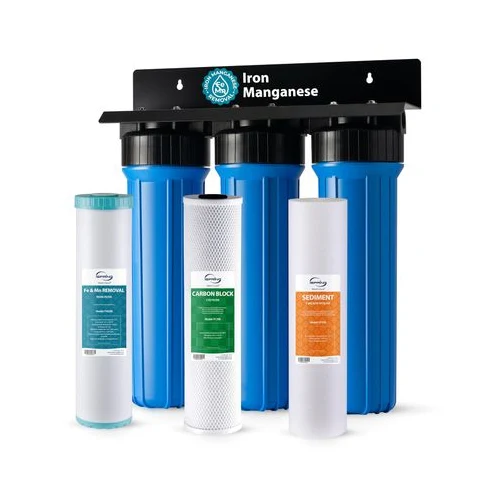
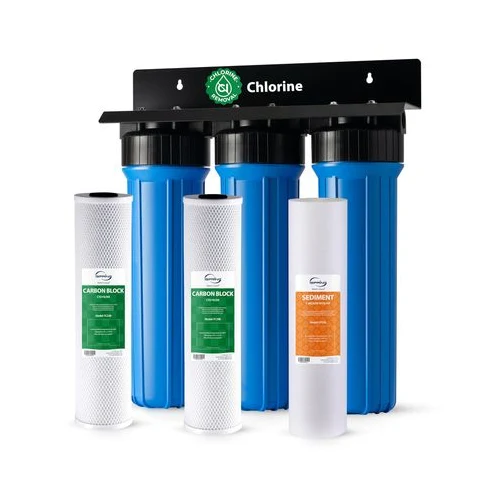
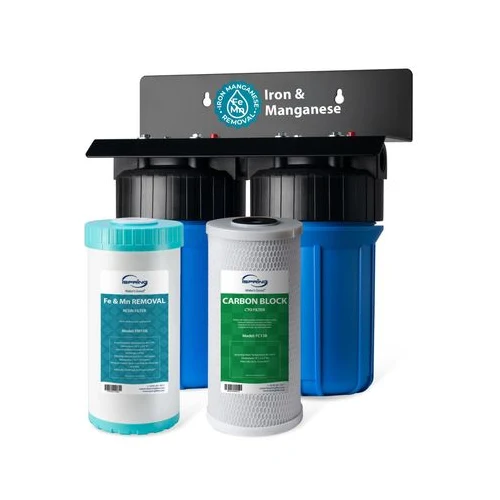
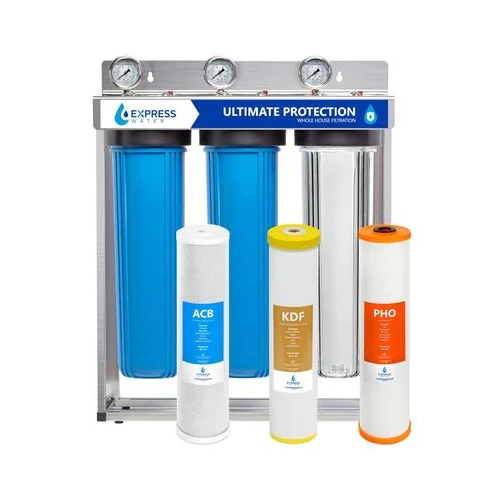
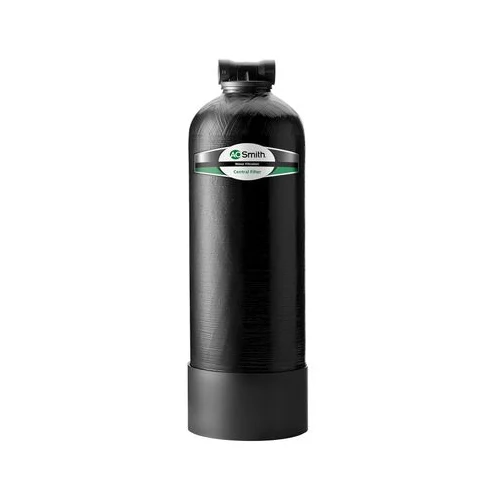
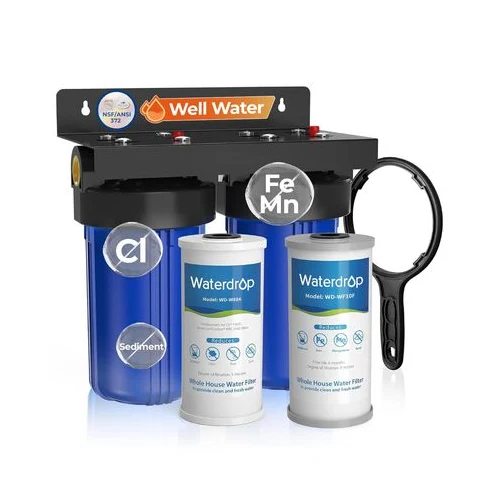
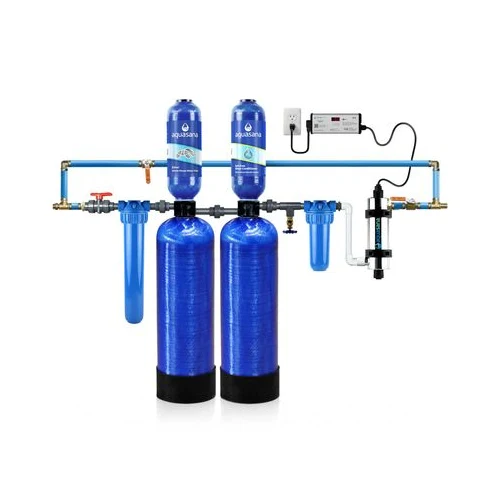
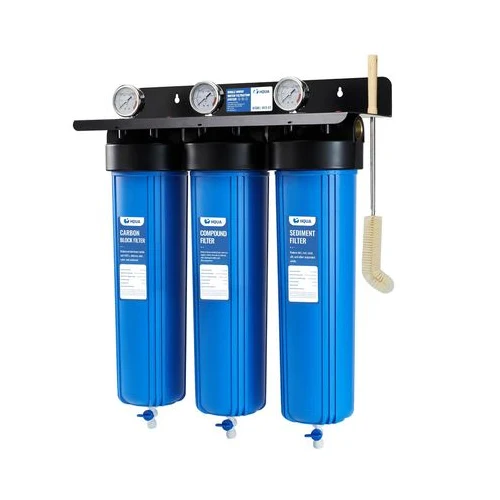
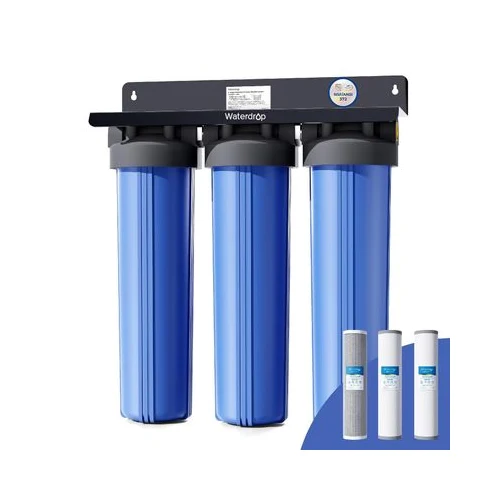
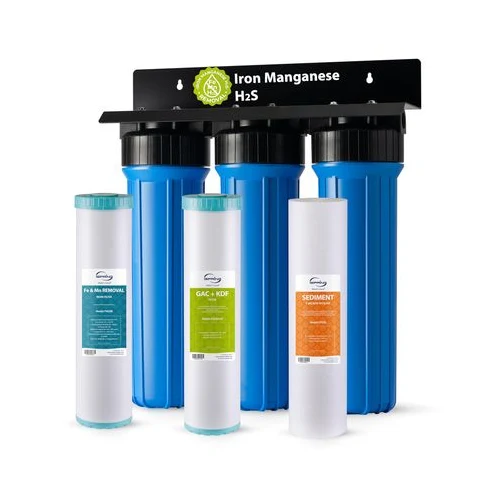
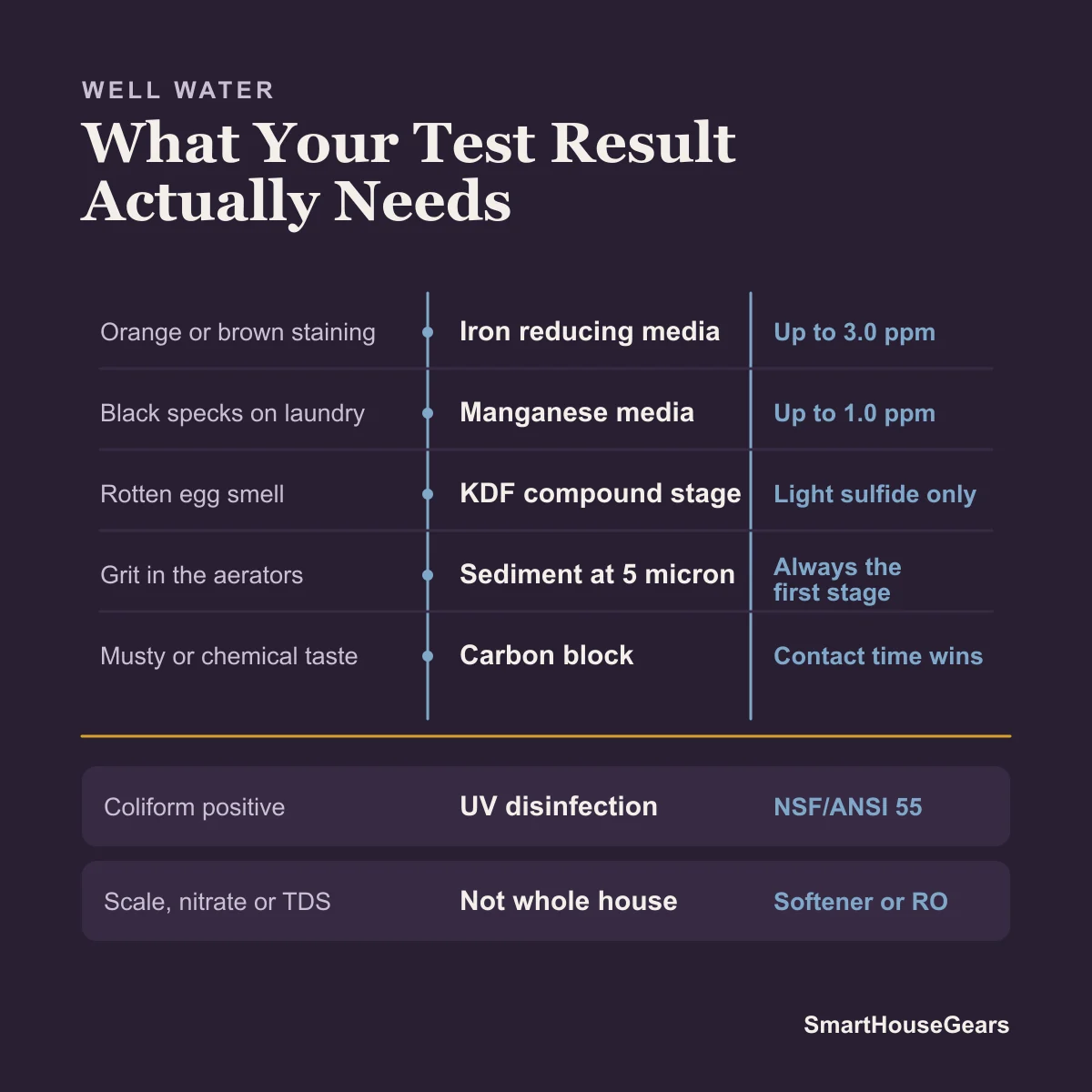
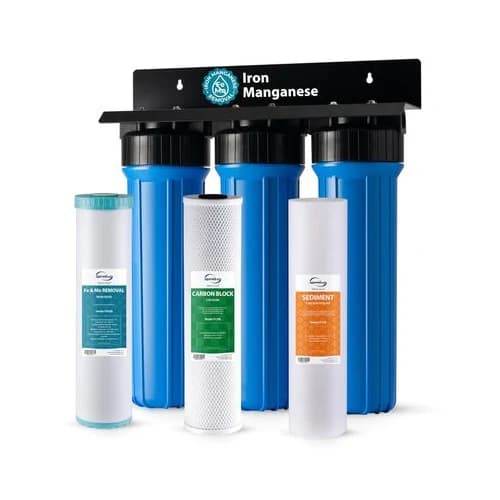
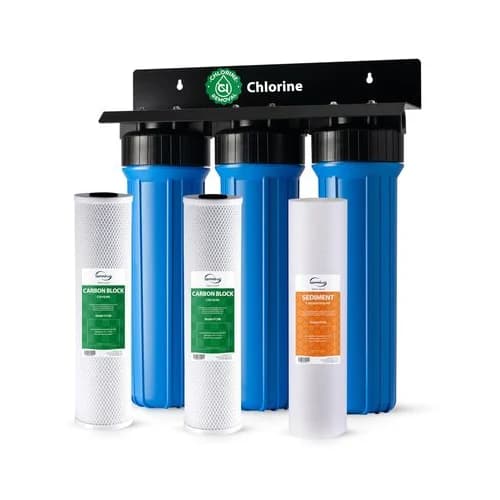
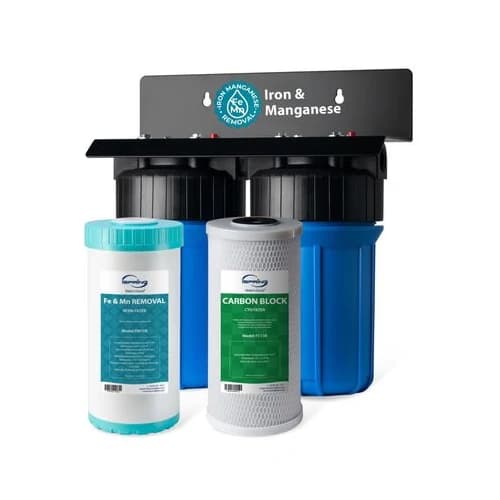
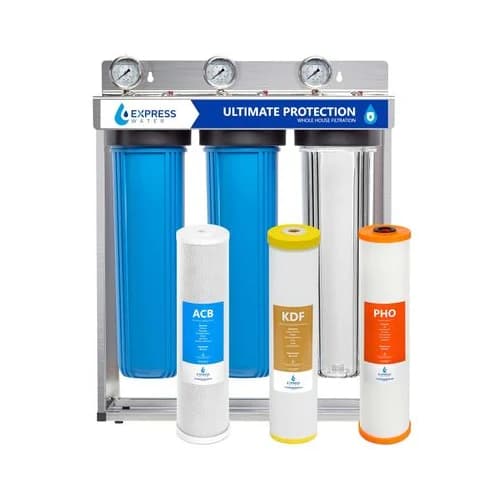
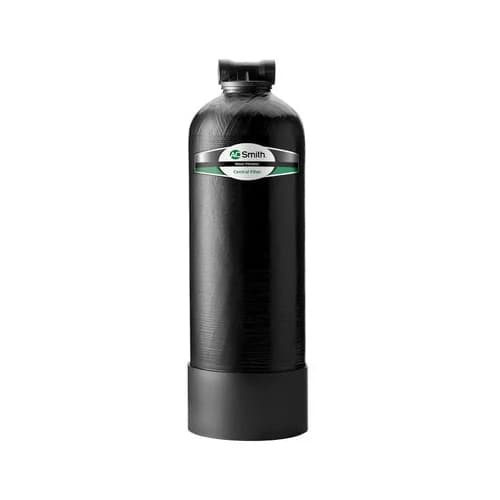
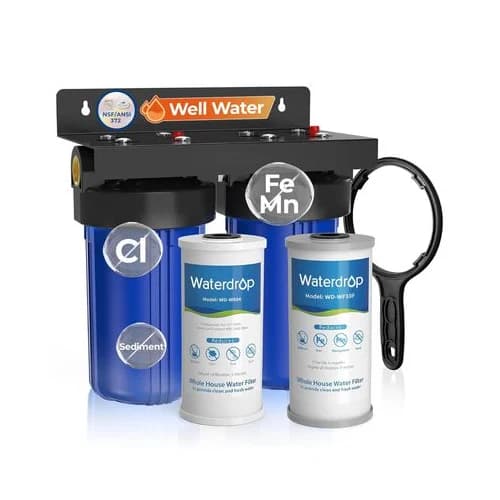
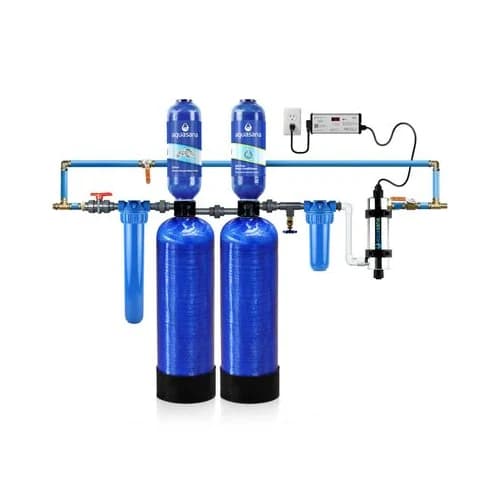
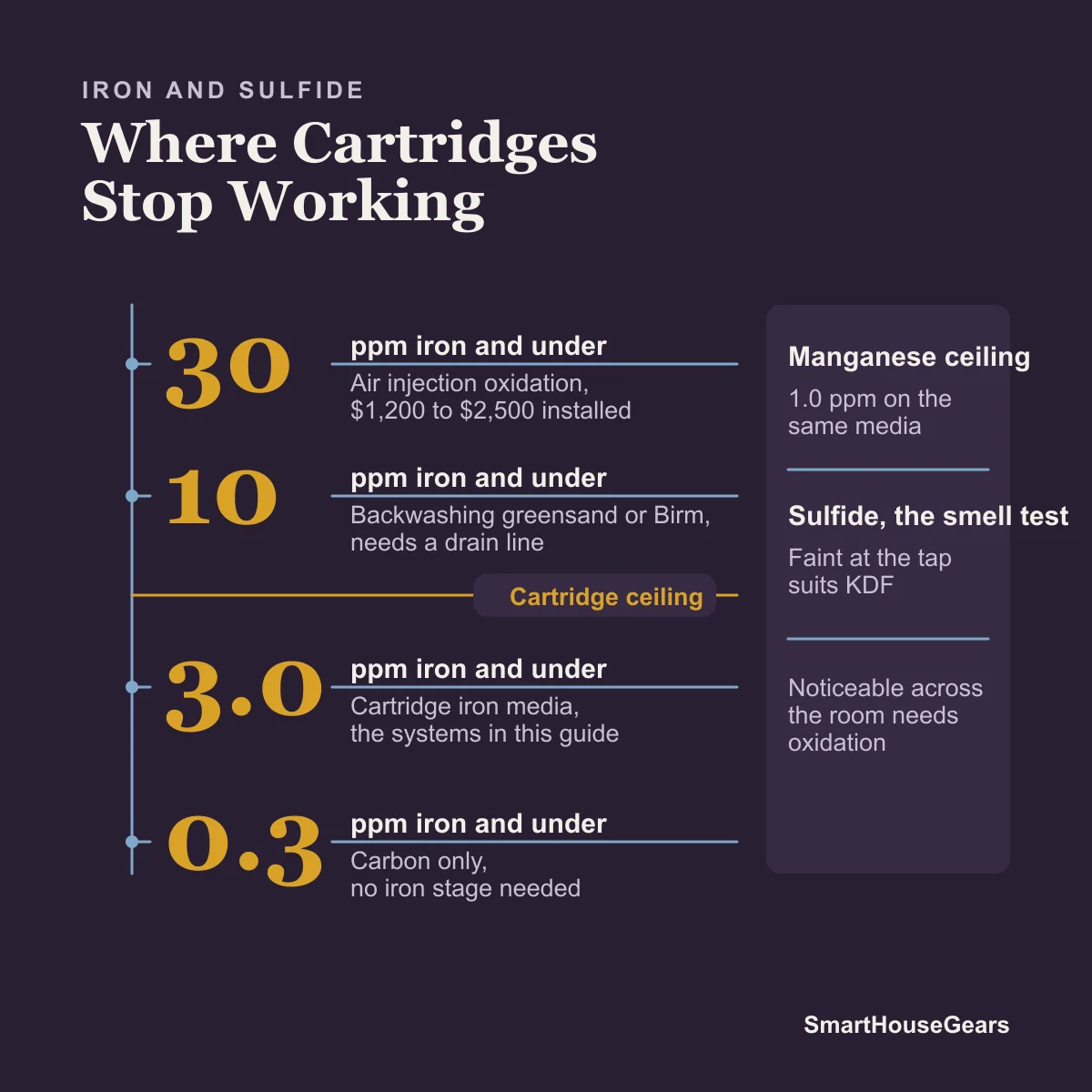
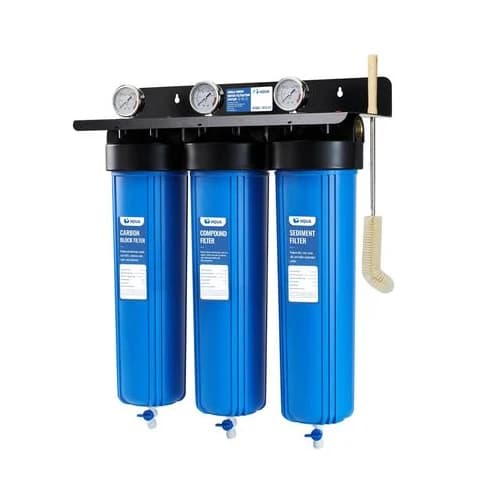
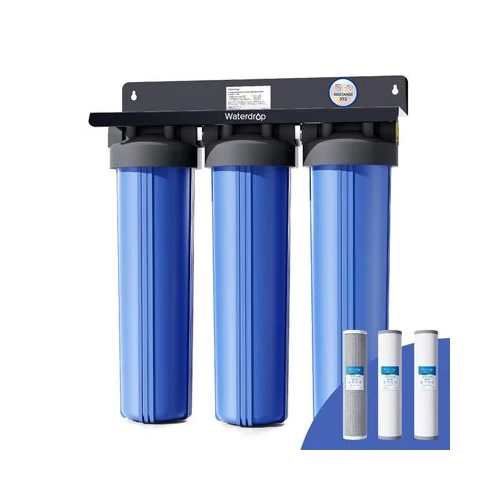
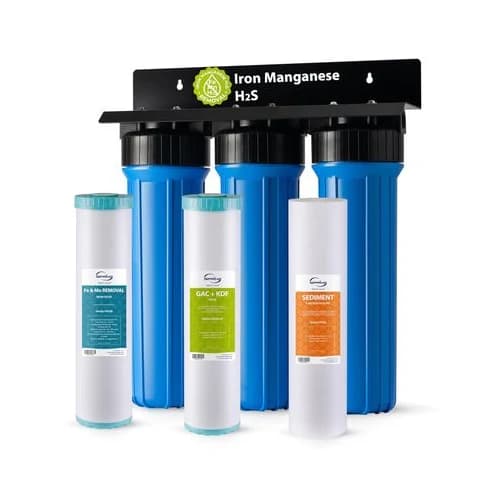
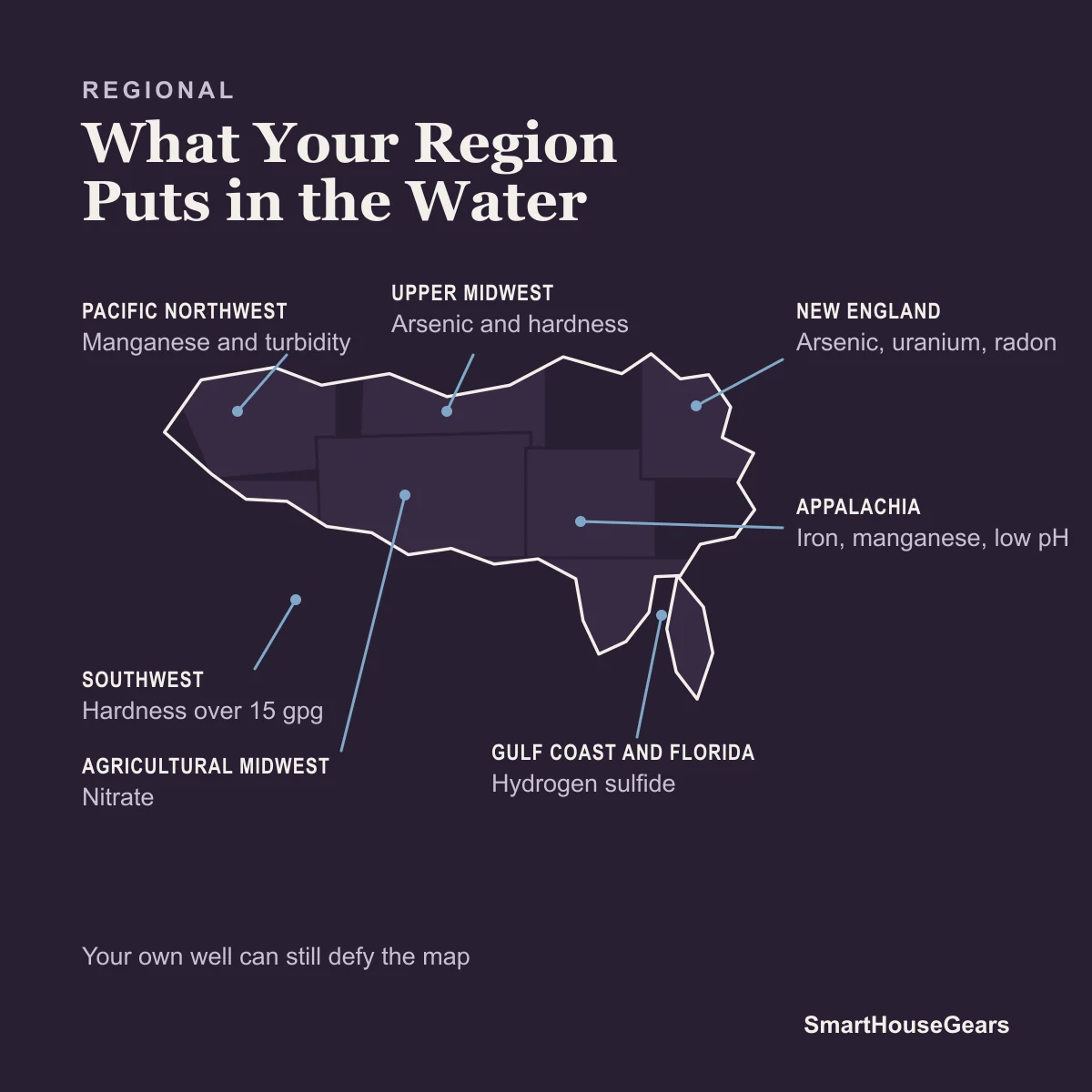
Discussion
Be the first to comment