The best mini split heat pump for garage use in 2026 is the one your electrical panel, your climate, and your install budget can actually support. A garage is the hardest room in an American house to condition.
You are fighting a concrete slab that pulls heat out of the space, an uninsulated door the size of a wall, and almost never a spare 230V circuit. Square footage alone will not tell you what to buy.
We compared Amazon.com listings, manufacturer specification sheets, AHRI and Energy Star documentation, and owner-report patterns across six verified ductless systems. Our pick for most two-car garages is MRCOOL 18,000 BTU DIY Ductless Mini Split.
The reason has almost nothing to do with its spec sheet. It is the only system in this guide you are actually permitted to install yourself, and that single fact moves the real project cost by $1,000 to $2,500.
That swing is larger than the price gap between any two units on this list. Sticker price is the least useful number in this category.
Two patterns jump out of that table. The cheapest units are not the weakest performers on paper, and the most expensive one is the only install you can legally handle alone.
That inverts how most people shop. Buyers compare a $599 to $749 ROVSUN against a $1,799 to $1,999 MRCOOL, then discover the cheaper unit needs a four-figure installation.
How Many BTU Does a Garage Mini Split Need?
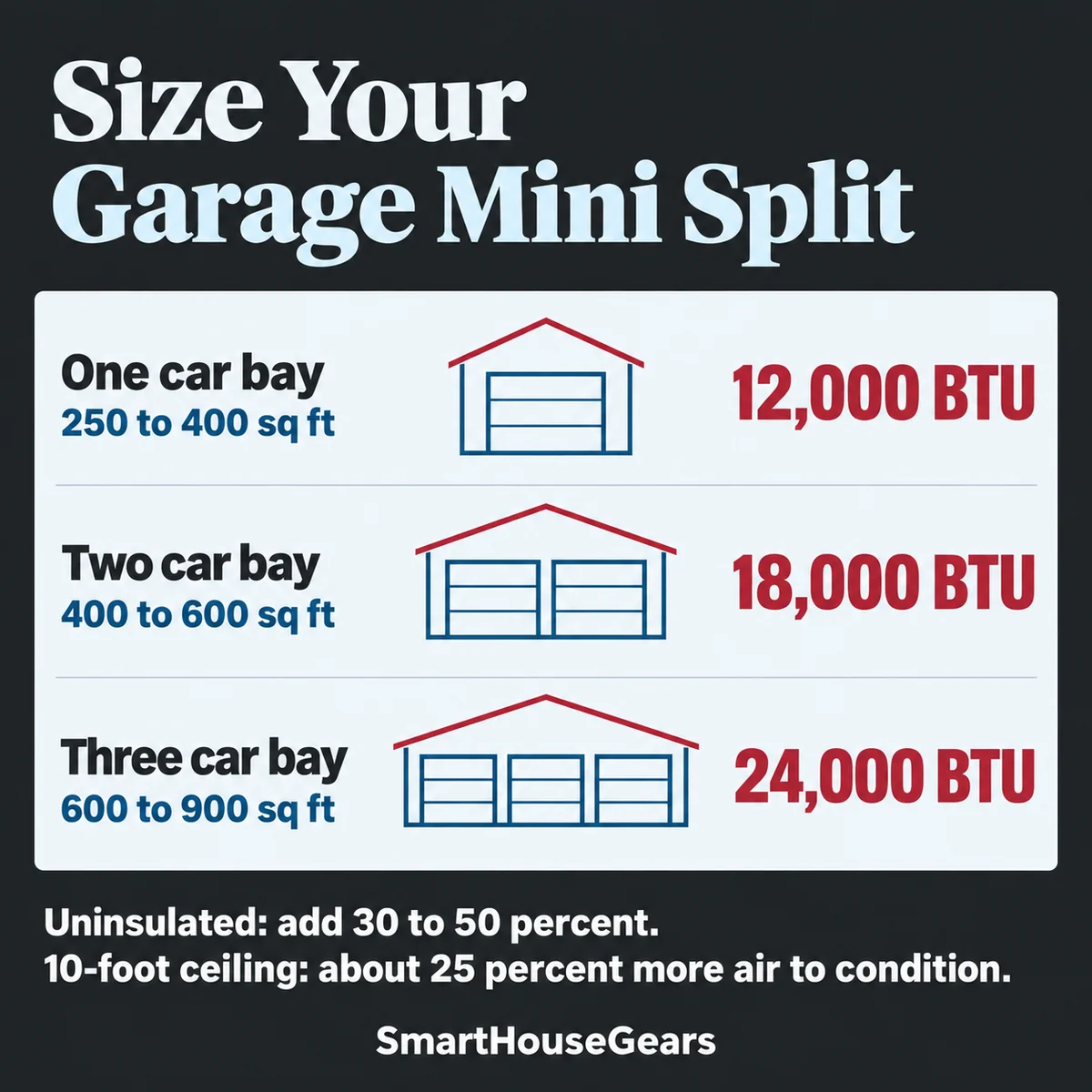
Size a garage mini split at 12,000 BTU for a one-car bay, 18,000 BTU for a typical insulated two-car garage, and 24,000 BTU or more for a three-car space. Garages need 30% to 50% more capacity than an interior room of the same square footage.
That penalty comes from three things a bedroom does not have. A concrete slab that acts as a heat sink, a large door with little or no insulation, and an air volume replaced every time the door rolls up.
Insulation changes the math more than any other factor. Filterbuy and other HVAC suppliers put an insulated garage door alone at a 30% to 40% cut in required capacity.
That routinely moves a buyer down a full tier, from an 18,000 BTU unit to a 12,000 BTU one. An insulated door in the $200 to $500 range can save you the price difference and keep saving on every bill afterward.
Ceiling height matters too, and most garage listicles skip it entirely. Capacity guidance assumes 8-foot ceilings, so a vaulted or 10-foot garage holds roughly 25% more air than its floor area suggests.
How to size a garage mini split: bay count and square footage across the left axis, insulation level and ceiling height as modifiers, and the recommended BTU tier as the result.
Resist the urge to oversize as insurance. An oversized inverter unit short-cycles, hitting the setpoint fast and shutting down before it ever pulls humidity out of the air.
In a garage already fighting condensation on a slab floor, that leaves you with a cold, clammy space and tools that rust. Correct sizing beats generous sizing every time.
If damp is your real complaint rather than temperature, solve that first. The logic in our smart dehumidifier guide for basements applies directly to a slab-floor garage, at a fraction of the cost.
Which Garage Mini Splits Are Actually DIY?
Only the MRCOOL 18,000 BTU DIY unit in this guide is sold for homeowner installation. The other five Amazon listings state that a licensed HVAC professional must perform the work, and Cooper & Hunter ties warranty validity to it.
This is the single most misreported fact in the garage mini split category. Search results are full of guides filing Senville, DELLA, and ROVSUN under "DIY mini splits" simply because the box arrives with a line set.
Arriving with a line set is not the same as arriving ready to install. The real distinction is whether the refrigerant circuit ever has to be opened.
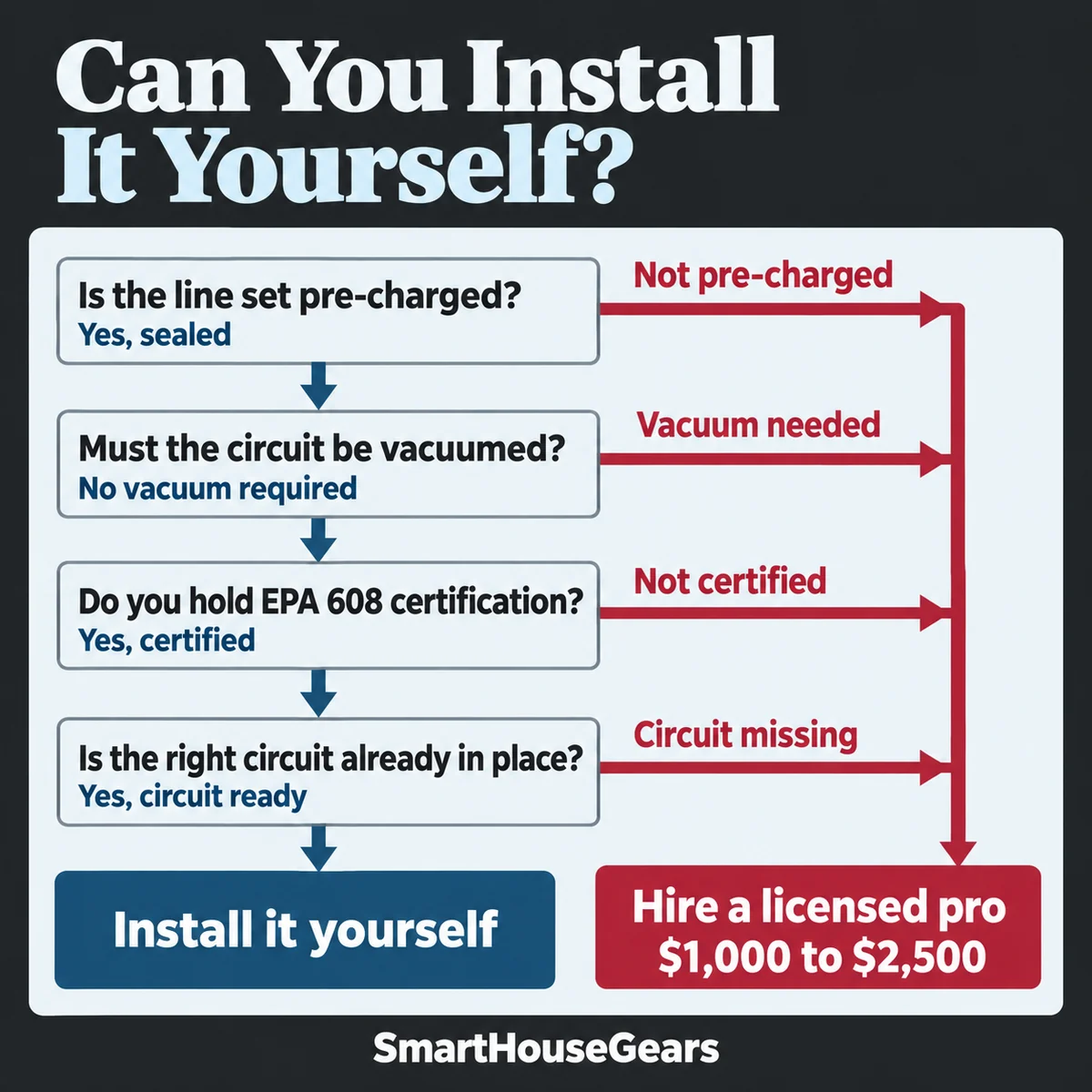
A pre-charged system ships with refrigerant sealed in the condenser and a pre-flared line set with quick-connect fittings. You mount both units, run the line set, tighten the connections, and open the service valves.
The sealed circuit is never exposed to atmosphere. That is what keeps the job inside homeowner territory.
An uncharged system is a different project. You flare the copper yourself, pull a deep vacuum with a pump and manifold gauges, hold that vacuum to prove the joints are tight, then release the charge.
Buying refrigerant and opening a sealed circuit requires EPA Section 608 certification under federal law. That is not a formality you can read your way around.
DELLA states the requirement plainly in its own Amazon listing. Line-set vacuuming is required during installation, and any change to line-set length requires adjusting refrigerant levels.
The install decision in four questions: is the line set pre-charged, does the circuit need vacuuming, do you hold EPA 608 certification, and does the garage already have the right circuit.
The financial gap makes this the first question to settle. Contractor installation for a single-zone garage system typically runs $1,000 to $2,500, depending on your market and the distance from condenser to panel.
Add that to a $599 to $749 ROVSUN and you land at roughly $1,600 to $3,100 all in. Buy the MRCOOL at $1,799 to $1,999, do the work over a weekend, and the electrician is often your only trade cost.
6 Best Mini Split Heat Pumps for Garage Use in 2026
We ranked these on total cost to a working garage, not on spec sheets alone. Install path, circuit requirements, cold-weather capability, warranty terms, and the depth of the owner base all outweighed a half-point of SEER2.
Best Overall
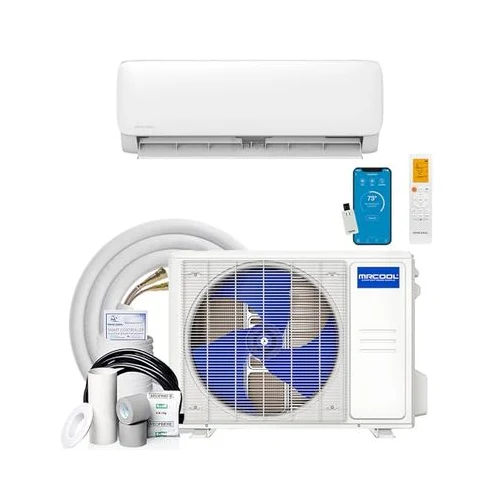
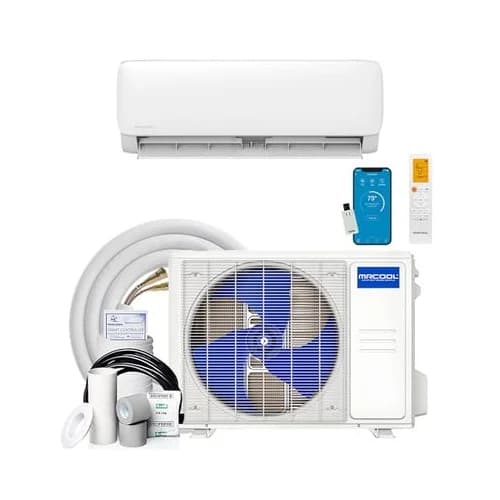
1. MRCOOL 18,000 BTU DIY Ductless Mini Split - Best Overall
Rated 4.5 out of 54.5· 134 reviews
The only system here you can legally install yourself, which saves $1,000 to $2,500 in contractor labor and makes it the cheapest finished garage in this guide despite the highest sticker price.
Key features
18,000 BTU heating and cooling for garages up to 750 sq ft
Pre-charged, pre-flared line set with quick-connect fittings, no vacuum pump needed
Built-in Smart HVAC control with Amazon Alexa and Google Assistant support
Requires a dedicated 208V to 230V circuit, so budget for an electrician
MRCOOL documents a 7-year compressor and 5-year parts warranty on the DIY 4th Gen line
What we like
Genuine homeowner installation with no EPA 608 certification required
Smart control is native to the unit rather than bolted on through a dongle
The largest DIY community in the category, so troubleshooting help is easy to find
Energy Star certified at 22 SEER on the 4th Gen DIY 18K configuration
Watch out for
Highest sticker price in this guide by a wide margin
Standard DIY series is not a hyper-heat unit, so output falls off in deep cold
Amazon stock for the DIY line moves in and out, so availability is inconsistent
The MRCOOL 18,000 BTU DIY Ductless Mini Split is the unit we would hand to most people converting a two-car garage into usable space. It is neither the cheapest box nor the most efficient one here.
It is the only one that lets you skip the largest line item in the project. Contractor labor on a single-zone install runs $1,000 to $2,500, more than the full purchase price of three units on this list.
The mechanism is the pre-charged line set. Refrigerant sits sealed in the condenser, and the line set arrives pre-flared with quick-connect fittings.
Because that circuit is never opened to atmosphere, the EPA 608 requirement does not apply. You are not buying refrigerant or evacuating a system, so the rule governing the other five units here simply does not reach you.
For a 750 sq ft garage, 18,000 BTU is the right tier if the space is insulated and the door is more than a bare steel panel. A leaky two-car garage in a hot climate wants this capacity rather than 12,000 BTU.
Smart control is built in through MRCOOL's Smart HVAC system, with Alexa and Google Assistant support. That matters more in a garage than a living room, because you want to pre-heat the space from indoors before walking out on a January morning.
This is also the unit that folds most cleanly into an existing setup. Pair it with one of our Matter smart home hub picks for USA homes and the garage becomes another room in your routines rather than another app.
The honest limitation is cold-weather output. The standard DIY series is not a hyper-heat product, so capacity sags on the coldest nights in Minnesota or upstate New York.
Availability is the other real risk. MRCOOL's DIY listings cycle in and out of stock on Amazon, and this ASIN is one of the few currently holding inventory.
Buy the MRCOOL 18,000 BTU DIY Ductless Mini Split if you will spend a weekend on a ladder and want the lowest all-in cost. Skip it if you were always hiring a contractor, because you would be paying a premium for a feature you never use.
Best Value
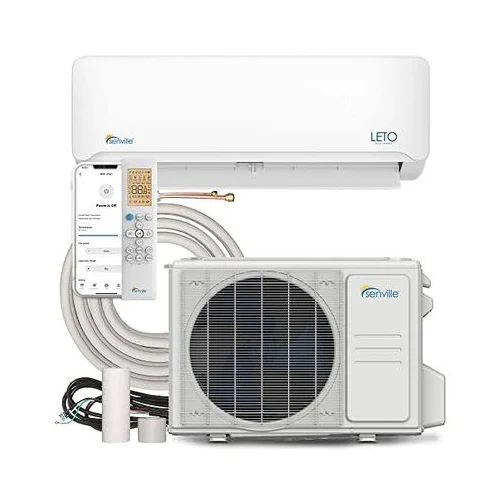
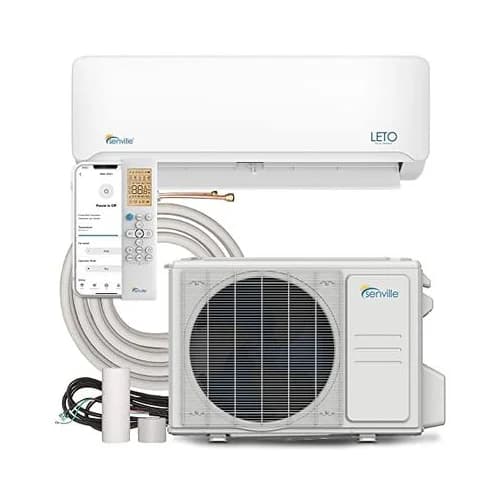
2. Senville LETO 12,000 BTU Mini Split - Best Value
Rated 4.4 out of 54.4· 2,180 reviews
The most proven hardware in this guide with more than 2,000 verified Amazon reviews, sold in both 115V and 230V variants, and backed by a 5-year parts and compressor warranty.
Key features
12,000 BTU covering 450 to 750 sq ft, right for a one-car bay or a tight insulated two-car garage
21.2 SEER2 on the 115V variant and 21.3 SEER2 on the 230V variant
Heat pump rated to 5°F, plus dehumidifier, fan and turbo modes
UL Listed and AHRI Certified with Alexa voice and app control
Pre-loaded with refrigerant for runs up to 25 ft, professional installation required
What we like
By far the deepest owner base here, which makes real-world problems easy to research
5 years on parts and 5 years on the compressor is strong for the price
Available in a 115V variant, so it can work without a new 230V circuit
Senville offers complimentary technical assistance, useful when a contractor has questions
Watch out for
Professional installation is required, so budget contractor labor on top
12,000 BTU is not enough for an uninsulated or three-car garage
The 115V and 230V variants share a listing, so the wrong pick is easy to order
The Senville LETO 12,000 BTU Mini Split carries 2,180 verified reviews, more owner feedback than the other five picks combined. For a sealed mechanical system expected to run a decade, that depth of evidence is worth real money.
The warranty tells the same story. Five years on parts and five on the compressor, plus free technical assistance from Senville, beats what most brands in this band commit to.
Efficiency is genuinely good rather than merely acceptable. Senville documents the 115V variant at 21.2 SEER2 and the 230V variant at 21.3 SEER2, competitive with units costing several hundred dollars more.
The 115V variant is the detail worth circling. Most American garages have one 120V circuit and nothing else, so a 12,000 BTU heat pump that runs on it removes an electrician from the project entirely.
Order carefully. Both voltages sit under related Senville LETO listings and the model codes differ only by a suffix.
Confirm the variant on the listing page before checkout. A 230V unit delivered to a 120V garage is a return shipment of a very heavy box.
Heating stops being useful around 5°F, which is honest for this class and fine across most of the country. If your garage regularly sees single digits, look at the DELLA Vario 18,000 BTU Mini Split instead.
Capacity is the real ceiling. At 12,000 BTU this suits a one-car garage, a workshop bay, or a well-insulated small two-car space, and it will struggle in an uninsulated 600 sq ft garage in a Texas August.
Buy the Senville LETO 12,000 BTU Mini Split if you are hiring a contractor anyway and want the most evidence-backed hardware for the money. On pure track record, it is the safest purchase in this guide.
Best for Cold Garages
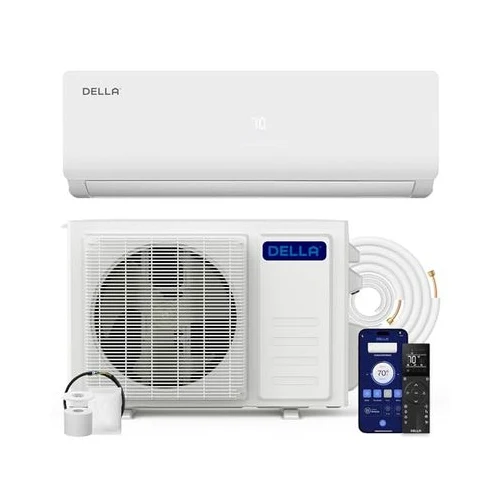
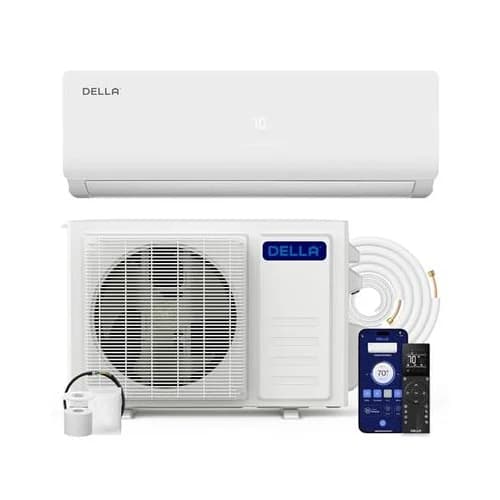
3. DELLA Vario 18,000 BTU Mini Split - Best for Cold Garages
Rated 4.4 out of 54.4· 1,438 reviews
Rated to keep heating at -4°F, which is 9 degrees lower than anything else in this guide, and it runs at 32 dBA so it does not drown out a shop radio.
Key features
18,000 BTU covering up to 1,000 sq ft on a 208V to 230V circuit
Heat pump rated to operate as low as -4°F, the coldest floor in this comparison
21 SEER2 with DC inverter technology and up to 30% claimed power savings
ETL Listed and AHRI Certified, running at 32 dBA with 4D airflow
Remote-mounted temperature sensing reads the air where you are, not at the ceiling unit
What we like
The best genuine cold-climate rating here for a Midwest or Northeast garage
32 dBA is quiet enough for a garage used as an office, gym or workshop
AHRI certification means the efficiency claims are third-party verified
The I Feel remote sensor avoids the classic problem of a ceiling-height unit misreading the room
Watch out for
DELLA states this is not a DIY system and mandates professional installation
Line-set vacuuming is required, so an EPA 608 certified contractor is unavoidable
Needs a dedicated 208V to 230V circuit with a maximum 20A fuse
The DELLA Vario 18,000 BTU Mini Split is the answer if your garage genuinely gets cold. Its -4°F heating rating is the lowest floor in this guide, and the gap to the 5°F units matters more than 9 degrees sounds.
Heat pump capacity falls as the outdoor temperature drops. A unit rated to 5°F is producing very little useful heat at 8°F, while one rated to -4°F still has headroom at that same temperature.
The 32 dBA noise figure is the second reason this earns its place. Garages are increasingly home gyms, podcast rooms, and remote-work offices, and quiet is worth paying for in a hard-surfaced room where every sound bounces.
AHRI certification is a detail most listings in this category cannot claim. It means the 21 SEER2 rating was verified by a third party rather than self-reported.
The remote temperature sensing has an outsized effect in a garage. Because the system reads temperature at the handheld remote rather than the ceiling-mounted head, it responds to air at bench height where heat has not pooled.
Now the honest part. DELLA is explicit that this is not a DIY mini split, that line-set vacuuming is required, and that changing line-set length means adjusting refrigerant levels.
Treat that as a hard cost rather than a suggestion. Add $1,000 to $2,500 of contractor labor and the DELLA lands close to a fully self-installed MRCOOL.
Buy the DELLA Vario 18,000 BTU Mini Split if winter is real where you live, you are hiring out regardless, and quiet operation matters. It is the most refined unit here for the money.
Best on a 115V Circuit
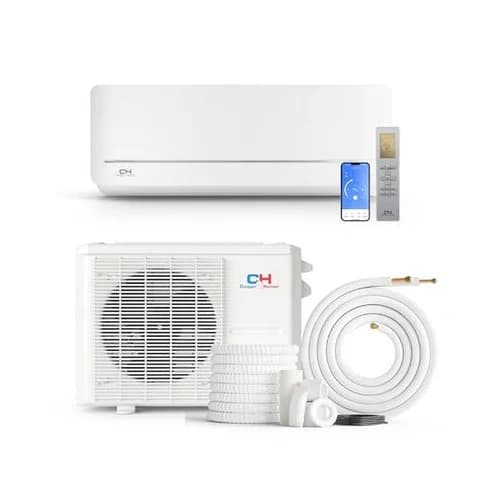
4. Cooper & Hunter MIA 12,000 BTU Mini Split - Best on a 115V Circuit
Rated 4.3 out of 54.3· 575 reviews
A 115V-only system from an established HVAC brand, using the new R454B refrigerant and backed by a 7-year compressor warranty, for garages with nothing but a standard outlet circuit.
Key features
12,000 BTU at 21.2 SEER2, purpose-built for 115V service, covering 450 to 550 sq ft
Uses R454B, the lower-impact A2L refrigerant the US industry moved to in 2025
Wi-Fi smart kit included in the box for scheduling and remote temperature control
UL Listed and AHRI Certified with heating rated to 5°F
Ships with a 16 ft pre-flared insulated line set, communication wire and drain extension
What we like
The only pick here designed exclusively for 115V, removing the new-circuit problem
Cooper & Hunter documents a 7-year compressor and 5-year parts warranty
R454B is the current-generation refrigerant, so future servicing stays straightforward
Established HVAC brand with a real dealer and parts network behind it
Watch out for
Warranty requires registration within 60 days and a licensed professional install
450 to 550 sq ft is the tightest coverage in this guide
Costs more than 18,000 BTU units from newer brands
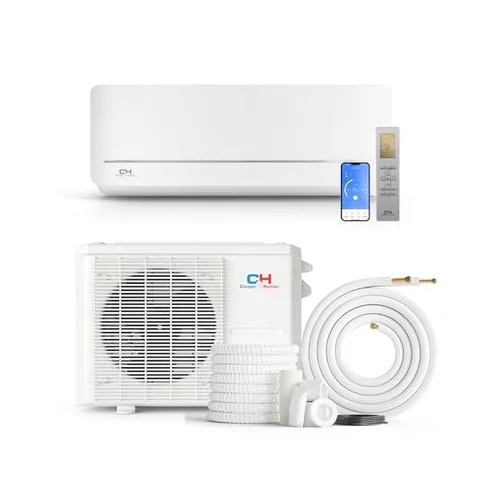
The Cooper & Hunter MIA 12,000 BTU Mini Split solves one specific and very common problem. Your garage has a single 120V outlet circuit, your panel is full, and a new 230V line means an electrician, a permit, and possibly a service upgrade.
This unit is engineered for 115V service rather than offered as a variant. That is a meaningfully different proposition, and it shows in a 21.2 SEER2 rating the 115V tier does not usually reach.
The refrigerant choice signals where the industry is heading. R454B is the A2L refrigerant that replaced R-410A across new US residential equipment in 2025, so parts and service stay conventional for the life of the unit.
Warranty terms are among the strongest here: 7 years on the compressor and 5 on parts, with a Toshiba-GMCC inverter compressor underneath. Registration is required within 60 days of installation, an easy step to forget and an expensive one to skip.
The Wi-Fi kit shipping in the box rather than as a paid accessory is a genuine convenience. Several competitors advertise smart control, then send a unit that needs a separate dongle.
The limitation is straightforward at 450 to 550 sq ft. That covers a one-car garage or a compact insulated two-car space, and pushing it into a full uninsulated bay will disappoint you on the hottest and coldest days.
Professional installation is required and the warranty depends on it. As with everything except the MRCOOL, budget contractor labor from the start.
Buy the Cooper & Hunter MIA 12,000 BTU Mini Split if your electrical situation rules out 230V and you want established-brand hardware with a long compressor warranty. It is the most sensible answer to a constrained panel.
Best Budget Pick
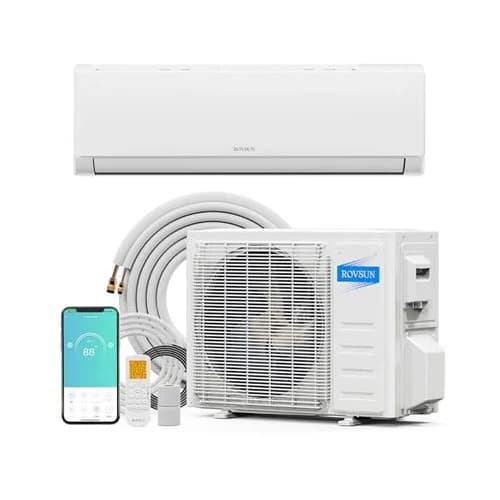
5. ROVSUN 18,000 BTU Wi-Fi Mini Split - Best Budget Pick
Rated 4.4 out of 54.4· 121 reviews
The cheapest credible way to get 18,000 BTU and app control into a two-car garage, provided you already have the 230V circuit and a contractor lined up.
Key features
18,000 BTU covering up to 1,000 sq ft on a 230V circuit
20 SEER2 inverter compressor with claimed energy savings up to 35%
32 dB in mute mode with a uniform air distribution design
App and voice control through Alexa and Google Assistant alongside the remote
Pre-charged condenser with a 16.4 ft line set, though an extra power cord is needed
What we like
Lowest entry price in this guide for full 18,000 BTU capacity
Quiet 32 dB mute mode matches units costing several hundred dollars more
Voice and app control included rather than sold as an add-on
Pre-charged condenser reduces the work a contractor has to do on site
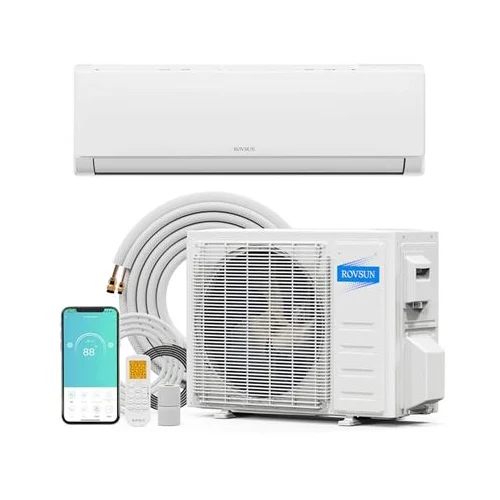
The ROVSUN 18,000 BTU Wi-Fi Mini Split is the value play for a garage that already has the infrastructure. If the 230V circuit exists and a contractor is booked, this is the least you can spend on a full two-car-garage system with app control.
The specification list holds up better than the price suggests. 20 SEER2, a 32 dB mute mode, 1,000 sq ft of coverage, and Alexa and Google support would have cost twice as much three years ago.
The pre-charged condenser matters even though this is not a DIY unit. It shortens the contractor's on-site time, which pulls real money out of an hourly labor quote.
The two-box shipping detail is a practical trap. Indoor and outdoor units travel separately and can arrive days apart.
Booking an installer before both boxes reach your driveway is exactly how a wasted trip charge happens. ROVSUN also notes that an extra power cord is needed beyond what ships in the box, so raise that with your electrician during the circuit scope.
The review base is our one reservation. At 121 ratings the 4.4 average is good, but the sample is thin beside the 2,180 behind the Senville LETO.
For a garage rather than a bedroom, we find that acceptable. A garage is a forgiving application, and the downside of a failure is a cold workshop rather than an unlivable house.
Buy the ROVSUN 18,000 BTU Wi-Fi Mini Split if the circuit exists, the installer is booked, and you want maximum capacity per dollar. Choose the Senville LETO 12,000 BTU Mini Split instead if a deep track record matters more than raw capacity.
Best Coverage per Dollar
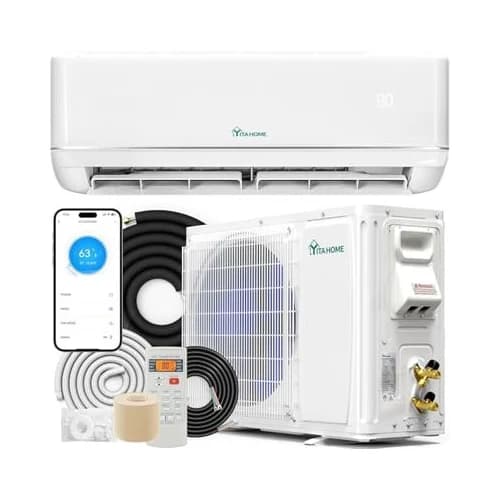
6. YITAHOME 18,000 BTU Mini Split - Best Coverage per Dollar
Rated 4 out of 54.0· 444 reviews
The widest coverage rating in this guide at 1,250 sq ft, with 21 SEER2 efficiency, PM2.5 filtration and a 135°F self-cleaning cycle that suits a dusty workshop.
Key features
18,000 BTU rated for areas up to 1,250 sq ft on 208V to 230V
21 SEER2 with claimed savings up to 25%, and up to 50% against a 14 SEER2 unit
Operating range from 5°F to 118°F with automatic defrost
135°F self-cleaning cycle plus negative ion, electrostatic and PM2.5 filtration
Wi-Fi and Alexa control, five modes, four fan speeds and a 0 to 24 hour timer
What we like
Largest coverage figure here, which gives a big or leaky garage useful headroom
The self-clean cycle and PM2.5 filtration genuinely suit sawdust and exhaust fumes
Amazon-fulfilled with Prime shipping, unusual for equipment this heavy
118°F upper limit handles a Phoenix or Las Vegas garage in July
Watch out for
Lowest rating in this guide at 4.0 stars across 444 reviews
Must be installed by a licensed HVAC professional per the manufacturer
Ships in two packages and excludes shut-off valves and the side protection grille
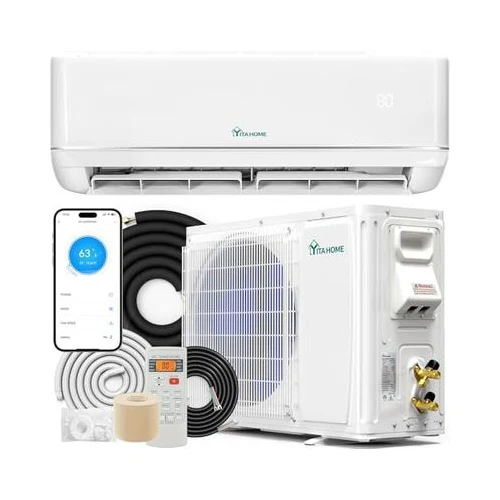
The YITAHOME 18,000 BTU Mini Split buys the most conditioned square footage per dollar of anything here. A 1,250 sq ft rating at this price is unusual, and that headroom separates comfortable from nearly comfortable in a large or leaky garage.
The 5°F to 118°F operating range is the spec we would highlight for southwestern buyers. A closed garage in Phoenix or Las Vegas can exceed 120°F in July, and plenty of units fault out rather than run in that heat.
The air-handling features fit a garage particularly well. A 135°F self-cleaning cycle, electrostatic filtration, and PM2.5 removal all matter in a room collecting sawdust, brake dust, and exhaust.
The 4.0 star rating is why it sits sixth rather than higher. That is exactly at our quality floor, and across 444 reviews it suggests more inconsistency than the 4.4 and 4.5 averages above it.
Read that alongside the install requirement and a pattern emerges. Systems demanding professional installation attract poor ratings from buyers who attempted it anyway, then reviewed the outcome.
The listing exclusions deserve attention before you order. Shut-off valves and the side protection grille are not included, and an installer will expect to find both in the box.
Prime fulfillment is a real advantage on hardware this heavy. Returns and damage claims on an Amazon-fulfilled item are far simpler than on a third-party freight shipment.
Buy the YITAHOME 18,000 BTU Mini Split if your garage is large, hot, or dusty and you want maximum coverage for the least money. Choose the ROVSUN 18,000 BTU Wi-Fi Mini Split if you prefer the higher owner rating and can live with 1,000 sq ft.
What Should You Check Before Buying a Garage Mini Split?
Check four things before you compare prices: your electrical panel, your coldest week, your insulation, and who is legally allowed to install the unit. Each one can change which product is correct for you, and panel capacity rules out more units than budget does.
Does your garage have the right electrical circuit?
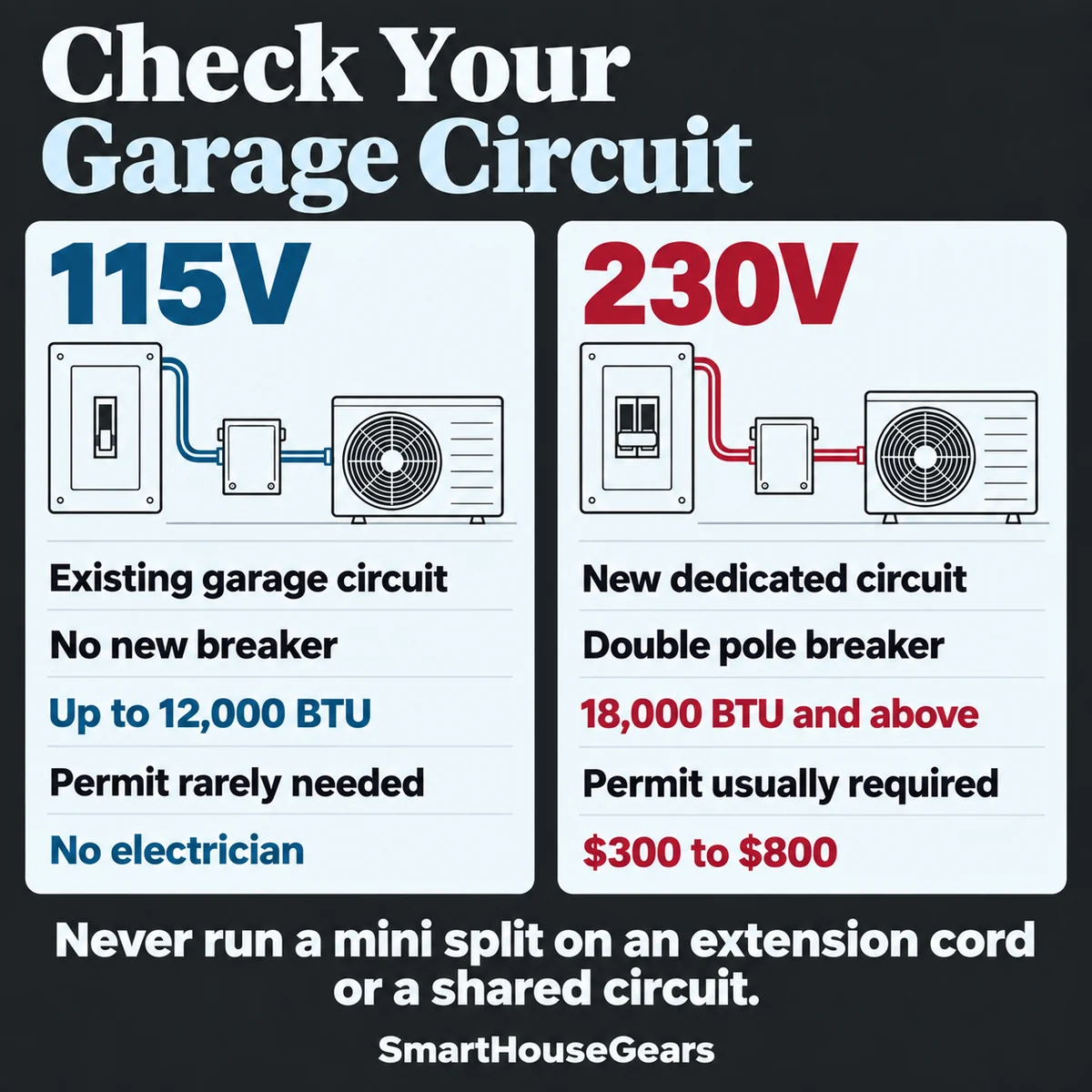
Check your panel before you check prices. Every 18,000 BTU unit here needs a dedicated 208V to 230V circuit, while most American garages have one 120V circuit shared with the door opener.
Adding a 230V circuit means an electrician, a breaker, a whip, and usually a permit. Budget $300 to $800 for a straightforward run, and considerably more if your panel is full and needs a subpanel.
Both are worth a hard look even at lower capacity. Never run a mini split on an extension cord or a shared circuit, because inverter compressors draw a heavy startup surge and a shared circuit will nuisance-trip at best.
If a new circuit is off the table entirely, a ductless system may be the wrong product for your garage. A window or portable garage air conditioner from our smart air conditioner guide for apartments plugs into standard 120V and cools a single bay without touching your panel.
What each circuit option actually requires: existing 120V garage service versus a new dedicated 230V run, with the breaker, disconnect and permit steps for each path.
How cold does your garage actually get?
Match the heating floor to your climate zone rather than the national average. A unit rated to 5°F is fine across most of the South and West Coast, and marginal through the Midwest and Northeast.
Capacity does not stop at the rated floor, it declines toward it. Industry data shows an 18,000 BTU unit making around 16,000 BTU of heat at 47°F can fall to roughly half that near 5°F.
That is why you size for your coldest week rather than your average one. The DELLA Vario 18,000 BTU Mini Split at -4°F is the only pick here with genuine cold-climate headroom, and the one to shortlist in Minnesota, Vermont, or upstate New York.
For punishing winters, a hyper-heat class unit rated to -13°F or -22°F is the correct product category. None cleared our review-quality floor on Amazon.com this cycle, so we left the slot empty rather than recommend a unit with three reviews behind it.
Is your garage insulated enough to condition?
Insulate before you install, never after. Conditioning an uninsulated garage is like heating a tent, and the unit will run continuously while your bill climbs.
The priority order is simple. Garage door first because it is the largest uninsulated surface, then the exterior walls, then the ceiling if there is living space above.
An insulated door in the $200 to $500 range can cut required capacity by 30% to 40%. That often drops you a full BTU tier, so the insulation partly pays for itself at purchase rather than only through savings.
Weatherstripping the bottom seal and perimeter is the cheapest improvement available. A quarter-inch gap along a 16-foot door leaks more conditioned air than most people believe.
Who is allowed to install it, and what does that cost?
Settle the install path before comparing prices, because it is the largest variable in the project. Five of our six picks require a licensed HVAC professional, and Cooper & Hunter makes the warranty conditional on it.
Contractor installation for a single-zone garage system typically runs $1,000 to $2,500. Distance from the panel, condenser mounting, and line-set length drive most of that variation.
Only the MRCOOL 18,000 BTU DIY Ductless Mini Split is sold for homeowner installation. Even there, send the electrical circuit to a licensed electrician: the refrigerant side is designed for you, the panel is not.
Get two quotes before ordering. Installer pricing in this category varies more between contractors than the hardware varies between brands.
Before You Order a Garage Mini Split
Measure the garage properlyFloor area plus ceiling height, since a 10-foot ceiling adds 25% more air volume to condition
Open your electrical panelConfirm space for a dedicated 230V breaker, or shortlist a 115V unit instead
Check your coldest week, not your averageMatch the heating floor to the low temperature your garage actually sees in January
Insulate the door firstA $200 to $500 insulated door can drop you a full BTU tier before you buy anything
Confirm the install path in the listingLook for pre-charged line set language, or the phrase requiring a licensed HVAC professional
Call your building departmentNew circuits and refrigerant appliances usually need a permit, and unpermitted work complicates a sale
Plan the condenser locationCheck HOA rules, setback requirements, and whether snow or roof runoff will land on it
Register the warranty on timeCooper & Hunter requires registration within 60 days of installation to keep coverage valid
What about rebates and the federal tax credit?
The federal credit is gone. Section 25C, the Energy Efficient Home Improvement Credit, expired on December 31, 2025 under the One Big Beautiful Bill Act, so a heat pump bought in 2026 does not qualify.
Ignore any guide still telling you to claim 30% back. That advice is a year out of date, and it is the most common error in current garage mini split content.
Utility rebates are the live opportunity. Many providers still offer $50 to $500 on qualifying high-efficiency heat pumps, with Energy Star certification as the usual threshold.
Check your specific utility before ordering, since most programs require pre-approval or a licensed installer's invoice. A DIY install can disqualify you from a rebate a contractor install would have earned, which is worth pricing into the decision.
Will your HOA allow the outdoor unit?
Read your covenants before choosing a mounting spot. Many HOAs restrict equipment visible from the street, and a condenser on the front-facing garage wall is exactly what those rules target.
Side and rear placement usually clears the requirement. Ground-mounted pads with a screen are approved more often than wall brackets on a visible elevation.
Noise ordinances are the other consideration in dense neighborhoods. The 32 dBA figure on the DELLA Vario refers to the indoor head, and outdoor condensers run considerably louder.
Mount the condenser away from a neighbor's bedroom window where you can. It costs nothing at install time and prevents a conversation you would rather avoid.
MRCOOL vs Senville vs DELLA: Which Wins a Two-Car Garage?
MRCOOL 18,000 BTU DIY vs DELLA Vario 18,000 BTU
Side by sideMRCOOL 18,000 BTU DIY vs DELLA Vario 18,000 BTU
Best Overall
MRCOOL 18,000 BTU DIY Ductless Mini Split
$1,799 to $1,999
Install Path
Homeowner, pre-charged(wins this comparison)
Heating Floor
Standard series
All-In Cost
Lowest with labor counted(wins this comparison)
Smart Control
Built-in Smart HVAC(wins this comparison)
Best for Cold Garages
DELLA Vario 18,000 BTU Mini Split
$949 to $1,149
Install Path
Licensed contractor
Heating Floor
Rated to -4°F(wins this comparison)
All-In Cost
Higher after labor
Smart Control
Wi-Fi and Alexa
Specification
Best OverallMRCOOL 18,000 BTU DIY Ductless Mini Split$1,799 to $1,999
Best for Cold GaragesDELLA Vario 18,000 BTU Mini Split$949 to $1,149
Install Path
Homeowner, pre-charged(wins this comparison)
Licensed contractor
Heating Floor
Standard series
Rated to -4°F(wins this comparison)
All-In Cost
Lowest with labor counted(wins this comparison)
Higher after labor
Smart Control
Built-in Smart HVAC(wins this comparison)
Wi-Fi and Alexa
The MRCOOL 18,000 BTU DIY Ductless Mini Split wins on total project cost for anyone willing to do the work. The DELLA's lower sticker price disappears the moment a contractor invoice lands.
The DELLA Vario 18,000 BTU Mini Split wins on cold weather and on quiet. If January nights hit single digits, or the garage doubles as an office, the -4°F rating and 32 dBA output are worth hiring out for.
Senville LETO 12,000 BTU vs Cooper & Hunter MIA 12,000 BTU
Side by sideSenville LETO 12,000 BTU vs Cooper & Hunter MIA 12,000 BTU
Best Value
Senville LETO 12,000 BTU Mini Split
$749 to $899
Owner Base
2,180 reviews(wins this comparison)
Coverage
450 to 750 sq ft(wins this comparison)
Warranty
5 yr parts and comp
Circuit
115V or 230V
Best on a 115V Circuit
Cooper & Hunter MIA 12,000 BTU Mini Split
$849 to $999
Owner Base
575 reviews
Coverage
450 to 550 sq ft
Warranty
7 yr comp, 5 yr parts(wins this comparison)
Circuit
115V, R454B(wins this comparison)
Specification
Best ValueSenville LETO 12,000 BTU Mini Split$749 to $899
Best on a 115V CircuitCooper & Hunter MIA 12,000 BTU Mini Split$849 to $999
Owner Base
2,180 reviews(wins this comparison)
575 reviews
Coverage
450 to 750 sq ft(wins this comparison)
450 to 550 sq ft
Warranty
5 yr parts and comp
7 yr comp, 5 yr parts(wins this comparison)
Circuit
115V or 230V
115V, R454B(wins this comparison)
The Senville LETO 12,000 BTU Mini Split wins for most buyers on evidence and coverage. Nearly four times the review base and 200 extra square feet, for less money, is a straightforward argument.
The Cooper & Hunter MIA 12,000 BTU Mini Split wins if 115V is a hard constraint and you want the longer compressor warranty. Being engineered for 115V rather than offered as a variant also removes the risk of ordering the wrong version.
The budget pair: ROVSUN vs YITAHOME
Both are 18,000 BTU, both need a 230V circuit, and both need a contractor. The split between them is coverage against consistency.
The YITAHOME 18,000 BTU Mini Split claims 1,250 sq ft against the ROVSUN's 1,000, and adds PM2.5 filtration and a self-clean cycle suited to a workshop. It also carries the lowest rating here at 4.0 stars.
The ROVSUN 18,000 BTU Wi-Fi Mini Split holds a 4.4 average across only 121 reviews. We would take the ROVSUN for a standard two-car garage, and the YITAHOME for a large, dusty, or very hot one.
Garage Mini Split Specifications Compared Side by Side
TableGarage Mini Split Specs for US Buyers
Product
Capacity
Circuit
SEER2
Heats To
Install
Warranty
MRCOOL DIY 18K
18,000 BTU
208V to 230V
22
Standard
Homeowner
7 yr / 5 yr
Senville LETO
12,000 BTU
115V or 230V
21.2
5°F
Pro
5 yr / 5 yr
DELLA Vario
18,000 BTU
208V to 230V
21
-4°F
Pro
Per listing
Cooper & Hunter MIA
12,000 BTU
115V only
21.2
5°F
Pro
7 yr / 5 yr
ROVSUN Wi-Fi
18,000 BTU
230V
20
Standard
Pro
Per listing
YITAHOME
18,000 BTU
208V to 230V
21
5°F
Pro
Per listing
MRCOOL DIY 18K
Capacity
18,000 BTU
Circuit
208V to 230V
SEER2
22
Heats To
Standard
Install
Homeowner
Warranty
7 yr / 5 yr
Senville LETO
Capacity
12,000 BTU
Circuit
115V or 230V
SEER2
21.2
Heats To
5°F
Install
Pro
Warranty
5 yr / 5 yr
DELLA Vario
Capacity
18,000 BTU
Circuit
208V to 230V
SEER2
21
Heats To
-4°F
Install
Pro
Warranty
Per listing
Cooper & Hunter MIA
Capacity
12,000 BTU
Circuit
115V only
SEER2
21.2
Heats To
5°F
Install
Pro
Warranty
7 yr / 5 yr
ROVSUN Wi-Fi
Capacity
18,000 BTU
Circuit
230V
SEER2
20
Heats To
Standard
Install
Pro
Warranty
Per listing
YITAHOME
Capacity
18,000 BTU
Circuit
208V to 230V
SEER2
21
Heats To
5°F
Install
Pro
Warranty
Per listing
Read that table from the right, not the left. The Install column changes the real price of every row more than the capacity column does.
Efficiency clusters tightly between 20 and 22 SEER2 across all six, so it is not the deciding variable most guides claim. Circuit type, heating floor, and who is allowed to touch the refrigerant are where these units genuinely differ.
Hiring a contractor, want proven hardware: the Senville LETO 12,000 BTU Mini Split has 2,180 verified reviews and a 5-year parts and compressor warranty.
Circuit already in place, tight budget: the ROVSUN 18,000 BTU Wi-Fi Mini Split gives you 18,000 BTU and app control for the least money.
Large, hot or dusty garage: the YITAHOME 18,000 BTU Mini Split covers 1,250 sq ft and adds PM2.5 filtration and a 135°F self-clean cycle.
Mistakes That Wreck a Garage Mini Split Install
The first mistake is buying before checking the panel. People order an 18,000 BTU unit, then learn a 230V circuit needs a subpanel and a four-figure electrician quote on top of the install they already budgeted.
The second is treating "includes a line set" as "you can install this." Only a pre-charged, pre-flared system with quick-connect fittings is homeowner-installable, and five of our six picks are not.
The third is skipping insulation and buying capacity instead. An oversized unit in an uninsulated garage short-cycles, leaves the slab damp, and costs more every month than the insulation would have cost once.
The fourth is mounting the condenser badly. Under a roof valley where snow slides off, in a corner with no airflow clearance, or on the elevation your HOA polices are all avoidable and expensive to redo.
The fifth is forgetting the warranty registration. Cooper & Hunter requires it within 60 days, and a lapsed registration turns a 7-year compressor warranty into no warranty at all.
The sixth is running the system with the garage door open. No mini split at any price conditions an open volume, and the compressor will run continuously while you achieve nothing.
Final Verdict: Which Garage Mini Split Should You Buy?
The best mini split heat pump for garage use is the one matching your panel, your winter, and your willingness to do the work. Efficiency ratings cluster so tightly here that they should be the last thing you compare, not the first.
For most people converting a two-car garage, buy the MRCOOL 18,000 BTU DIY Ductless Mini Split. It carries the highest sticker price and the lowest finished cost, because it is the only system here you are permitted to install yourself.
If a contractor was always part of the plan, buy the Senville LETO 12,000 BTU Mini Split. With 2,180 verified reviews, 21.2 SEER2, and five years on both parts and compressor, it is the most evidence-backed purchase on this list.
What size mini split do I need for a 2-car garage?
Most insulated 2-car garages between 400 and 600 sq ft need an 18,000 BTU mini split, while a well-sealed smaller bay can run on 12,000 BTU. Garages need 30% to 50% more capacity than an interior room of the same size because of the slab floor, the uninsulated door, and the air that dumps in every time you open it.
Can I install a mini split in my garage myself?
Only if the system ships with a pre-charged, pre-flared line set designed for homeowner installation. Of the six picks in this guide, only the MRCOOL 18,000 BTU DIY unit is sold that way. The other five listings state that a licensed HVAC professional must do the work, and several tie warranty validity to that.
Do I need a 230V circuit for a garage mini split?
Most 18,000 BTU and larger units require a dedicated 208V to 230V circuit, which usually means an electrician and a new breaker. If your garage only has a standard 120V outlet, look at 115V models such as the Cooper & Hunter MIA 12,000 BTU or the 115V variant of the Senville LETO 12,000 BTU.
Will a mini split heat pump work in a cold garage in winter?
Standard mini splits keep heating down to roughly 5°F, and the DELLA Vario 18,000 BTU is rated to -4°F. Capacity drops as the outdoor temperature falls, so a unit that makes 18,000 BTU of heat at 47°F may deliver closer to half that near 5°F. Size up if you live in the Midwest or Northeast.
How much does it cost to run a mini split in a garage?
An 18,000 BTU inverter unit at 20 SEER2 draws roughly 800 to 1,500 watts under real load, so running it four hours a day costs about $12 to $30 a month at average US electricity rates. Inverter compressors throttle down once the space is at temperature, which is why they cost far less to run than a 1,500W resistive space heater.
Do I need to insulate my garage before installing a mini split?
Insulate first, then size the unit. An insulated garage door alone can cut the required capacity by 30% to 40%, which often moves you from an 18,000 BTU system down to a 12,000 BTU one. Skipping insulation means paying for a bigger unit and then paying again on every utility bill.
What is the best mini split for a garage with Alexa?
The MRCOOL 18,000 BTU DIY unit is the strongest Alexa pick because its Smart HVAC control is built in rather than added through a dongle, and it supports Google Assistant too. The DELLA Vario 18,000 BTU and YITAHOME 18,000 BTU are solid alternatives with Wi-Fi and Alexa control at a lower price.
Does a garage mini split need a permit?
In most US jurisdictions yes, because the job involves a new dedicated electrical circuit and a refrigerant appliance. Requirements vary by city and county, so call your local building department before you buy. Unpermitted HVAC work can complicate a home sale and can void a homeowners insurance claim.
Can a mini split cool a garage with the door open?
No, and no unit in any price range will. A mini split conditions a closed volume of air, so an open garage door turns it into an expensive outdoor fan. Keep the door shut while the system runs and let it recover for 15 to 20 minutes after you close up.
Is a mini split better than a space heater for a garage?
For anything more than occasional use, yes. A mini split heat pump moves heat rather than generating it, so it delivers roughly two to three times more warmth per watt than a 1,500W resistive heater, and it also cools in summer. A space heater still wins if you only need heat a few hours a month.
Do garage mini splits still qualify for a federal tax credit in 2026?
No. The Section 25C Energy Efficient Home Improvement Credit expired on December 31, 2025 under the One Big Beautiful Bill Act, so equipment bought in 2026 does not qualify. Utility-level rebates for high-efficiency heat pumps are still running in many states, so check your provider before you order.
What is EPA 608 certification and do I need it?
EPA Section 608 certification is the federal credential required to buy refrigerant and open a sealed refrigerant circuit. You need it, or a contractor who has it, for any system with an uncharged line set that must be vacuumed down before startup. Pre-charged DIY systems avoid this because the circuit is never opened.
Discussion
Be the first to comment
Have a question or experience to share? Scroll down to leave a comment.
Discussion
Be the first to comment