Lighting - Guest post
Smart Lighting Tricks That Make a Small Living Room Feel Warm and Bigger
Lauren Mitchell9 min read
A small living room does not need a bigger floor plan. It needs better light.
I have styled dozens of small rentals and starter homes, and the rooms that feel warm and generous are almost never the ones with the most furniture or the biggest windows. They are the ones where the light is layered, warm, and placed where people actually sit.
Smart lighting makes that easy, and it does not need to cost much. A single smart bulb costs about as much as a takeaway dinner, and a starter kit that transforms a whole room comes in under $100.
Here are the tricks that work in real small living rooms, with real prices, real products, and the mistakes to avoid.
Prices in this guide are approximate US prices at the time of writing and change often.
1. Start with warm light, not bright light
The single biggest mistake in a small living room is a cold, bright ceiling light. A bare 5000K daylight bulb makes a small room feel like an office: every flaw shows, colors look washed out, and nobody wants to sit there in the evening.
Warm light, 2700K, the color of a candle or an old-fashioned bulb, does the opposite. It makes wood look richer, skin tones look better, and a small room feel like a place to settle in.
This is where a smart bulb earns its money. A dimmable white smart bulb lets you set the warmth once and keep it there, or shift it through the day: a little brighter and cooler while you clean in the morning, warm and low in the evening.
A Philips Hue White Ambiance bulb costs around $25, and an IKEA TRÅDFRI white spectrum bulb costs around $10 to $12 and does the same basic job. A four-pack from a budget brand like Sengled or TP-Link Tapo runs about $30 to $40.
Before you buy, check two things:
- The fitting. Most US living room lamps take a standard E26 bulb, but check any enclosed fixture for a maximum wattage on its label.
- The hub. Philips Hue needs a Hue Bridge (about $50, often bundled with starter kits), while IKEA, Tapo and Sengled bulbs mostly connect straight to your Wi-Fi with no hub at all. If you only want one room done, a hub-free bulb is the cheaper start.
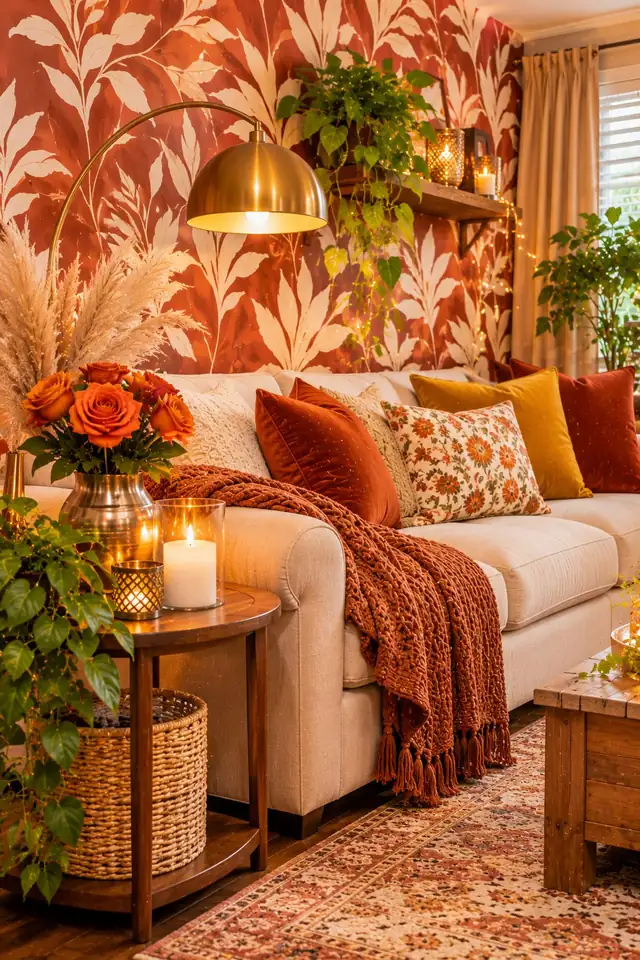
An arched floor lamp, a table lamp and candles: three layers of light that make a small room feel bigger, not brighter.
2. Layer three kinds of light
One light source, however good, flattens a room. Interior designers talk about three layers, and the rule holds in the smallest living room:
- Ambient light is the general glow. In a small room it should be low and warm: a dimmed floor lamp or a pair of table lamps, not the ceiling fixture.
- Task light is a focused light where you read, work or do a puzzle: a floor lamp with an adjustable arm beside the sofa, or a small table lamp on the side table.
- Accent light shows off something you love: a picture light over a framed print, a strip of warm LED behind the TV stand, or fairy lights along a shelf.
You do not need all three on at full strength. On a normal evening, try ambient at about 40%, task light on only where someone is sitting, and one accent light glowing.
The room will look deeper than it does with a single ceiling light at 100%, because your eye reads the different pools of light as different spaces, and different spaces make a room feel bigger.
A cheap way to add an accent layer is a warm white LED strip, about $12 to $18 for a 2 meter strip, stuck behind a shelf or along the back of the TV console.
Keep it warm white (2700K), not color-changing rainbow mode, unless you genuinely enjoy it. In a small room, colored light gets tiring fast.
3. Put the brightest light where you sit, not overhead
Ceiling lights shine down on the top of your head and the middle of the rug. They light the room's least interesting parts and leave the seating area in relative shadow, which is exactly backwards.
Move the brightest light in the room to seating height. A floor lamp with a warm smart bulb beside the sofa, aimed slightly down and out, puts light on faces, books and cups of tea: the things that make a room feel lived in. A table lamp on the side table does the same job in a tighter corner.
Measure before you buy:
- A floor lamp for a reading spot should stand about 55 to 65 inches tall, with the bottom of the shade roughly at eye level when you sit.
- A table lamp should be about 24 to 30 inches tall on a standard 24 inch side table.
Too tall and the bulb glares in your eyes; too short and the light pools on the tabletop instead of the room.
If your living room has a ceiling fixture you cannot remove (most rentals do), fit it with a warm smart bulb, set it to 30 to 40% brightness, and treat it as background only. The lamps do the real work.
4. Use scenes, not switches
A smart lighting scene is a saved setting: which lights are on, how bright, and how warm. Set three scenes and a small living room runs itself.
| Scene | Lights | Brightness and warmth |
|---|---|---|
| Evening | All lamps on | 40 to 60%, warm 2700K. The default for relaxing, talking and reading. |
| Movie | Lamps off or at 10%, a soft glow behind the TV | The screen stays the brightest thing in the room, so your eyes relax. |
| Morning | Lamps on | 70 to 80%, a little cooler at around 3500K while you tidy and get going. |
Evening
- Lights
- All lamps on
- Brightness and warmth
- 40 to 60%, warm 2700K. The default for relaxing, talking and reading.
Movie
- Lights
- Lamps off or at 10%, a soft glow behind the TV
- Brightness and warmth
- The screen stays the brightest thing in the room, so your eyes relax.
Morning
- Lights
- Lamps on
- Brightness and warmth
- 70 to 80%, a little cooler at around 3500K while you tidy and get going.
Setting this up takes about ten minutes in the Philips Hue, IKEA Home smart or Tapo app: pick the lights, set each one's brightness and warmth, save it under a name, and add it to your phone's home screen or a voice command.
After that, one tap replaces walking around the room switching four lamps on and off. More importantly, the room always looks the way you meant it to look, instead of however the last person left it.
If you want scenes to run across different brands from one place, a hub helps; our guide to Matter smart home hubs explains when one is worth it.
5. Make one lamp the hero
A small room can only hold one star. Pick one lamp, the prettiest one you own or a $40 to $60 arched or tripod floor lamp, and let it be the thing people notice.
Put it where it is seen from the doorway, give it the warmest bulb, and keep everything around it calmer.
This matters more than it sounds. When every lamp in a small room competes, the room feels cluttered. When one lamp leads and the others support it, the eye has somewhere to rest, and the room feels settled.
What to look for in a hero lamp:
- A shade that throws light up and down (a drum shade does this well).
- A warm bulb.
- A dimmer, either the smart bulb itself or a plug-in dimmer for about $10 to $15.
A brass arched lamp is a classic choice for a small living room because the arc brings the light over the sofa without taking up floor space, and the curve itself adds shape to a boxy room.
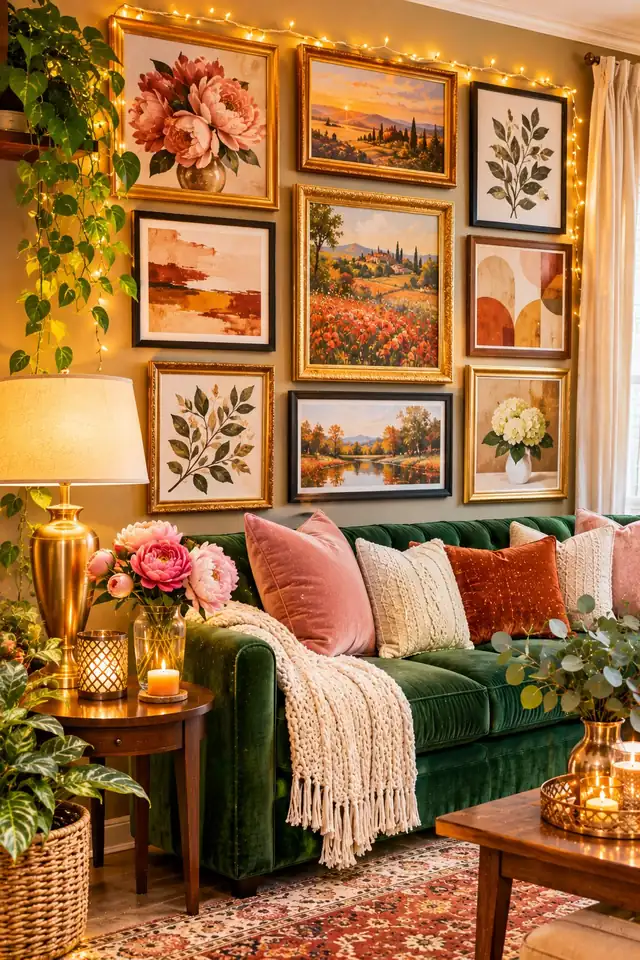
Soft light at eye level beats a bright ceiling light: fairy lights on the gallery wall and a table lamp beside the sofa.
6. Light the corners and the room grows
Dark corners shrink a room. Your eye stops at the edge of the light, so a room with two black corners reads as a room with two missing corners.
Fix it for almost nothing: put a small light in the darkest corner. A $15 to $20 plug-in wall sconce, a tiny table lamp on a plant stand, or a battery fairy light jar on a shelf all work.
You do not need much. Even 10% brightness in a corner tells your eye the room keeps going.
Fairy lights deserve a special mention. A single warm white string along a shelf or around a mirror costs about $8 to $12, uses almost no electricity, and adds the one thing a small room often lacks: sparkle at eye level.
Keep them warm white and keep them to one feature. A whole room wrapped in fairy lights stops looking cozy and starts looking like a market stall.
7. Dim the TV wall
The TV is the biggest dark rectangle in most living rooms, and in a small one it dominates.
A warm LED strip behind the TV, called bias lighting, softens the contrast between the bright screen and the dark wall. Your eyes strain less, the screen looks better, and the wall behind the TV stops being a black hole in the evening.
A basic USB-powered warm white strip for a 55 inch TV costs about $12 to $15 and sticks to the back of the set in five minutes. Smart strips (around $25 to $35) can dim with your evening scene.
Either way, keep it warm white and dim. The glow should be a soft halo, not a second screen.
8. A starter kit for under $100
If you are starting from zero, here is the whole room in one shopping list.
| Item | Approximate cost |
|---|---|
| 2 hub-free warm white smart bulbs (E26, dimmable, 2700K to 3500K) | $20 to $25 for a pair |
| 1 warm white LED strip for the TV or a shelf | $12 to $15 |
| 1 warm white fairy light string | $8 to $12 |
| 1 plug-in dimmer for an existing lamp | $10 to $15 |
| 1 small table lamp for the darkest corner, thrifted or new | $15 to $25 |
| Total | Roughly $65 to $92 |
2 hub-free warm white smart bulbs (E26, dimmable, 2700K to 3500K)
- Approximate cost
- $20 to $25 for a pair
1 warm white LED strip for the TV or a shelf
- Approximate cost
- $12 to $15
1 warm white fairy light string
- Approximate cost
- $8 to $12
1 plug-in dimmer for an existing lamp
- Approximate cost
- $10 to $15
1 small table lamp for the darkest corner, thrifted or new
- Approximate cost
- $15 to $25
Total
- Approximate cost
- Roughly $65 to $92
Add a smart plug (about $10) for any lamp you want on a schedule, for example the corner lamp switching on at sunset so you come home to a lit room.
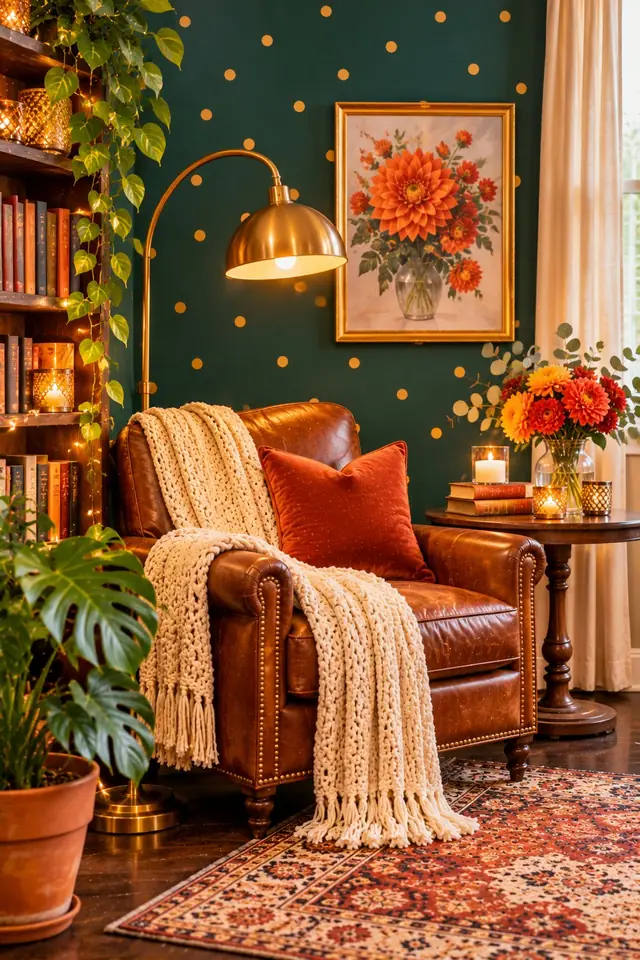
A reading corner done right: one arched floor lamp with a warm bulb does the work, while the rest of the room stays calm.
What to check before you buy anything
Three quick checks save a return trip:
Before you buy smart lighting
- Wi-Fi reachSmart bulbs need a steady 2.4 GHz signal. If the living room is far from the router, test with your phone first: one bar of signal means the bulb will drop out.
- Dimmer switchesA smart bulb on an old wall dimmer will flicker or buzz. Leave the wall dimmer at full and let the bulb do the dimming.
- Household agreementIf you share the room, agree on the evening scene together, so nobody keeps switching everything to 100% because they cannot find the app.
If weak Wi-Fi is the problem across the house, our guide to WiFi 7 mesh systems covers whole-home coverage.

Corners lit, not left dark: a floor lamp and fairy lights stretch a small living room and make the far wall feel further away.
The short version
Warm light, three layers, the brightest light at seating height, scenes instead of switches, one hero lamp, lit corners, a dim TV wall, and a starter kit under $100.
None of this needs rewiring, a landlord's permission or a big budget. A small living room that is lit well feels warm in winter, calm in the evening, and bigger than its floor plan suggests, and it only takes an afternoon to set up.
Quick answers
FAQ: small living room smart lighting
What color temperature is best for a small living room?
Warm white, around 2700K, for the evening. It makes wood look richer, skin tones look better and a small room feel settled. A tunable smart bulb lets you go a little cooler, around 3500K, in the morning while you tidy and get ready.
How do you make a small living room look bigger with lighting?
Layer the light instead of relying on one ceiling fixture: low ambient light from lamps, a task light where you sit, and one accent light. Then light the darkest corners, even at 10 percent. Your eye reads separate pools of light as separate spaces, so the room feels deeper.
Do smart bulbs need a hub?
Some do and some do not. Philips Hue works best with the Hue Bridge, while IKEA, TP-Link Tapo and Sengled Wi-Fi bulbs mostly connect straight to your router. For one room, a hub-free bulb is the cheaper start.
Why does my smart bulb flicker on a dimmer switch?
Smart bulbs do their own dimming, and an old wall dimmer fights them, which causes flicker or buzzing. Leave the wall dimmer at full power and dim from the app, a scene or a smart remote instead.
How much does it cost to light a small living room with smart lighting?
Roughly $65 to $92 for a starter kit: two hub-free warm white smart bulbs, an LED strip for the TV or a shelf, a fairy light string, a plug-in dimmer and a small corner lamp. Add a smart plug, about $10, for any lamp you want on a schedule.