Skip to content

Climate Control

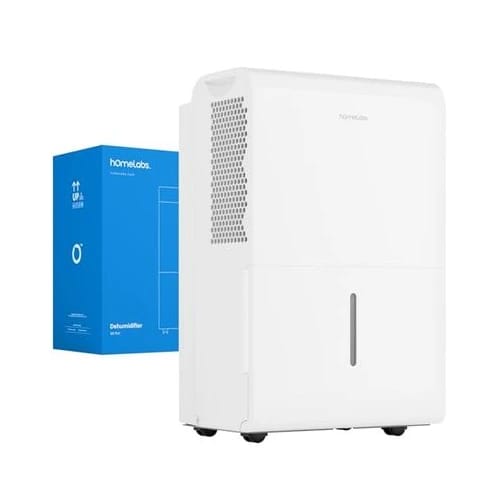
hOmeLabs 7,000 Sq Ft Wi-Fi Dehumidifier Review for Basements

Subhadeep GhoshUpdated June 28, 20264.5 rating
hOmeLabs 7,000 Sq Ft Wi-Fi Dehumidifier review for USA buyers
Best Overall
4.5(28,655 reviews)

hOmeLabs 7,000 Sq Ft Wi-Fi is the best starting point for most American basements that need a genuinely smart dehumidifier without paying flagship money.

It pairs strong coverage, real app and voice control, and one of the largest proven owner bases in the category, which makes it the lowest-risk default pick.

$269.99

Amazon.in price as of 29/06/2026. Details

Value
Excellent value
Rating
4.5/5
Reviews
28,655

Summary

Our verdict

The bottom line, who it fits, and where to think twice before you scroll the full review.

Verdict

Buy this if you want the safest mainstream smart dehumidifier for a normal damp basement with a working floor drain or downhill path.

Skip it if your basement has no low drain or you need a built-in pump, in which case the pump-equipped hOmeLabs model is the better fit.

Best for

Homeowners with a typical 1,000 to 2,000 sq ft damp basement who want WiFi app control, Alexa and Google voice support, and a unit with thousands of owner reviews behind it.

Watch outs

Basements with no floor drain, buyers who need a built-in pump, or Apple Home households expecting native HomeKit or Matter support.

Long read

Detailed review

Hands-on context, what daily ownership feels like, and where this pick lands against rivals.

Editor's take

The hOmeLabs 7,000 Sq Ft Wi-Fi earns the top spot because it solves the largest number of real basement problems with the fewest tradeoffs. A basement dehumidifier has to run hard, stay connected, and keep working through a long humid season, and this model does all three without asking you to overspend.

Coverage is the first reason it works. Rated for up to 7,000 sq ft and 50 pints a day, it has plenty of headroom for the basement most American homes actually have. You are buying margin, which means the unit cycles on a humidity target instead of grinding at full output to keep up.

The smart layer is the part owners use most. Because the basement is the room you rarely visit, the value of an app is not the novelty, it is the visibility. A full-tank alert, an offline warning, and remote humidity control turn a blind spot into something you can check from the couch or from vacation.

The honest weakness is drainage. This SKU drains by gravity, so it shines when you have a floor drain or a downhill route and feels awkward when you do not. The other honest note is long-term reliability, where a minority of owners report the unit weakening after a couple of years of constant basement duty.

As an hOmeLabs 7,000 Sq Ft Wi-Fi review, the bottom line is simple. This is the smart dehumidifier I would recommend first to a friend who wants a dry basement and does not want to become an appliance researcher. It is proven, connected, and priced to make sense before a wet summer.

Why It Wins for Most Basements

The mix of coverage, smart control, and proof is hard to beat.

Most smart dehumidifiers force a tradeoff between capacity, connectivity, and owner proof. This model lands in the middle of all three, which is exactly what a default pick should do.

The enormous review base matters more than any single spec. When a unit is mounted in a basement and running nonstop, knowing that thousands of owners have already stress-tested it lowers your risk in a way a spec sheet cannot.

App and Voice Control

Remote visibility is the real basement payoff.

The WiFi app lets you set a humidity target, change modes, and confirm the unit is running from anywhere. In a basement, that remote confirmation is the feature you reach for most.

Alexa and Google voice support add convenience for quick checks and changes, though the deeper monitoring still lives in the app. Treat voice as the shortcut and the app as the control center.

Drainage and Placement

Gravity drain works well only with the right layout.

Run the continuous-drain hose to a floor drain or sump and the unit becomes truly hands-off. Without a downhill path, you are back to emptying a tank, which defeats the purpose.

Place it near the dampest area with a few inches of clearance for airflow. Good intake and exhaust space does more for results than tucking it neatly into a corner.

Reliability and Upkeep

Maintenance is what separates a three-year unit from a five-year one.

Clean the washable filter monthly, keep the coils clear, and run an auto humidity target instead of constant max output. Those habits directly extend the compressor's life.

Register the warranty on day one. Across the whole category, early-life failures are the main complaint, so you want a mid-life problem to be the manufacturer's responsibility.

Specs & features

At a glance

The quick facts and the headline features that actually matter day to day.

Quick facts

Best Pick
Best Overall
Coverage
7,000 sq ft
User Rating
4.5/5 from 28,655 reviews
Best For
Homeowners with a typical 1,000 to 2,000 sq ft damp basement who want WiFi app control, Alexa and Google voice support, and a unit with thousands of owner reviews behind it.

Key features

  • Removes up to 50 pints per day and covers basements up to 7,000 sq ft
  • WiFi app sets humidity targets, schedules, and modes from anywhere
  • Works with Alexa and Google for hands-free voice control
  • Turbo mode, auto shut-off, and a washable filter for low upkeep
  • Continuous gravity drain option so you never empty a bucket
  • Usually lands in the $250-$290 range depending on the deal

Trade-offs

Pros and cons

The honest highs and lows we'd flag to a friend asking which to buy.

What we like

  • Huge, well-established owner base makes it a low-risk default
  • Genuinely useful app with remote control and humidity monitoring
  • Plenty of coverage for a full basement with margin to spare
  • Quiet enough that it does not dominate a finished basement room

Watch out for

  • This SKU has no built-in pump, so you need a downhill drain
  • Reliability reports are mixed once the unit passes the two-year mark
  • No Apple HomeKit or Matter support for Apple Home households

Side by side

How it compares

A quick look at the other picks in this guide and where each one wins.

Our process

How we evaluate products

What goes into every recommendation, so you know the rating is more than a spec sheet.

Real buyer feedback

We combine marketplace review signals with the strengths and drawbacks documented inside the original buying guide.

US-focused advice

Recommendations are framed for American homes, pricing realities, and ownership expectations relevant to the US market.

Value analysis

We look at positioning, compromises, and the quality of the product's feature mix instead of just headline specs.

Contextual comparisons

Every review stays connected to the rest of the shortlist, so buyers can move from one product page to its alternatives without losing context.

Buyer questions

Frequently asked questions

Real questions buyers ask before clicking buy.

Is the hOmeLabs 7,000 Sq Ft Wi-Fi dehumidifier worth it?

Yes, for most basements it is the best balance of coverage, smart control, and owner proof. It is not the cheapest unit, but it is the lowest-risk smart pick for a typical damp basement.

Does the hOmeLabs 7,000 Sq Ft Wi-Fi work with Alexa?

Yes, it works with both Alexa and Google Home for voice control, and it has a full WiFi app for setting humidity targets and monitoring the unit remotely.

Does the hOmeLabs 7,000 model have a built-in pump?

No, this SKU drains by gravity through a hose, so it needs a downhill drain. If your basement has no low drain, choose the hOmeLabs 7,500 Wi-Fi model with a built-in pump instead.

How big a basement can it handle?

It is rated for spaces up to 7,000 sq ft and removes up to 50 pints per day, which covers the typical American basement with comfortable margin for a humid season.

Keep exploring

Discussion

Be the first to comment

Have a question or experience to share? Scroll down to leave a comment.