The best fitness tracker without subscription should not make you pay again just to understand the data your body created. That sounds obvious, but the wearable market in 2026 has drifted hard toward premium memberships, AI coaches, recovery paywalls, and "free trial included" language that gets messy after the first few months.
We built this guide for US buyers who want a premium wearable that keeps working after checkout. We compared Amazon.com listings, official manufacturer specs, current expert reviews, owner complaints, app paywalls, and real-world fit issues across watches, bands, and rings. The goal was simple: find trackers that give you useful health, sleep, workout, and recovery data without a required monthly fee.
Our top pick is Garmin Venu 4 because it combines a premium smartwatch feel with the strongest free health app in this group. Garmin vivoactive 6 is the better value if you want most of the Garmin experience for less money.
Editor's choice
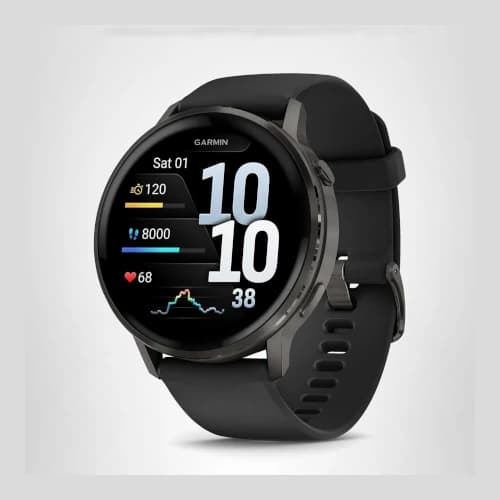
Garmin Venu 4
Rated 4.6 out of 54.6
The best balance of premium build, long battery life, free Garmin Connect data, wellness metrics, workout tracking, and phone-neutral compatibility.
This is not a "never subscribe to anything" article. Optional services can be useful. Apple Fitness Plus, Fitbit Premium, Garmin Connect Plus, and third-party coaching apps all have a place if you like guided workouts or AI summaries.
The line we draw is ownership. If the device hides basic sleep trends, recovery, GPS history, heart-rate context, or health summaries unless you keep paying, it loses points here.
Quick Comparison of the Best Fitness Trackers Without Subscription
At a glance
No-Monthly-Fee Fitness Trackers for US Buyers
Amazon.com ratings and review counts were checked during article research in June 2026. Prices are shown as ranges because wearable prices move constantly.
How We Picked Fitness Trackers Without Paid App Lock-In
We looked for three things before anything else: a usable free app, a real Amazon.com listing, and enough owner feedback to trust the product. We also held every pick to a 4.0-star Amazon.com floor, so a wearable with great specs but weak ratings or thin availability did not make the main list.
We also treated "optional subscription" differently from "required subscription." Garmin Venu 4 and Garmin vivoactive 6 now sit in a world where Garmin Connect Plus exists, but the main Garmin Connect experience is still useful without paying.
Fitbit is more complicated. Fitbit Charge 6 and Fitbit Sense 2 work without Premium, but Fitbit does hold back some deeper coaching and trend analysis. They stay in this guide because many American buyers want a simple tracker, not a training lab.
We gave extra credit to devices that work across both iPhone and Android, have 5ATM water resistance or better, support US warranty expectations, and use mature health platforms. We also watched for 2026 trends: Garmin's optional paid tier backlash, new Fitbit hardware rumors, smart ring legal drama, and Prime Day demand for fitness wearables.
The 2026 Trend: Subscription Fatigue Is Driving Wearable Searches
The reason this keyword matters in 2026 is not subtle. Wearable buyers are tired of buying hardware and then discovering the best insights live behind another monthly bill.
Oura made smart ring subscriptions normal. Fitbit trained buyers to expect Premium upsells. Whoop built its whole model around membership. Garmin, long seen as the no-subscription safe zone, added Garmin Connect Plus as an optional tier and instantly triggered pushback from loyal users.
That does not mean every paid service is bad. Some people love guided workouts, adaptive plans, AI summaries, and premium coaching. The problem is that many American buyers already pay for streaming, cloud storage, security cameras, meal apps, fitness apps, and smart home plans. A wearable subscription can feel like one more small leak in the monthly budget.
This article is positioned around that shift. Searches for a no monthly fee fitness tracker and a fitness tracker without paid app are not just bargain-hunting searches. They are ownership searches. The buyer wants to know what still works after the trial ends.
That is why Garmin dominates the top of this list. Garmin Venu 4, Garmin vivoactive 6, and Garmin Forerunner 165 give you the least awkward answer to the subscription question. Garmin Connect Plus exists, but the main fitness experience still works without it.
Apple and Samsung answer the question differently. Apple Watch Series 10 and Samsung Galaxy Watch 7 are ecosystem devices. Their health apps are free, but their best value comes when the watch, phone, assistant, payment system, and cloud account already match your life.
Fitbit is the middle ground. Fitbit Charge 6 and Fitbit Sense 2 are usable without Premium, but you will see the walls. Some buyers shrug that off. Others find it irritating enough to leave Fitbit entirely.
Smart rings are the fast-rising side story. People want sleep and recovery data without wearing a watch, but many do not want Oura's monthly membership. The catch in 2026 is that the subscription-free rings we checked still sat below our 4.0-star bar, so this guide stays focused on the watches and bands that earn the rating while keeping core health data free.
What Big Fitness Tracker Roundups Usually Miss
Most large wearable guides rank products by hardware category: best Fitbit, best Apple Watch, best Garmin, best budget band, best smart ring. That is useful, but it often misses the question buyers are actually asking: "What am I locked into after I buy it?"
Subscription cost should be treated like battery life or water resistance. If one tracker costs less upfront but pushes paid analytics every week, the true ownership experience is different from a higher-priced watch with better free software.
Many guides also blur optional and required subscriptions. That makes Garmin Venu 4 look closer to a Fitbit or Oura-style model than it really is. The practical difference is huge. Optional extras are tolerable. Locked core insight is not.
Another missing angle is household phone mix. A single person with an iPhone can safely buy Apple Watch Series 10. A family with iPhones, Samsung phones, and Pixel phones should be more careful. Garmin and Fitbit transfer between platforms more gracefully.
Finally, many reviews underplay comfort. A watch that is accurate but annoying at night will collect worse sleep data than a less powerful device you actually wear. That is why a slim band like Fitbit Charge 6 deserves a spot even though it cannot match Garmin's training depth.
The 8 Best Fitness Trackers Without Subscription in 2026
Best Overall
1. Garmin Venu 4 - Best Overall
Rated 4.6 out of 54.6· 1,281 reviews
The strongest premium fitness tracker for buyers who want deep health, sleep, recovery, and workout data without a required monthly fee.
Key features
Garmin Connect health and workout history without a required subscription
Bright AMOLED display with premium watch styling
Sleep score, HRV status, Body Battery, workouts, and recovery context
Works with iPhone and Android phones
Longer battery life than Apple and Samsung smartwatches
What we like
Best free app experience in this guide
Feels like a premium smartwatch without forcing a paid coaching plan
Strong battery life for sleep tracking and travel
Good choice for mixed workouts, walking, gym, cycling, and casual running
Watch out for
Costs more than the vivoactive 6
Smartwatch app selection is thinner than Apple Watch or Wear OS
Some new AI-style extras sit in Garmin Connect Plus
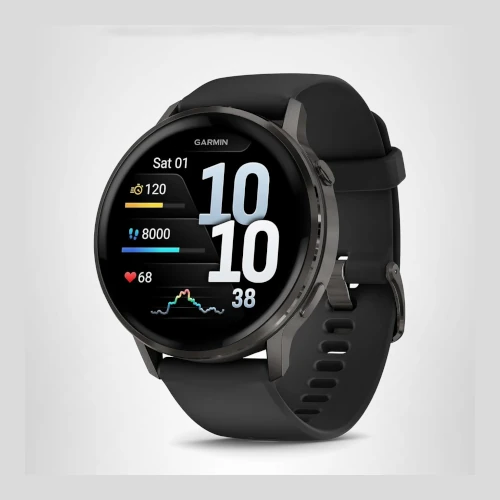
Garmin Venu 4 is the one we would put on the wrist of most buyers who ask for a premium tracker with no monthly fee. It gives you the Garmin data depth people actually want: sleep score, HRV status, Body Battery, workouts, heart-rate trends, recovery context, and long-term history in Garmin Connect.
The important part is that you do not need Garmin Connect Plus to make the watch useful. Garmin's optional paid tier adds newer AI-style summaries and extra app features, but the core health and workout data remain outside the paywall. That is the difference between an optional add-on and a device that feels rented.
In a typical US home, Garmin Venu 4 fits the widest range of habits. It can track morning walks in a suburban neighborhood, Peloton rides in the basement, strength workouts in a garage gym, and sleep during a red-eye flight without demanding a charger every night.
The AMOLED screen is bright enough for summer runs and backyard workouts, and the interface is easier to live with than older button-only Garmin watches if you are coming from an Apple Watch or Fitbit. You still get enough physical control to handle sweaty workouts better than a pure touchscreen.
Smart home buyers should set expectations correctly. Garmin Venu 4 is not the best wrist remote for Alexa routines, HomeKit scenes, or Google Home controls. It is a health-first wearable with enough smart features to cover notifications, payments, music control, and daily convenience.
Remember that a watch also competes for a Bluetooth connection slot. Our best multipoint earbuds for laptop and phone guide explains why most earbuds hold only two live connections, so a watch, a laptop and a phone cannot all stay paired at once.
Owner sentiment around Garmin is unusually loyal for a reason. People complain about price, occasional software quirks, and Garmin's confusing model lineup, but they keep praising battery life and data ownership. If you hate paying for monthly plans, that matters more than having the flashiest app store.
The best rival is Garmin vivoactive 6. Buy that instead if the lower price matters more than a more premium finish. Step up to Garmin Venu 4 if you want the nicer daily watch and the most polished all-around Garmin experience here.
Verdict: This is the best fitness tracker without subscription fees for most US buyers. It costs premium money, but it does the rare thing a premium wearable should do: it lets you own the useful data.
Best Value
2. Garmin vivoactive 6 - Best Value
Rated 4.4 out of 54.4· 2,797 reviews
A lighter, cheaper Garmin with an AMOLED display, strong health tracking, and free Garmin Connect data for everyday fitness.
Key features
AMOLED fitness smartwatch with Garmin Connect support
Built-in GPS, sleep tracking, Body Battery, and workout modes
Works with iPhone and Android
Amazon verified at 4.4 stars with 2,797 ratings during research
Long battery life compared with mainstream smartwatches
What we like
Best Garmin value for subscription-averse buyers
Enough health and training depth for most non-elite users
Comfortable for all-day wear and sleep tracking
Strong alternative to Fitbit for people who want richer free data
Watch out for
Less premium than Venu 4
Not as focused on serious running as Forerunner models
No broad third-party app ecosystem like Apple Watch
Some advanced Garmin features are reserved for pricier models
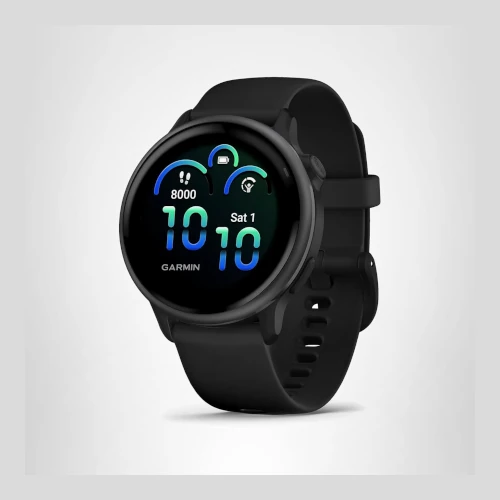
Garmin vivoactive 6 is the value pick because it gives you the part of Garmin that matters most: the free Garmin Connect ecosystem. You get a serious fitness platform without paying every month, and the hardware costs much less than a flagship Venu or Forerunner.
This is the watch we would recommend to someone who works from home, walks the dog twice a day, lifts a few times a week, and wants better sleep and recovery context than Fitbit gives for free. It is not a niche athlete tool. It is a practical health watch for normal American routines.
The big win over Fitbit is data access. Garmin vivoactive 6 gives you a stronger free dashboard for workouts, stress, sleep, body energy, training history, and trends. Fitbit still looks friendlier, but Garmin gives you more substance once you start paying attention.
The watch also works across iPhone and Android, which makes it a safer household pick than Apple Watch or Samsung Galaxy Watch. If you change phones next year, Garmin vivoactive 6 does not become useless.
In our ranking, the biggest limitation is athletic ceiling. Runners training for a marathon should look at Garmin Forerunner 165 or a higher Forerunner because those models organize running features more cleanly. The vivoactive line is better as a daily health watch that can handle workouts well.
Battery life is another reason this beats most mainstream smartwatches for sleep tracking. Apple and Samsung watches are more capable mini phones, but that comes with more charging. A tracker you forget to charge gives you broken sleep data, and broken sleep data defeats the point.
Verdict: Buy Garmin vivoactive 6 if you want the best no monthly fee fitness tracker value in 2026. It is the sensible Garmin for people who want health data, not a status watch.
Best for Running
3. Garmin Forerunner 165 - Best for Running
Rated 4.7 out of 54.7· 4,092 reviews
A focused running watch with built-in GPS, Garmin Coach, recovery guidance, and free training history for runners who hate paid apps.
Key features
Built-in GPS and running-focused workout metrics
Garmin Coach, race widget, recovery time, and morning report
AMOLED display with a light case for daily wear
Works with Garmin Connect without a required monthly fee
Amazon verified at 4.7 stars with 4,092 ratings during research
What we like
Best pick here for 5K, 10K, and half-marathon training
More runner-friendly than vivoactive 6
Free Garmin Connect history beats most paid-app rivals
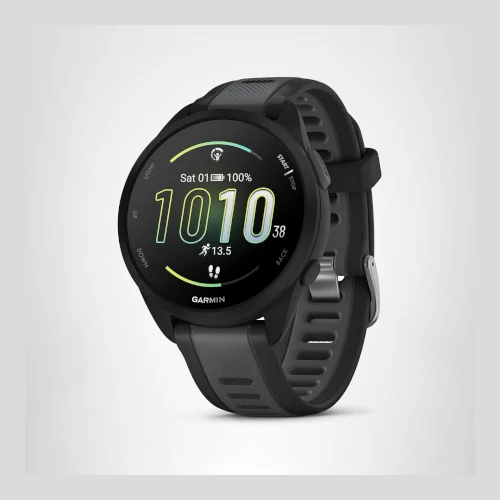
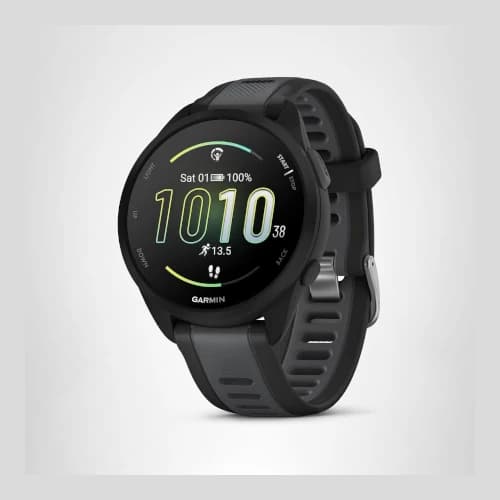
Garmin Forerunner 165 is the answer for runners who do not want to rent a training dashboard. It gives you the run-first Garmin experience in a lighter, cheaper body than the brand's higher-end race watches.
The appeal is not one flashy spec. It is the way the watch organizes training. You can see pace, distance, heart rate, recovery time, race prep, and Garmin Coach guidance without jumping through a paid-app funnel. For most 5K, 10K, and half-marathon runners, that is more useful than a prettier smartwatch interface.
In a US context, Garmin Forerunner 165 makes sense for fall marathon season, summer 5K plans, and New Year's fitness goals. It also works well for runners who train before work and want a display they can read quickly at sunrise.
The free Garmin Connect app is still the reason to buy it. You can review routes, splits, sleep, recovery, HRV context, and long-term trends without paying Garmin every month. That is the opposite of the subscription fatigue many buyers are trying to avoid.
Compared with Garmin vivoactive 6, this watch is less lifestyle-friendly but better for structured running. Compared with Garmin Venu 4, it feels sportier and less premium. That is the right trade if your main question is how to train better.
The limitation is navigation. If you need full maps for trail running, backcountry routes, or long adventure races, move up the Garmin line. For neighborhood loops, treadmill work, suburban greenways, and road races, Garmin Forerunner 165 is more than enough.
Verdict: This is the best running-focused fitness watch without a required paid app. It is not the fanciest watch here, but it is the one we would trust for a runner who wants clear training data and no subscription drama.
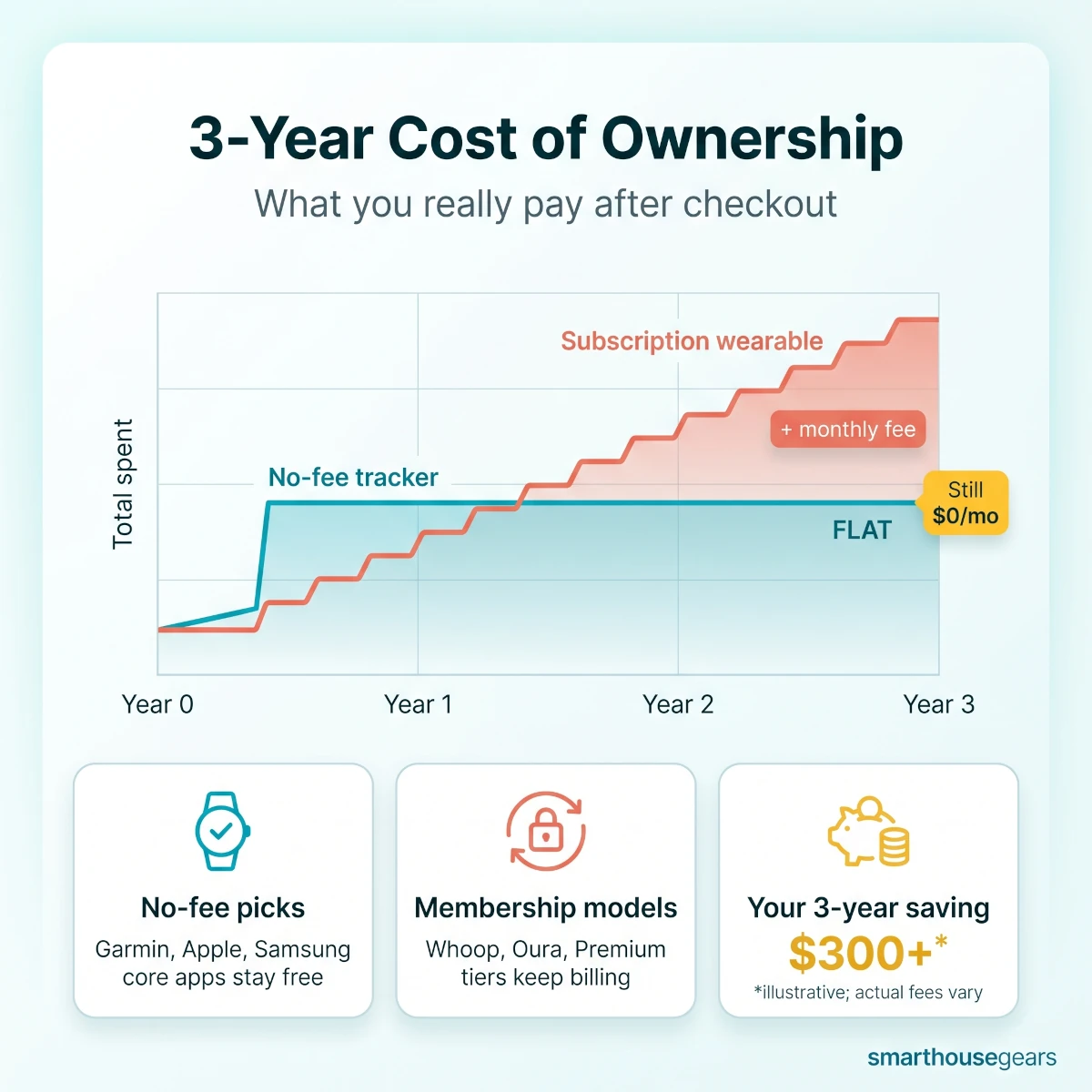
Three-year cost in focus: a no-fee Garmin, Apple Watch, or Samsung watch stays flat after checkout, while Fitbit Premium and membership-based wearables keep adding to the bill month after month.
Best for iPhone
4. Apple Watch Series 10 - Best for iPhone
Rated 4.7 out of 54.7· 11,099 reviews
The best no-fee fitness smartwatch for iPhone owners who want Apple Health, safety tools, apps, calls, and workout tracking in one polished device.
Key features
Apple Health and Activity Rings work without Apple Fitness Plus
ECG app, sleep tracking, heart-rate alerts, and workout tracking
Always-on Retina display with fast charging
iPhone, Siri, Apple Pay, and app ecosystem integration
Amazon listing showed Amazon Choice status and strong buying volume during research
What we like
Best smartwatch experience for iPhone users
No subscription required for core health and workout data
Excellent safety features for falls, crashes, and emergency calls
Huge app and accessory ecosystem in the US
Watch out for
Only works with iPhone
Battery life is weak compared with Garmin
Apple Fitness Plus is optional but heavily promoted
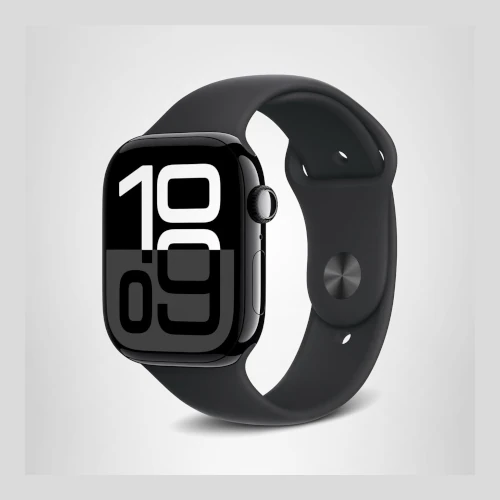
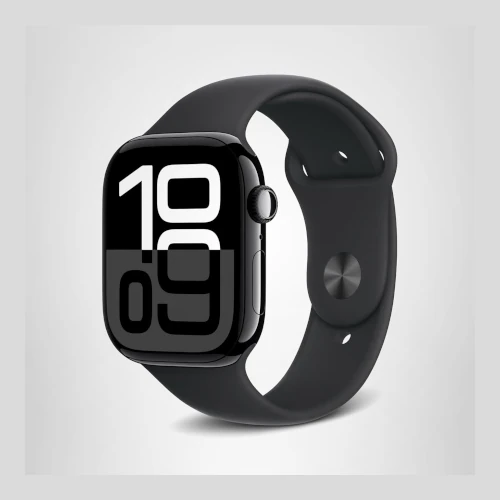
Apple Watch Series 10 is the easiest recommendation for iPhone owners who want fitness tracking without a mandatory subscription. Apple Fitness Plus is optional. Apple Health, Activity Rings, workouts, heart-rate alerts, ECG on supported models, sleep tracking, fall detection, and crash detection do not require a monthly plan.
That matters because many buyers confuse Apple Watch with subscription fitness. The watch will offer Fitness Plus trials and guided classes, but the core device is still useful after the trial ends. If you mostly walk, lift, run, swim, cycle, or track daily movement, you do not need the paid service.
As a fitness tracker, Apple Watch Series 10 is strongest when smart features matter too. It handles calls, texts, Siri, Apple Pay, app notifications, family safety features, and third-party apps better than any Garmin or Fitbit.
The tradeoff is battery life. In real life, Apple Watch ownership means charging habits. If you want complete sleep tracking, you have to top it up before bed or during a morning routine. People who hate charging should buy Garmin Venu 4 instead.
For American households already using iPhones, Apple TV, HomePods, AirPods, and HomeKit, the integration is hard to beat. You can control music, unlock a Mac, pay at a grocery store, check timers during Thanksgiving prep, and answer quick messages from the same device that tracks your workouts.
It is not the best cross-platform value. It is not the best battery pick. It is not the best pure training tool. But if you own an iPhone and want one wearable that handles health, safety, smart features, and daily convenience without forcing a fitness subscription, Apple Watch Series 10 is the right call.
Verdict: Buy it if you live in the Apple ecosystem. Skip it if you use Android or if multi-day battery life matters more than apps and smart features.
Best Android Pick
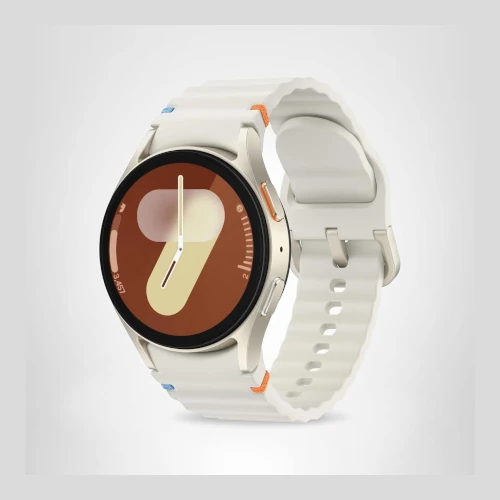
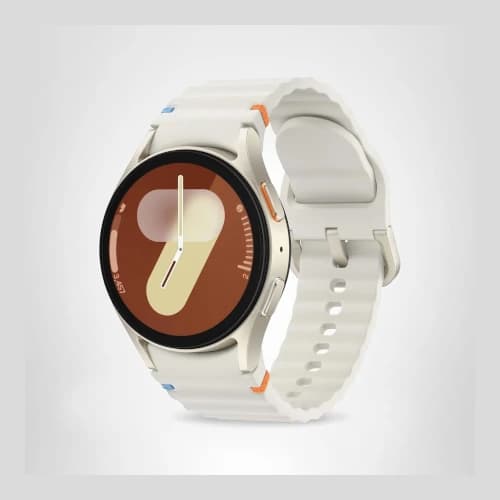
5. Samsung Galaxy Watch 7 - Best Android Pick
Rated 4.6 out of 54.6· 7,492 reviews
The best no-subscription fitness smartwatch for Android users, especially Galaxy phone owners who want Samsung Health without a paid plan.
Key features
Samsung Health tracking without a required monthly fee
Energy Score, sleep coaching, heart-rate tracking, GPS, and body composition
Wear OS app support with Google services
Amazon related listing verified at 4.6 stars with 7,492 ratings during research
Best fit for Samsung Galaxy and Android users
What we like
Best Android alternative to Apple Watch
Useful health summaries without a paid subscription
Strong smart features, app support, and notifications
Often priced aggressively on Amazon
Watch out for
Not for iPhone users
Some health features work best on Samsung phones
Battery life trails Garmin
Wear OS can feel busy if you only want simple tracking
Samsung Galaxy Watch 7 is the Android answer to the Apple Watch problem. It gives Android users a real smartwatch with health tracking, GPS workouts, app support, payments, voice assistants, and notifications without requiring a monthly fitness plan.
The free Samsung Health experience covers the basics well: steps, workouts, sleep, heart rate, stress, body composition, daily summaries, and Energy Score. Some features work best with a Samsung phone, but the watch is still the cleanest no-subscription choice for Android buyers who want smart features and fitness in one device.
This is a good pick for apartment dwellers, commuters, and anyone who values messages, maps, payments, smart replies, and app notifications as much as gym data. It is also more useful than a Garmin if you want wrist access to Google services.
The battery is the weak point. If you want to track sleep every night, you need a charging routine. Garmin still wins for set-it-and-forget-it health tracking, and Samsung Galaxy Watch Ultra 2025 is better if you want a rugged Samsung option.
Verdict: This is the best no-fee fitness smartwatch for most Android users. Buy it if you want a real smartwatch first and a fitness tracker second.
Best Premium Android
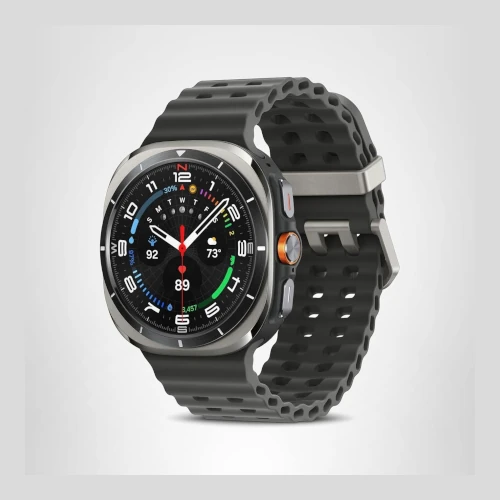
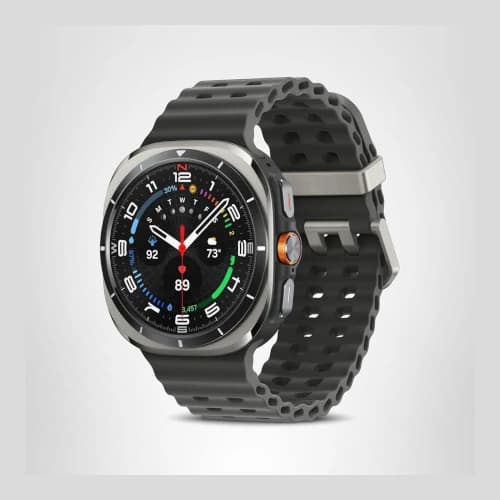
6. Samsung Galaxy Watch Ultra 2025 - Best Premium Android
Rated 4.6 out of 54.6· 540 reviews
A rugged premium Android watch for buyers who want Samsung Health, LTE options, GPS, outdoor styling, and no required fitness subscription.
Key features
Premium rugged Galaxy Watch design with outdoor-focused hardware
Samsung Health workout, sleep, heart-rate, and Energy Score tools
LTE model options for more independent use
Amazon related listing verified at 4.6 stars with 540 ratings during research
Best paired with Samsung Galaxy phones
What we like
Best premium Android wearable in this guide
More rugged and outdoor-friendly than Galaxy Watch 7
Strong smart features without a required monthly health plan
Good pick for Android users who dislike Garmin styling
Watch out for
Large case is not ideal for small wrists
Costs much more than Galaxy Watch 7
Battery life still cannot match Garmin adventure watches
Samsung Galaxy Watch Ultra 2025 is for Android users who want the premium-watch feel of an Apple Watch Ultra-style device without moving to iPhone. It is bigger, tougher, and more outdoorsy than Samsung Galaxy Watch 7, and it keeps the Samsung Health experience subscription-free.
The Ultra makes the most sense if you hike, travel, cycle, run outdoors, or want a watch that looks at home with a heavier case. It is also a better fit for people who want LTE options and more independence from the phone during workouts.
This is still not a Garmin Fenix replacement for backcountry athletes. Garmin wins on battery life, mapping depth in higher models, and training history. The Samsung wins on smartwatch feel, Android integration, calls, notifications, and app convenience.
The no-fee angle is straightforward. Samsung Health gives you the core health and fitness tools without asking for a monthly plan. You can track workouts, sleep, body composition, heart rate, and daily health summaries as part of the normal watch experience.
The problem is size and price. Some wrists will hate the bulk, and many buyers should just buy Samsung Galaxy Watch 7 instead. The Ultra earns its place only if you want the more rugged build and premium Android identity.
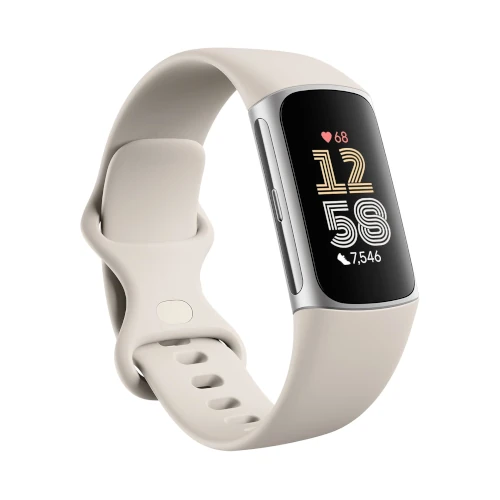
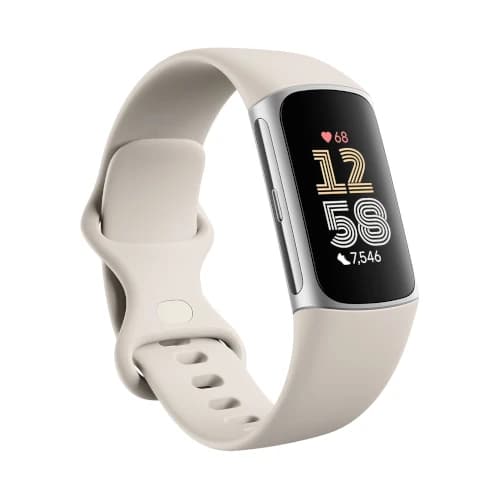
Fitbit Charge 6 is the safest Fitbit pick if you want a simple band and do not want a bulky watch. It tracks steps, workouts, sleep, heart rate, built-in GPS, ECG where supported, and core daily health data without requiring Fitbit Premium.
The honest caveat is that Fitbit is not as generous as Garmin. Premium adds deeper reports, coaching, and some longer-term insights. If that annoys you on principle, buy Garmin vivoactive 6 instead.
Still, Fitbit Charge 6 stays on this list because many buyers do not want a watch. They want a small band that tracks movement, sleep, gym sessions, and basic health signals without covering the wrist like a mini phone.
The Google additions help. Google Wallet, Google Maps, and YouTube Music controls make the band feel less limited than older Fitbits. It is still not a smartwatch, but it is no longer just a step counter with a nicer screen.
In apartments, offices, and smaller wrists, the form factor matters. Fitbit Charge 6 is easier to sleep with than a big watch, and it disappears under a sleeve. That makes it more likely you will actually wear it long enough to collect useful data.
Verdict: Buy it if you want the best slim no monthly fee fitness tracker and can live with Fitbit's Premium upsell. Avoid it if you want the richest free analytics.
Best for Stress
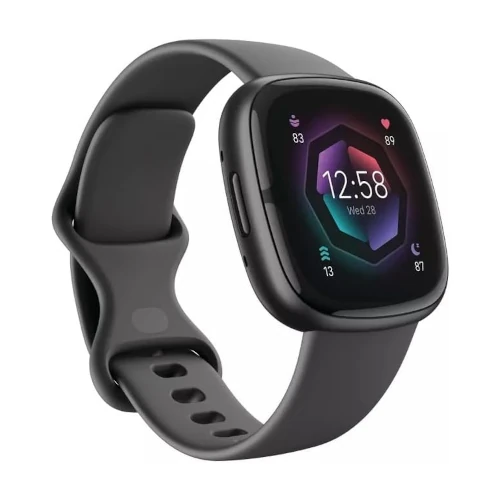
8. Fitbit Sense 2 - Best for Stress
Rated 4.1 out of 54.1· 9,986 reviews
A stress and sleep-focused Fitbit smartwatch with ECG, SpO2, GPS, Alexa Built-in, and a large Amazon owner base.
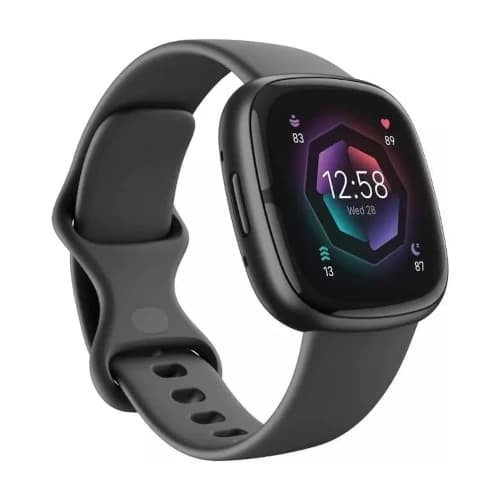
Fitbit Sense 2 is the Fitbit to buy if stress, sleep, and a calmer smartwatch experience matter more than advanced training. It has ECG, SpO2, GPS, heart-rate tracking, stress tools, sleep features, and Alexa Built-in.
This is a good wearable for people who want nudges, not a runner's command center. It fits a work-from-home routine, a busy parent schedule, or someone trying to understand stress and sleep patterns without wearing a huge watch.
Alexa Built-in gives it a smart home angle that Garmin lacks. You can ask for weather, set timers, and trigger simple Alexa routines from your wrist. It is not a full Echo replacement, but it is useful while cooking, packing lunches, or walking around the house.
The subscription caveat remains. Fitbit Sense 2 works without Premium, but the free app is less complete than Garmin Connect. If you are the kind of buyer who will resent every Premium banner, do not buy a Fitbit.
Battery life is better than Apple and Samsung, which helps sleep tracking. The watch is also less distracting than a full smartwatch, which some users will prefer. If you want apps, fast replies, and a deep notification experience, go Samsung or Apple.
Verdict: Buy Fitbit Sense 2 if you want a stress and sleep watch with Alexa and no required monthly fee. Skip it for serious training or if Premium upsells bother you.
Buying Guide: How to Choose a Fitness Tracker Without Subscription Fees
The phrase "no subscription" is not enough. A bad free app can be just as frustrating as a paid one. You want a wearable that gives you enough data, enough context, and enough history to make better choices without asking for your card every month.
Start With the App, Not the Sensor List
Most wearable spec sheets look impressive. Heart rate, SpO2, skin temperature, GPS, HRV, stress, sleep stages, readiness, and calories all sound useful. The question is whether the app explains those numbers without hiding the answer.
Apple is strong if you already live in Apple Health. Apple Watch Series 10 spreads data across Health, Fitness, and third-party apps, but it does not force Apple Fitness Plus for core tracking.
Fitbit is easy to understand but less generous. Fitbit Charge 6 and Fitbit Sense 2 are fine without Premium, but the app will remind you what you are missing.
Decide Whether You Want a Fitness Tracker or a Smartwatch
A fitness tracker should help you understand movement, recovery, sleep, and long-term habits. A smartwatch should also handle notifications, apps, calls, payments, and voice assistants.
If you want fitness first, buy Garmin. If you want smartwatch first, buy Apple or Samsung. If you want a small band, buy Fitbit Charge 6. If you want stress and sleep with a calmer interface, buy Fitbit Sense 2.
This choice matters more than most spec differences. A runner will be happier with Garmin Forerunner 165 than with a prettier watch that buries training data. A busy iPhone user may be happier with Apple Watch Series 10 even if the battery is worse.
Check Phone Compatibility Before You Fall in Love
Apple Watch is iPhone-only. That is not a small detail. If your household mixes iPhone and Android, do not assume you can pass an Apple Watch to an Android user later.
Samsung Galaxy Watch works with Android and is best with Samsung phones. Some health features and setup paths favor Galaxy devices. If you use Pixel, Motorola, or OnePlus, confirm the exact features you care about before buying.
Garmin and Fitbit are safer cross-platform picks. They work with iPhone and Android, which makes them better if you switch phones every few years or buy for a family member whose phone may change.
Battery Life Controls Sleep Tracking Quality
Sleep tracking is only useful if the device is on your body. That sounds obvious, but many buyers choose a smartwatch with one-day battery life, then charge it at night and wonder why sleep trends look incomplete.
Garmin wins for people who want multi-day wear. Garmin Venu 4 and Garmin vivoactive 6 make sleep tracking easier because you are not negotiating battery life every night.
Apple and Samsung can track sleep well, but you need a charging ritual. A 20-minute charge before bed or during a shower can work. If that sounds annoying, buy something else.
Look for Certifications and US Warranty Details
Wearables are small devices that live against your skin, deal with sweat, and charge often. For US buyers, we like to see clear water resistance, FCC compliance, recognizable sellers, and a warranty path that does not require international shipping.
Most picks here are safe mainstream choices. Garmin, Apple, Samsung, and Fitbit all have established US support channels, though Amazon sellers can vary. Buy directly from Amazon.com or the brand store when possible.
For water resistance, 5ATM is the practical baseline for swimming and sweaty workouts. Do not treat water resistance as permanent. Soap, sunscreen, hot tubs, saltwater, and age can all reduce protection.
Treat Health Features as Wellness Tools, Not Medical Decisions
ECG, blood oxygen, irregular rhythm alerts, sleep apnea notifications, skin temperature, and stress tracking can be useful. They are not replacements for medical care.
This matters in the US because wearable health claims can vary by feature, region, and regulatory status. A feature shown in a launch keynote may not work the same way on every model, every phone, or every account.
If you run outside, prioritize GPS, comfortable buttons, readable screens, and training history. If you lift, prioritize comfort, timers, heart-rate trends, and an app that does not punish manual workout logging. If you walk, prioritize comfort and battery.
For sleep and stress tracking, Fitbit Sense 2 deserves attention thanks to its calmer interface and multi-day battery. For a small band, Fitbit Charge 6 is the easiest Fitbit to wear.
Privacy Matters Because Health Data Is Personal
Fitness data is not just step counts. It can reveal sleep schedules, travel patterns, stress spikes, workouts, location routes, menstrual cycle data, and health trends. That deserves more care than a random gadget app.
Stick with brands that publish privacy policies, support account controls, and have reputations to protect. Be especially cautious with cheap no-name watches that promise every health metric but give you a vague app developer name and no clear data policy.
If privacy is a top concern, keep location permissions tight, limit unnecessary app integrations, and avoid linking every platform to every other platform. You do not need to send your workouts to five services to get healthier.
Watch for These Subscription Paywall Traps
The most common trap is the free trial that feels like part of the product. A listing may advertise Premium, coaching, AI plans, advanced sleep, or guided programs in the same breath as the hardware. Three or six months later, the free trial ends and the app changes tone.
Before you buy, separate hardware features from app-service features. Built-in GPS, heart-rate tracking, water resistance, display brightness, case size, and battery life belong to the hardware. Coaching plans, long-term insights, AI summaries, and some readiness scores may belong to the service.
This is why Fitbit Charge 6 is both recommended and criticized here. The hardware is good, the band is easy to wear, and the core tracker works without paying. But Fitbit Premium is visible enough that subscription-sensitive buyers should go in with eyes open.
Another trap is vague "AI health coach" language. AI can be useful, but it is often the first feature companies move into paid tiers because it has ongoing server costs. If AI coaching is the headline reason you want a tracker, assume it may not stay free forever.
The safer features are local and long-standing: GPS workouts, heart-rate zones, sleep duration, workout history, step trends, timers, alarms, notifications, and manual exercise logs. Those are less likely to disappear because they define the basic device experience.
How US Seasons Should Shape Your Choice
Fitness tracker buying has a seasonal rhythm in the United States. January brings New Year goals, spring brings walking and allergy-season health tracking, summer brings outdoor running and hiking, fall brings race training, and November brings the biggest deal window.
If you are buying for summer workouts, prioritize screen brightness, sweat comfort, and water resistance. Garmin Forerunner 165 is excellent for morning runs, while Samsung Galaxy Watch Ultra 2025 makes more sense for Android users who want a tougher outdoor smartwatch.
For winter, sleep and recovery matter more. Short days, holiday travel, colder runs, and disrupted routines make battery life and overnight comfort more important. Garmin Venu 4 and Fitbit Sense 2 are better winter wellness watches than a device you charge every night.
For Prime Day, Black Friday, and Cyber Monday, know your first choice before the sale starts. A weak tracker at 40 percent off is still a weak tracker. Watch Garmin, Fitbit, Samsung, and Apple pricing, but do not let a one-day discount push you into a subscription model you already dislike.
Apartment, Suburban, and Travel Use Cases
Apartment buyers should care about comfort, phone integration, and charging simplicity. If you commute, use public transit, or walk indoors often, Apple Watch Series 10 and Samsung Galaxy Watch 7 feel more useful because notifications, payments, and quick replies matter.
Suburban homeowners often benefit more from battery life and outdoor tracking. Dog walks, yard work, weekend hikes, garage gym sessions, and school pickup routines reward a tracker that stays on the wrist for days. Garmin is strongest there.
Frequent travelers should think about chargers and time zones. A watch with a proprietary cable is fine at home but annoying in a hotel if you forget it. If you travel often, keep a spare charger in your toiletry kit or buy a model that can survive a weekend without topping up.
If you already use smart home gear, be realistic about control. Wearables are not the center of the smart home. They are quick remotes at best. Alexa on Fitbit Sense 2, Siri on Apple Watch Series 10, and Google services on Samsung Galaxy Watch 7 can help, but none replace a good hub, speaker, or phone app.
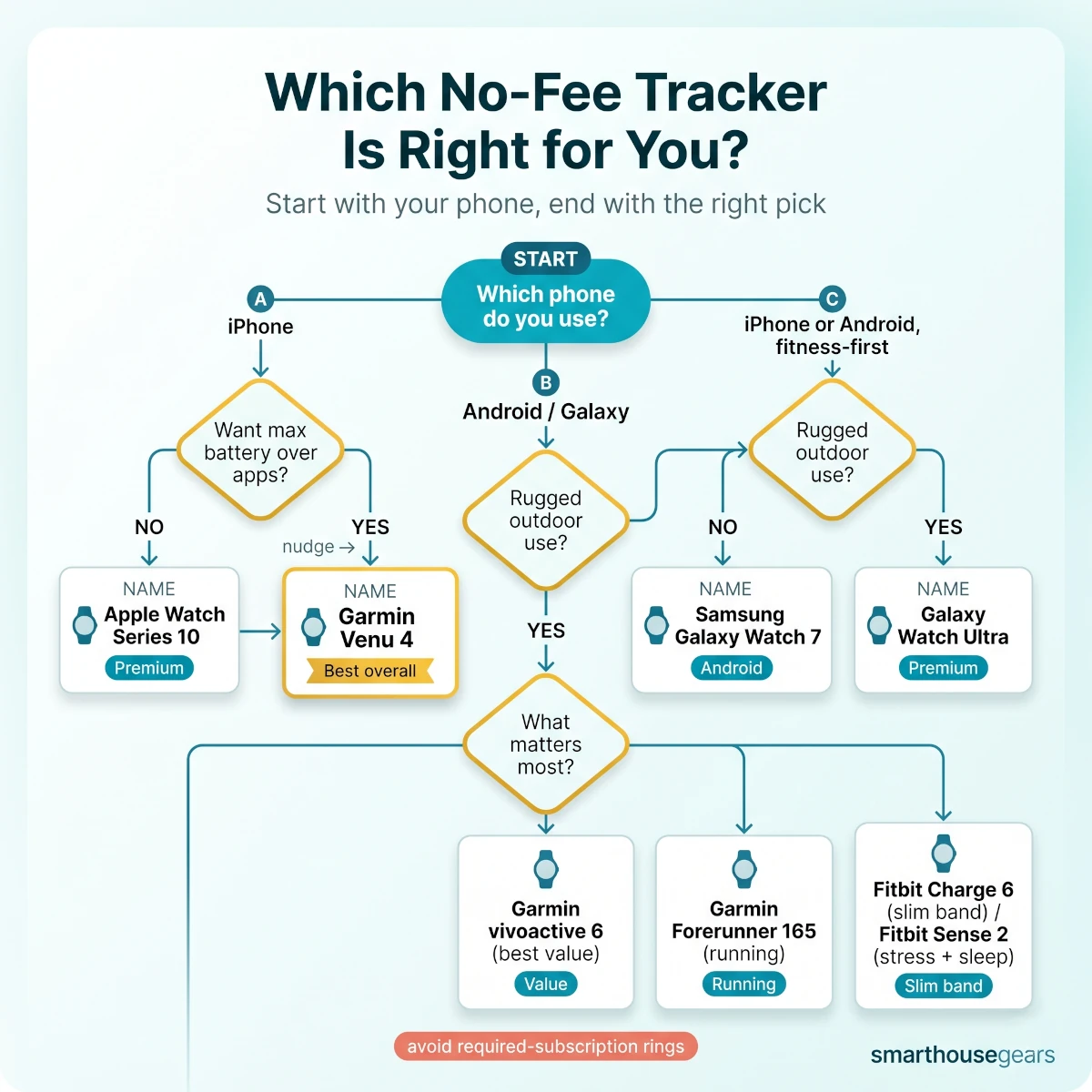
A quick decision path: start with your phone, then weigh battery needs, workout seriousness, sleep comfort, and how much optional-upsell pressure you can tolerate to land on the right no-fee pick.
Head-to-Head: Garmin vs Fitbit vs Apple vs Samsung for No Monthly Fees
Fitbit is easier for beginners, but the Premium prompts are part of the experience. Fitbit Charge 6 is still a good slim tracker, and Fitbit Sense 2 is good for stress, but neither beats Garmin on free analytics.
This comparison is simple. Do not buy Apple Watch Series 10 for Android. Do not buy Samsung Galaxy Watch 7 for iPhone. Both platforms are good without a required fitness subscription, but both reward staying inside their phone ecosystem.
The smart ring category is rising because it solves comfort, not workout depth. If sleep is your only goal, a no-subscription ring can tempt you, but the ones we checked fell below our rating bar, so a comfortable watch like Garmin Venu 4 or a slim band like Fitbit Charge 6 is the safer no-fee pick for most people right now.
Full Specs and Ownership Comparison
TableFitness Trackers Without Subscription - Full Comparison
Product
Best For
Free App Quality
Phone Compatibility
Battery Reality
Smart Home Angle
US Warranty Norm
Price Tier
Garmin Venu 4
Premium all-around health
Excellent
iPhone and Android
Multi-day
Limited
1 year
$499-$550
Garmin vivoactive 6
Best value Garmin
Excellent
iPhone and Android
Multi-day
Limited
1 year
$275-$300
Garmin Forerunner 165
Running plans
Excellent
iPhone and Android
Multi-day
Limited
1 year
$198-$250
Apple Watch Series 10
iPhone users
Very good
iPhone only
Daily charging
Siri and HomeKit
1 year
$279-$429
Samsung Galaxy Watch 7
Android smartwatch
Very good
Android
Daily to two-day
Google and Samsung
1 year
$190-$260
Samsung Galaxy Watch Ultra 2025
Premium Android
Very good
Android
Better than Watch 7
Google and Samsung
1 year
$459-$550
Fitbit Charge 6
Slim band
Good but upsells Premium
iPhone and Android
Several days
Limited Google tools
1 year
$99-$130
Fitbit Sense 2
Stress and sleep
Good but upsells Premium
iPhone and Android
Several days
Alexa Built-in
1 year
$185-$200
Garmin Venu 4
Best For
Premium all-around health
Free App Quality
Excellent
Phone Compatibility
iPhone and Android
Battery Reality
Multi-day
Smart Home Angle
Limited
US Warranty Norm
1 year
Price Tier
$499-$550
Garmin vivoactive 6
Best For
Best value Garmin
Free App Quality
Excellent
Phone Compatibility
iPhone and Android
Battery Reality
Multi-day
Smart Home Angle
Limited
US Warranty Norm
1 year
Price Tier
$275-$300
Garmin Forerunner 165
Best For
Running plans
Free App Quality
Excellent
Phone Compatibility
iPhone and Android
Battery Reality
Multi-day
Smart Home Angle
Limited
US Warranty Norm
1 year
Price Tier
$198-$250
Apple Watch Series 10
Best For
iPhone users
Free App Quality
Very good
Phone Compatibility
iPhone only
Battery Reality
Daily charging
Smart Home Angle
Siri and HomeKit
US Warranty Norm
1 year
Price Tier
$279-$429
Samsung Galaxy Watch 7
Best For
Android smartwatch
Free App Quality
Very good
Phone Compatibility
Android
Battery Reality
Daily to two-day
Smart Home Angle
Google and Samsung
US Warranty Norm
1 year
Price Tier
$190-$260
Samsung Galaxy Watch Ultra 2025
Best For
Premium Android
Free App Quality
Very good
Phone Compatibility
Android
Battery Reality
Better than Watch 7
Smart Home Angle
Google and Samsung
US Warranty Norm
1 year
Price Tier
$459-$550
Fitbit Charge 6
Best For
Slim band
Free App Quality
Good but upsells Premium
Phone Compatibility
iPhone and Android
Battery Reality
Several days
Smart Home Angle
Limited Google tools
US Warranty Norm
1 year
Price Tier
$99-$130
Fitbit Sense 2
Best For
Stress and sleep
Free App Quality
Good but upsells Premium
Phone Compatibility
iPhone and Android
Battery Reality
Several days
Smart Home Angle
Alexa Built-in
US Warranty Norm
1 year
Price Tier
$185-$200
How to Read Amazon Ratings for Fitness Trackers
Amazon ratings help, but wearable ratings need context. A 4.1-star fitness tracker with 20,000 reviews may be safer than a 4.8-star new model with 40 reviews, but the older product may also carry complaints from several software eras.
Color and size variants can also merge reviews. A listing may show one review count across multiple colors, case sizes, or bundles. That is common with Apple, Fitbit, and Samsung listings. It is useful for broad owner sentiment, but it does not always describe the exact color or band bundle you are viewing.
Read the bad reviews first. For fitness trackers, the useful complaints usually fall into five categories: battery life, skin irritation, app sync, GPS accuracy, and subscription frustration. A few angry shipping reviews should not scare you off. Repeated app complaints should.
Check whether the seller is Amazon.com, the brand store, or a marketplace seller. A wearable can be authentic and still arrive with return friction if the seller is not the one you expected. For higher-priced watches like Garmin Venu 4 or Samsung Galaxy Watch Ultra 2025, seller quality matters.
Do not overvalue star ratings alone. Fitbit Charge 6 has a lower rating than some no-name watches, but it has a real ecosystem, known limitations, a huge owner base, and useful Google integrations. We would rather buy a known 4.1-star device than a mystery 4.7-star watch with a throwaway app.
Also watch the date pattern. If recent reviews mention a firmware problem, a broken sync update, or a feature removal, that matters more than five-year-old praise. Wearables are app-dependent products, so software health changes the ownership experience.
The No-Fee Scorecard We Use Before Recommending a Tracker
We use a simple five-question filter before recommending any no-subscription wearable. First, does the device show useful daily data without paying? Second, does the app keep meaningful history? Third, does the device work with the buyer's current phone? Fourth, will the buyer actually wear it overnight? Fifth, is the brand likely to support it for several years?
Garmin Venu 4 scores highest because it answers yes to all five. It is not the cheapest, but the free Garmin Connect experience makes the purchase feel complete.
Garmin vivoactive 6 is almost as strong at a lower price. It gives up some premium feel, but it does not give up the subscription-free Garmin advantage.
Apple Watch Series 10 scores high for iPhone owners and low for everyone else. That sounds obvious, but it is the main reason Apple Watch should not be the default recommendation in a mixed-phone household.
Samsung Galaxy Watch 7 is similar on Android. It is a great pick for Galaxy users and a weaker pick if you might move to iPhone.
Fitbit products score well on wearability and beginner friendliness, but lose points on paywall pressure. Fitbit Charge 6 survives that penalty because it is small, proven, and useful. Fitbit Sense 2 survives because stress tracking, battery life, and Alexa Built-in give it a clear job.
What We Did Not Include and Why
Some popular wearables did not make this list because they fail the intent of the keyword. That does not make them bad products. It means they are the wrong answer for a buyer specifically searching for a fitness tracker without paid app pressure.
We did not include Whoop as a main pick because the membership model is the product. Whoop can be useful for recovery-focused athletes, shift workers, and people who love screen-free tracking, but it is the opposite of a no monthly fee fitness tracker. The hardware may feel inexpensive upfront, but the long-term cost is tied to membership.
We did not make Oura Ring 4 a main pick for the same reason. Oura is polished, comfortable, and excellent for sleep and recovery, but the required membership is exactly what many searchers are trying to avoid. If you already know you like Oura's coaching model, it may be worth it. If you typed "without subscription" into Google, it probably is not.
We also left the Amazfit Helio Ring off the main list this round. It is one of the more interesting subscription-free smart rings, and the no-membership angle is genuinely appealing for sleep-first buyers. The problem is rating: its Amazon.com score sat below our 4.0-star bar at research time, with too many complaints about sizing, battery, and app polish. We would rather point you to a higher-rated watch or band than recommend a ring we cannot fully stand behind yet. If a subscription-free ring climbs back above that bar, it earns a fresh look.
We considered Google Pixel Watch models because they bring Fitbit health tools into a modern Wear OS smartwatch. The issue is that Fitbit's deeper health model still points users toward Premium, and Pixel Watch battery life is not as friendly for sleep tracking as Garmin. For Android buyers avoiding subscriptions, Samsung Galaxy Watch 7 is the cleaner pick in this guide.
We also skipped most no-name Amazon fitness watches. Many have attractive ratings, low prices, bright screens, and long feature lists. The problem is app quality, privacy clarity, sensor consistency, and long-term support. A cheap watch that loses sync after six months is not a value.
Some new 2026 products looked promising but did not have enough Amazon.com owner feedback at research time. That matters because this article is built for affiliate buying confidence, not launch-day hype. A product can look great in a press release and still be a risky recommendation if real owners have not lived with it.
We did not include every Garmin model. Garmin's lineup is crowded, and too many Garmin picks would make the article less helpful. Garmin Venu 4 covers premium wellness, Garmin vivoactive 6 covers value, and Garmin Forerunner 165 covers runners. That trio answers the main Garmin use cases without turning this into a Garmin catalog.
We included Fitbit carefully, not blindly. Fitbit Charge 6 and Fitbit Sense 2 are not the best no-subscription platforms, but they are still relevant because millions of US buyers like Fitbit's simplicity, small size, and familiar app. The caveat is part of the recommendation, not a footnote.
Common Buying Mistakes With No-Subscription Wearables
The first mistake is buying for features you will never use. If you do not run, full running metrics should not steer your decision. If you do not answer calls from your wrist, smartwatch calling should not matter. If you hate sleeping with watches, a huge feature list will not fix the comfort problem.
The second mistake is treating battery life as a spec instead of a habit. A watch rated for one day may be fine if you charge during your morning shower. A watch rated for several days may still fail you if the charger is always in another room. Match the device to your routine, not the marketing number.
The third mistake is ignoring band comfort. A stiff silicone band can make a good tracker feel cheap, especially in humid Southern summers or during long treadmill sessions. Budget for a softer sport loop, nylon band, or breathable replacement strap if the stock band irritates your skin.
The fourth mistake is letting a sale decide the platform. A discounted Apple Watch is still wrong for Android. A cheap Fitbit is still a Fitbit with Premium prompts. A Garmin deal is great only if you like Garmin's more fitness-focused interface.
The fifth mistake is expecting medical certainty. Wearables can flag patterns, encourage better habits, and give you useful context. They cannot diagnose you from the couch. If a device changes how you think about a health issue, use that as a reason to talk to a professional, not as the final answer.
The sixth mistake is buying a smart ring for workouts. Rings are great for sleep comfort and passive wellness trends. They are poor tools for pace, intervals, strength training, live heart-rate zones, and outdoor route tracking. If workouts matter, buy a watch first.
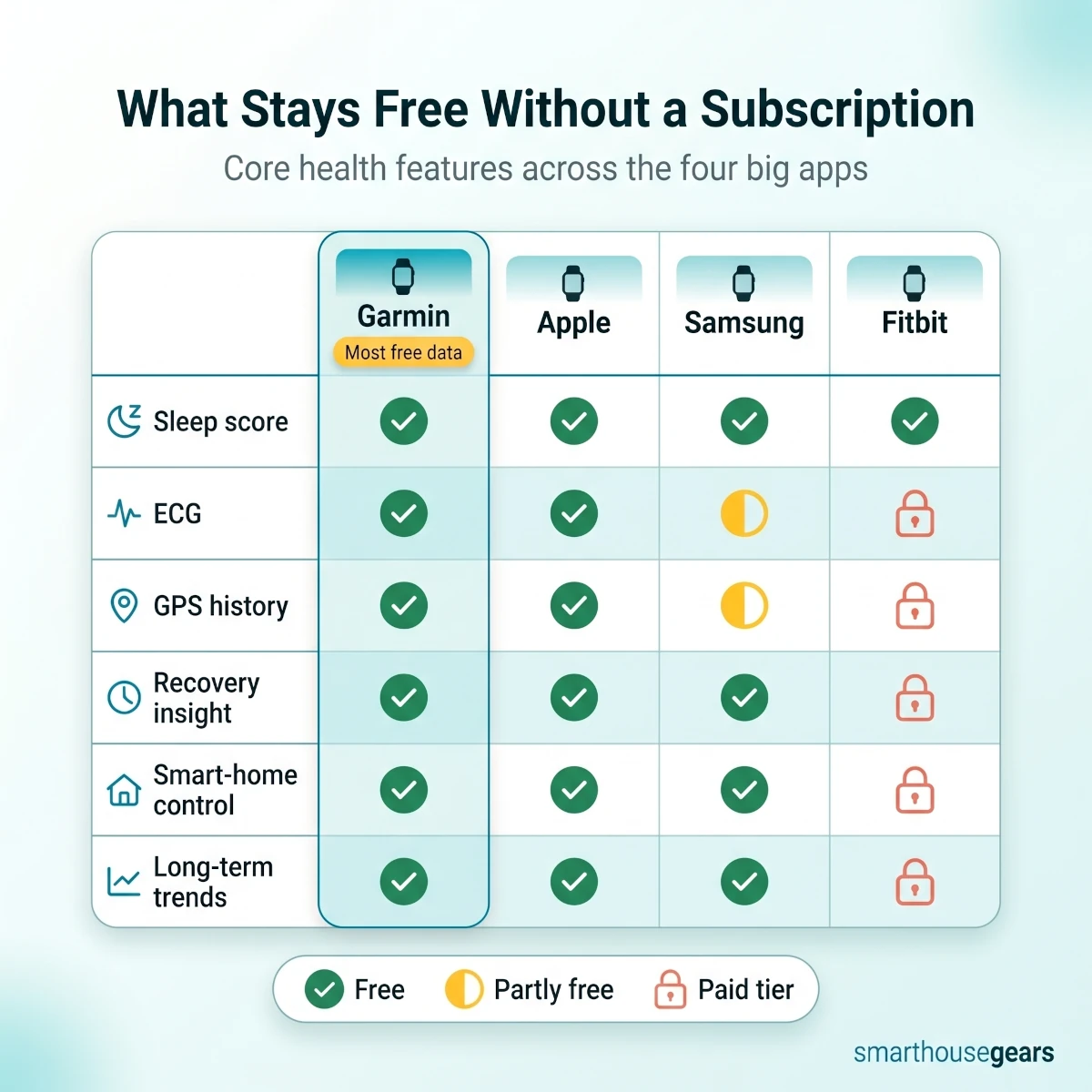
What you keep for free: how Garmin, Apple, Samsung, and Fitbit compare on sleep score, ECG, GPS history, recovery insight, and smart home controls without a required subscription.
Practical Setup Tips for US Buyers
Before You Check Out
Confirm phone compatibility firstApple Watch is iPhone only and Galaxy Watch is Android only, so the phone decides the shortlist.
Check who the Amazon seller isPrefer Amazon.com itself or the official brand store for cleaner warranty and returns.
Pick a wearable you will actually sleep inSleep and recovery data is only useful if the device is comfortable enough to wear overnight.
Expect prices to moveWearable pricing swings hard around Prime Day, Black Friday, Cyber Monday, and New Year fitness sales.
Read the app's subscription page before buyingKnow exactly what is free and what sits behind Premium, Fitness Plus, or Connect Plus.
Get the band size rightBudget for a softer sport or sleep band if the stock strap feels stiff or irritates your skin.
If you are building a broader no-fee smart home, pair this guide with our best smart Wi-Fi thermostats and smart home power outage preparation guides. The same buying principle applies across the house: favor hardware that keeps working without a service you do not want to keep.
Final Verdict: The Best Fitness Tracker Without Subscription Fees
The best fitness tracker without subscription for most US buyers is Garmin Venu 4. It gives you premium hardware, long battery life, strong workout tracking, sleep and recovery context, and the best free app experience in this group.
The best value is Garmin vivoactive 6. It gives you most of the Garmin advantage for much less money, and it is the first watch we would recommend to someone leaving Fitbit because of Premium fatigue.
The no-fee principle is simple: buy the device that stays useful after the trial ends. In 2026, that means Garmin for most fitness-focused buyers, Apple for iPhone households, Samsung for Android smartwatches, and Fitbit for simple bands and stress tracking.
If we were buying one today, we would get Garmin Venu 4 and stop thinking about monthly fees.
Quick answers
Frequently Asked Questions About Fitness Trackers Without Subscription
What is the best fitness tracker without subscription fees in 2026?
Garmin Venu 4 is the best overall pick for most US buyers because Garmin Connect keeps core health, sleep, recovery, GPS, and workout history available without a required monthly plan. Garmin Connect Plus exists as an optional tier, but the watch does not need it for the main health and training tools people buy a tracker for.
Which fitness tracker has no monthly fee and works with iPhone?
Apple Watch Series 10 is the easiest no-monthly-fee choice for iPhone users because Apple Health, Activity Rings, ECG, workout tracking, sleep data, and safety features work without Apple Fitness Plus. Garmin Venu 4, Garmin vivoactive 6, Fitbit Charge 6, and Fitbit Sense 2 also work with iPhone, but Apple Watch gives the deepest iPhone integration.
Is Garmin really subscription-free after Garmin Connect Plus?
Yes for the core features that matter most. Garmin Connect Plus adds optional AI-style insights and expanded extras, but Garmin says existing health and fitness data remain available without paying. For buyers avoiding monthly fees, Garmin still has the strongest free app experience among mainstream fitness watches.
Can I use Fitbit Charge 6 without Fitbit Premium?
Yes, Fitbit Charge 6 works without Fitbit Premium for steps, workouts, heart rate, GPS, sleep score, ECG app access where supported, notifications, Google Wallet, and Google Maps. The catch is that some deeper trends, advanced coaching, and longer-form insight cards sit behind Premium, so Fitbit is usable without a subscription but less generous than Garmin.
What is the best sleep tracker without a subscription?
Garmin Venu 4 is the best all-around sleep tracker without a required subscription because it combines a sleep score, HRV status, recovery context, and multi-day battery life. If you want a lower-cost option, Garmin vivoactive 6 and Fitbit Sense 2 also track sleep well without a monthly plan, and Fitbit adds several days of battery for comfortable nightly wear.
Do Apple Watch health features require Apple Fitness Plus?
No. Apple Fitness Plus is optional. Apple Watch tracks workouts, Activity Rings, sleep, heart rate, ECG on supported models, fall detection, crash detection, and many Apple Health metrics without that subscription. Fitness Plus mainly adds guided workouts and classes.
Which Android fitness tracker has no required subscription?
Samsung Galaxy Watch 7 is the best Android smartwatch choice with no required subscription, especially for Samsung phone owners. Samsung Health includes sleep, workouts, Energy Score, body composition, heart rate, GPS workouts, and daily health summaries without a monthly fee.
Are smart rings better than fitness watches if I hate subscriptions?
Smart rings are better for low-distraction sleep and recovery tracking, while fitness watches are better for running, cycling, gym workouts, GPS, music, calls, and on-screen stats. A no-subscription smart ring can make sense if sleep is your only goal, but every pick in this guide is a watch or band because the subscription-free rings we checked sat below our 4.0-star quality bar. If you train several days a week, a watch is the safer buy.
Which fitness tracker is best for runners without a paid app?
Garmin Forerunner 165 is the best running watch here for most buyers who want no paid app. It gives built-in GPS, race widgets, Garmin Coach, recovery time, wrist heart rate, AMOLED display, and free Garmin Connect history without needing a subscription.
Should I buy a Fitbit, Garmin, Apple Watch, or Samsung Watch?
Buy Garmin if you want the best free fitness app and long battery life. Buy Apple Watch if you own an iPhone and care about smart features. Buy Samsung Watch if you use Android, especially Galaxy phones. Buy Fitbit only if you want a simple band or stress-focused smartwatch and accept that some advanced insights are paid.
Do any fitness trackers work with Alexa or smart home controls?
Fitbit Sense 2 and Fitbit Versa 4 include Alexa Built-in, which can handle timers, weather, simple smart home commands, and quick voice requests. Apple Watch uses Siri, Samsung Galaxy watches use Google Assistant or Bixby depending on setup, and Garmin focuses more on health and fitness than smart home control.
What should I avoid in a no-subscription fitness tracker?
Avoid trackers that advertise a low upfront price but hide recovery, sleep trends, workout history, or coaching behind a required membership. Also avoid no-name watches with vague sensor claims, weak privacy policies, and poor app support, even when Amazon ratings look tempting.
Discussion
Be the first to comment
Have a question or experience to share? Scroll down to leave a comment.


Discussion
Be the first to comment